The Hidden Side of Naples: An Insider’s Atlas of Secret Gems
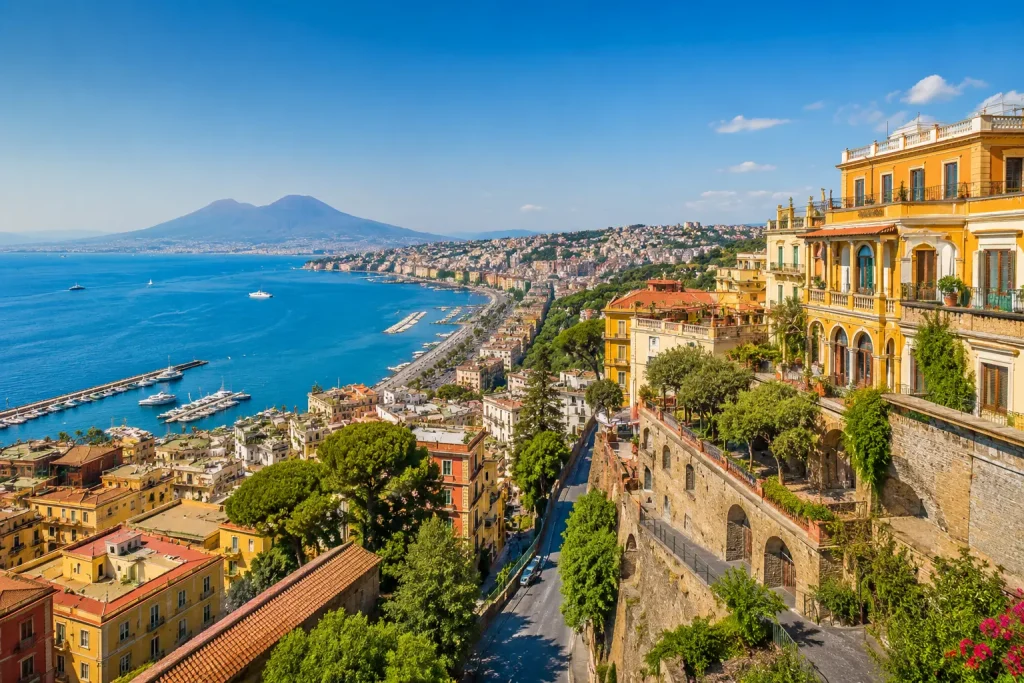
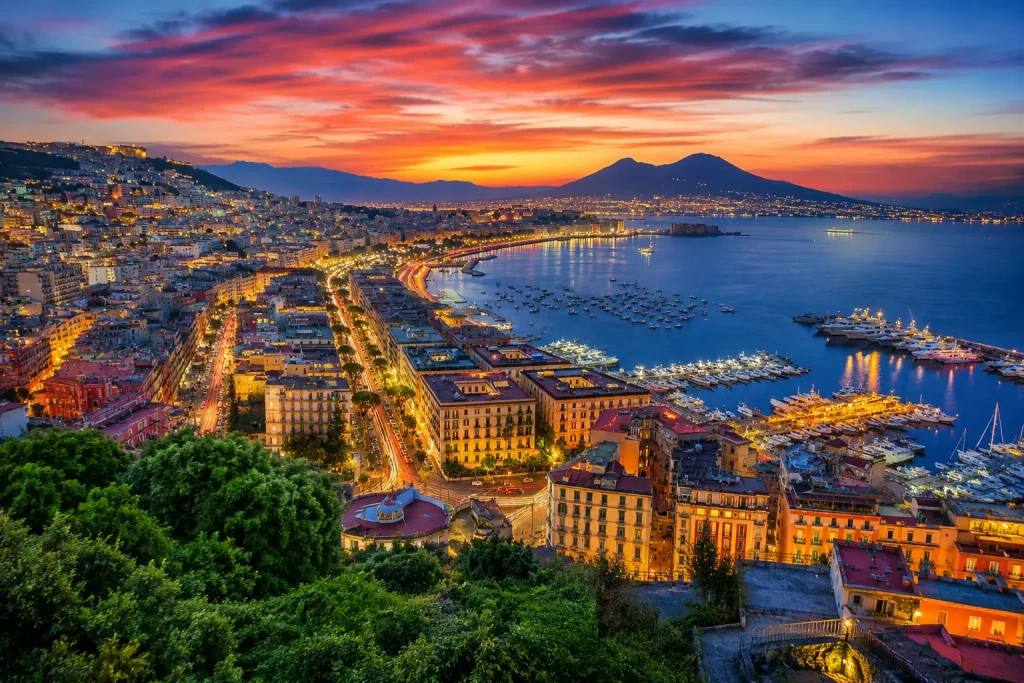
A hidden panoramic corner of Naples revealing the city’s layered soul — ancient streets, volcanic landscapes, secret rooftops, and the timeless atmosphere that makes Naples one of Italy’s most mysterious destinations.
Naples is a city people rarely feel neutral about. Some travelers arrive and see only chaos: noisy streets, scooters flying past ancient churches, laundry hanging above crumbling palaces, graffiti beside Baroque masterpieces. Others fall hopelessly in love with it and never quite recover.
Most visitors stay on the surface. They walk along Spaccanapoli, eat pizza near the historic center, visit Pompeii, and leave believing they have truly “seen Naples.”
But the real Naples hides beneath, above, and behind the obvious.
Under the streets lies a buried Greco-Roman world carved into volcanic stone. Behind anonymous doors stand forgotten aristocratic palaces. Silent cloisters hide behind chaotic avenues. Ancient staircases climb toward secret panoramic viewpoints. Underground cemeteries preserve rituals that existed nowhere else in Europe.
This guide is your atlas to the hidden side of Naples — a city layered with mystery, spirituality, art, and stories most tourists never discover.
Why Explore the Hidden Side of Naples?
Discover underground Greco-Roman ruins beneath the city
Escape the busiest tourist crowds
Experience authentic Neapolitan street life
Visit hidden churches, cloisters, and palaces
Find panoramic viewpoints locals still use
Explore one of Europe’s most layered historical cities
Experience Naples beyond pizza, postcards, and stereotypes
Exploring the Secret Layers of Naples
A breathtaking panoramic view of Naples revealing the city’s hidden layers — historic hillside neighborhoods, the Bay of Naples, and Mount Vesuvius rising above southern Italy.
Naples is not a city you simply visit — it is a city you descend into.
Unlike Florence or Venice, Naples reveals itself in layers. Beneath modern traffic lies an ancient Greek and Roman city carved directly into volcanic tuff stone. Above street level rise hidden monasteries, rooftop gardens, aristocratic palaces, and panoramic staircases overlooking Mount Vesuvius and the Bay of Naples.
Every neighborhood feels like a different world.
The Rione Sanità district preserves underground catacombs, cave cemeteries, and extraordinary Baroque architecture. Vomero hides quiet staircases and some of the city’s most spectacular views. Along the coastline, forgotten Roman ruins lie submerged beneath crystal-clear water.
Naples is chaotic, spiritual, aristocratic, decaying, artistic, and deeply alive — often all at once.
This hidden atlas is designed to guide you through those secret layers of the city.
Whether you are chasing the echo of Roman history underground or seeking the view from a forgotten hillside stair, this atlas will help you navigate the layers that define the Neapolitan soul.
The Secret Atlas: 12 Hidden Places to Discover
1. Napoli Sotterranea: Deep Beneath the City
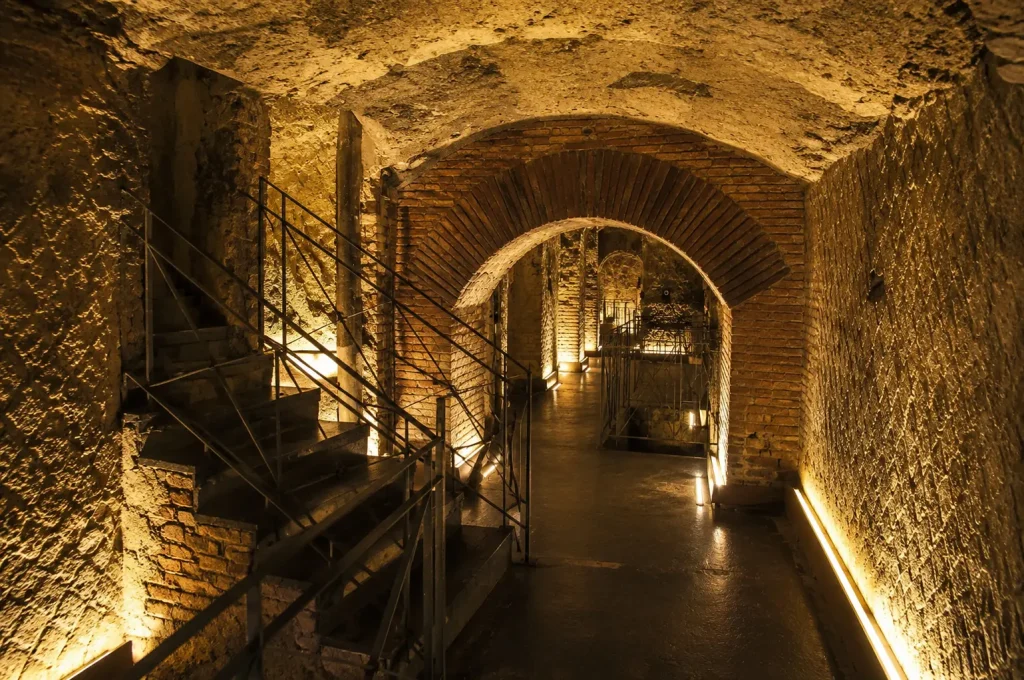
A hidden underground corridor inside Napoli Sotterranea revealing ancient brick arches, volcanic stone chambers, and the mysterious underground world buried beneath Naples.
Far beneath the streets of modern Naples lies an underground world shaped by more than 2,000 years of history. Napoli Sotterranea takes visitors through ancient aqueducts, Greek-Roman tunnels, wartime bomb shelters, and hidden chambers carved directly into volcanic rock.
The experience feels less like a museum and more like descending through the buried layers of the city itself. Narrow candlelit passages suddenly open into massive underground cisterns once used to supply water to Naples for centuries.
Some sections reveal traces of ancient theaters and Roman infrastructure hidden beneath modern apartments. Others preserve memories of civilians sheltering underground during World War II bombings.
For travelers interested in archaeology, urban history, or unusual experiences, this is one of the most unforgettable underground tours in Italy.
Practical Information
Best For: History Lovers, Archaeology Enthusiasts Neighborhood: Historic Center Time Needed: 1.5–2 Hours
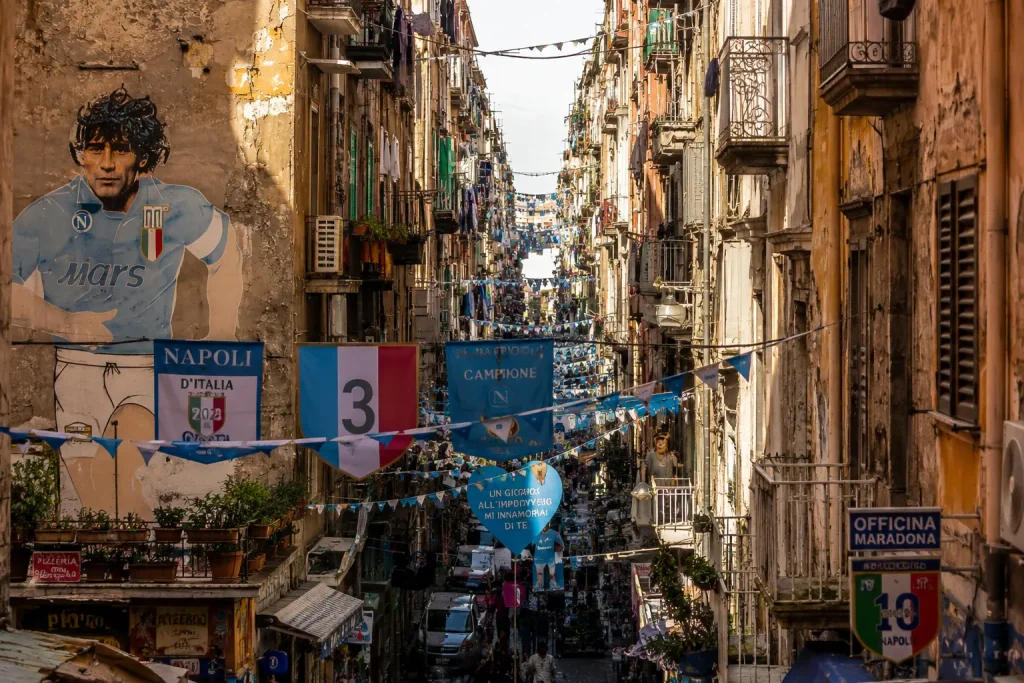
The vibrant streets of Quartieri Spagnoli capture the authentic soul of Naples with historic alleyways, Maradona murals, hanging laundry, and everyday Neapolitan life.
The Quartieri Spagnoli — or Spanish Quarter — is where many travelers encounter the raw energy of authentic Naples for the first time.
Originally built in the 16th century to house Spanish soldiers, the district evolved into one of the most densely populated and misunderstood neighborhoods in the city. Today, it has become one of Naples’ most vibrant cultural areas.
Scooters race through impossibly narrow streets. Tiny shrines glow beneath balconies. Street art dedicated to Diego Maradona covers entire buildings. Elderly locals chat from windows while hidden trattorias serve some of the best food in Naples.
Despite its chaotic reputation, the area has transformed dramatically in recent years and is now one of the city’s most atmospheric places to explore.
This is not polished tourist Naples. This is living Naples.
Practical Information
Best For: Street Photography, Local Food, Authentic Atmosphere Neighborhood: Quartieri Spagnoli Time Needed: 2–3 Hours
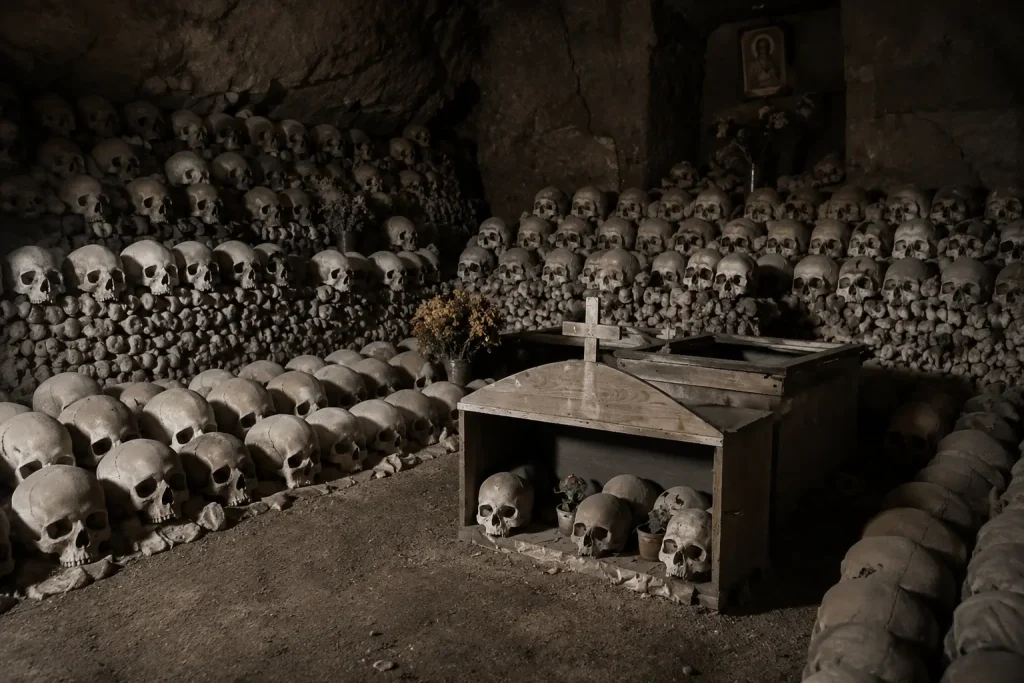
The haunting underground chambers of Fontanelle Cemetery preserve thousands of skulls and bones tied to Naples’ unique spiritual traditions and dark history.
Deep inside a massive volcanic cave lies one of the most mysterious places in Naples: the Fontanelle Cemetery.
Thousands of skulls and bones fill this enormous underground ossuary, many belonging to victims of plague, famine, and epidemics that devastated the city centuries ago.
But what makes Fontanelle unique is not only death — it is the strange spiritual relationship Neapolitans developed with the anonymous dead.
For generations, locals “adopted” skulls known as anime pezzentelle (“poor souls”), cleaning them, praying for them, and asking for protection or miracles in return.
The atmosphere is haunting but deeply human.
It remains one of the most fascinating dark tourism sites in Italy.
Practical Information
Best For: Dark Tourism, Spiritual History, Local Legends Neighborhood: Rione Sanità Time Needed: 45–60 Minutes
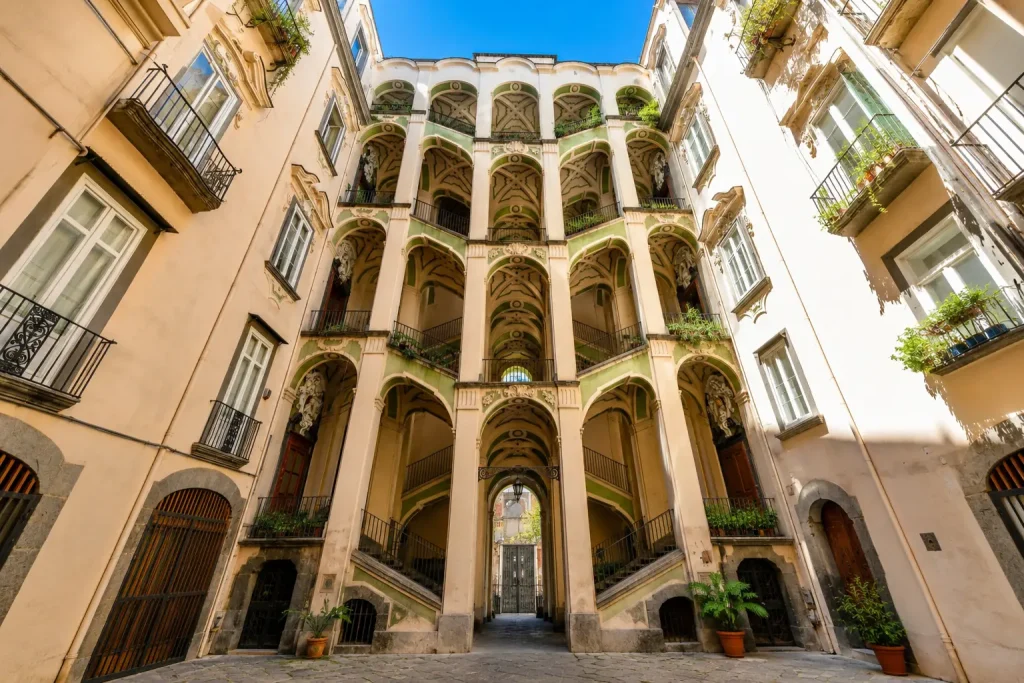
The magnificent courtyard of Palazzo dello Spagnolo showcases one of Naples’ most iconic examples of Baroque architecture hidden within the historic Rione Sanità district.
Hidden inside the Rione Sanità district stands one of Naples’ greatest architectural surprises.
Palazzo dello Spagnolo is famous for its extraordinary open staircases, often described as “winged stairs” because of their dramatic symmetrical design. Built in the 18th century, the palace represents the elegance and theatricality of Neapolitan Baroque architecture.
From the outside, many travelers walk past without realizing what hides behind the façade. Inside, however, the palace opens into a breathtaking courtyard framed by elaborate staircases and arches.
The building perfectly captures the contradiction of Naples itself: beauty hidden behind decay.
Practical Information
Best For: Architecture Lovers, Photography Neighborhood: Rione Sanità Time Needed: 30–45 Minutes
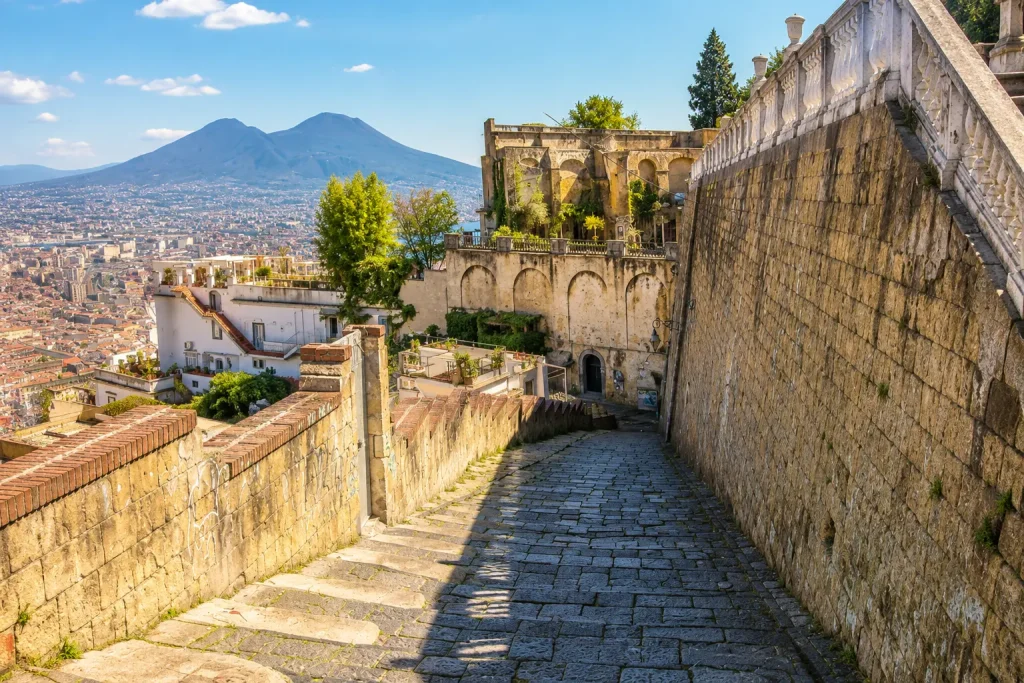
The historic Pedamentina staircase descends through the hills of Naples, offering breathtaking panoramic views of the city and Mount Vesuvius.
Most visitors experience Naples from crowded viewpoints near Castel Sant’Elmo. Few discover the ancient stairway hidden below it.
The Pedamentina is a historic staircase built in the 14th century, connecting the Vomero hill with the historic center through hundreds of steps, gardens, hidden alleys, and panoramic terraces.
Walking the route feels like moving through multiple versions of Naples at once. One moment reveals breathtaking views of Mount Vesuvius and the Bay of Naples. The next leads into quiet residential corners untouched by tourism.
Unlike the city’s busiest viewpoints, the Pedamentina often remains peaceful even during high season.
Practical Information
Best For: Panoramic Walks, Photography Neighborhood: Vomero Difficulty: Moderate (many stairs) Time Needed: 1–2 Hours
6. Capodimonte Museum: Masterpieces Without Crowds
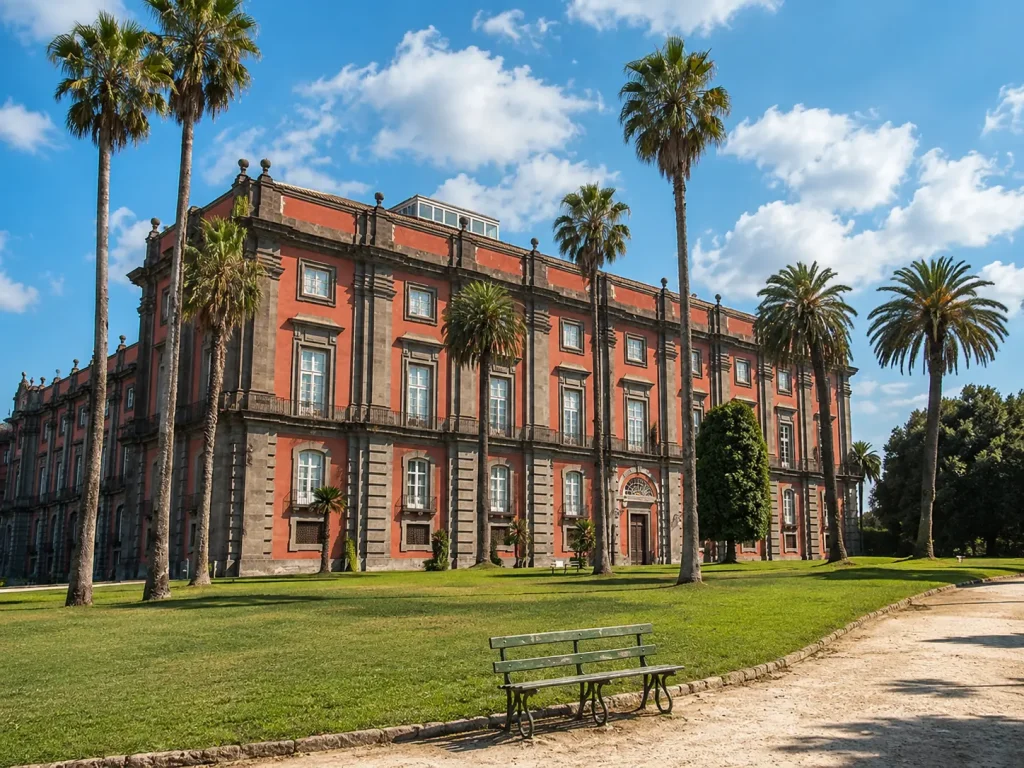
The majestic Capodimonte Museum rises above Naples surrounded by palm trees, royal gardens, and one of Italy’s most underrated art collections.
While tourists crowd museums in Rome and Florence, one of Italy’s greatest art collections remains surprisingly peaceful inside Naples’ Capodimonte Museum.
Originally built as a royal Bourbon palace, the museum houses masterpieces by Caravaggio, Titian, Raphael, Parmigianino, and many other masters of Italian art.
The surrounding park adds to the atmosphere, creating an almost isolated artistic retreat above the noise of the city. Massive halls, royal apartments, and grand staircases give the museum the feeling of a hidden royal world suspended above Naples.
For art lovers, this may be the single most underrated museum in southern Italy.
Practical Information
Best For: Art Lovers, Renaissance Art Neighborhood: Capodimonte Time Needed: 2–4 Hours
7. Catacombs of San Gennaro: Early Christian Treasures
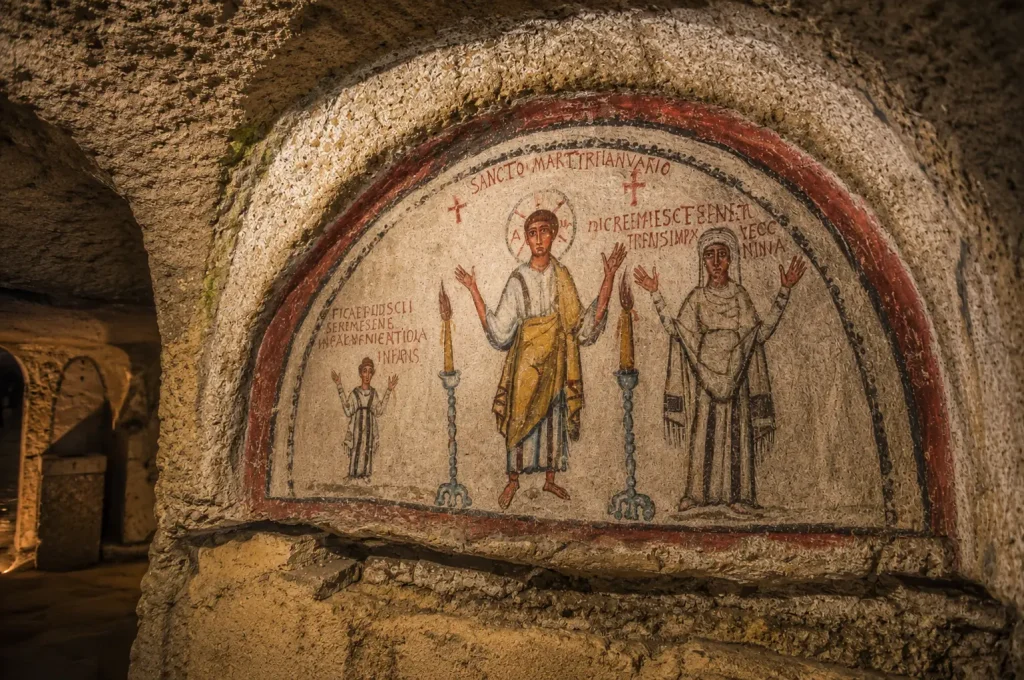
An ancient Christian fresco preserved inside the Catacombs of San Gennaro reveals the spiritual and artistic heritage hidden beneath Naples.
Beneath the streets of the Rione Sanità lies another hidden world — the Catacombs of San Gennaro.
Unlike the darker atmosphere of Fontanelle Cemetery, these early Christian catacombs feel surprisingly open and spiritual. Wide underground corridors lead through ancient burial chambers decorated with faded frescoes and early Christian symbols dating back more than 1,500 years.
The catacombs were named after San Gennaro, Naples’ patron saint, whose remains were once kept here.
One of the most remarkable aspects of the site is its modern restoration story. Local community projects helped revive the catacombs and transformed them into a symbol of cultural renewal for the Sanità district.
Practical Information
Best For: Early Christian History, Underground Naples Neighborhood: Rione Sanità Time Needed: 1–1.5 Hours
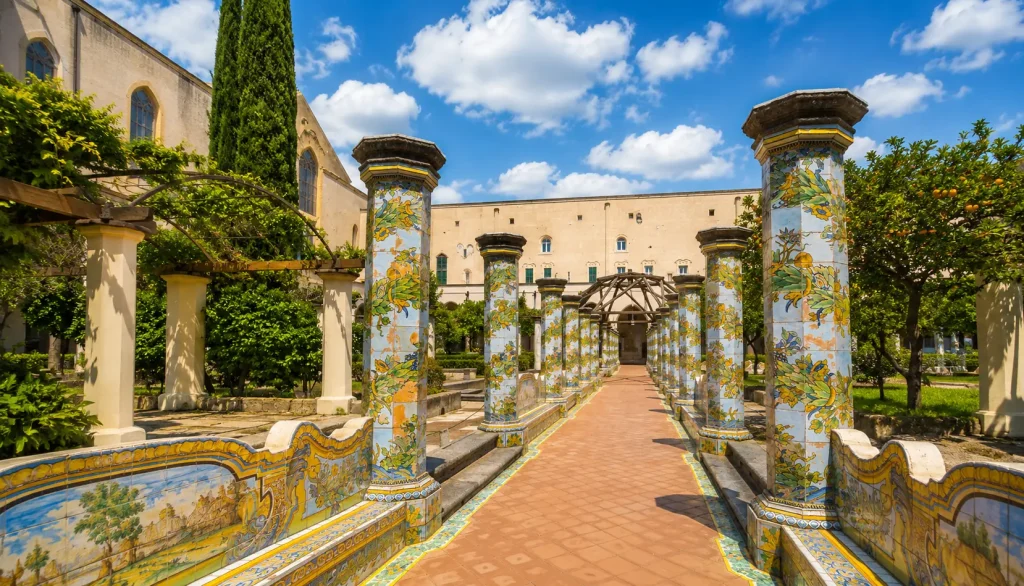
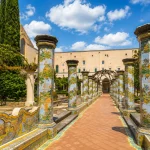
The colorful majolica columns of the Cloister of Santa Chiara create one of the most peaceful and beautiful hidden spaces in Naples.
Outside the monastery walls, Naples feels loud, fast, and chaotic.
Inside the Cloister of Santa Chiara, everything changes.
This peaceful oasis is famous for its colorful majolica-tiled columns and benches decorated with hand-painted scenes of gardens, countryside life, and flowers. Sunlight filters through orange trees while birds sing above the quiet walkways.
The contrast with the surrounding city is extraordinary.
Practical Information
Best For: Peaceful Escapes, Photography Neighborhood: Historic Center Time Needed: 45–60 Minutes
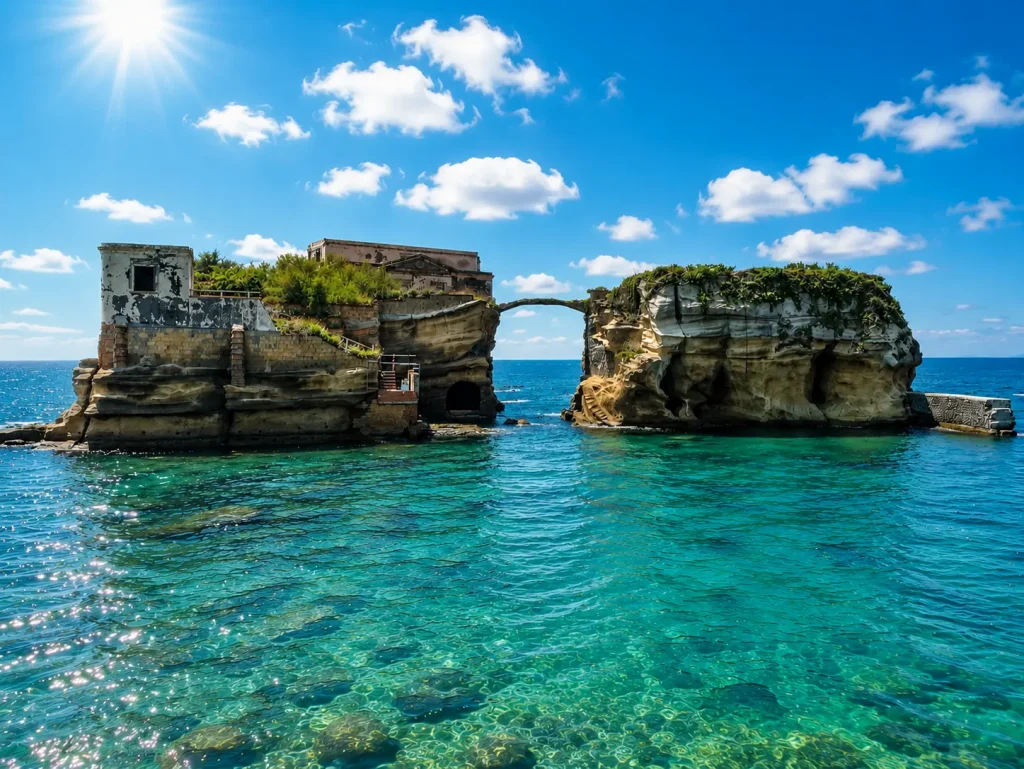
The mysterious La Gaiola Island combines turquoise waters, ancient ruins, and легенды о проклятии in one of Naples’ most fascinating coastal hidden gems.
Along the Posillipo coastline lies one of the strangest and most beautiful places in Naples.
La Gaiola is a tiny island connected by a narrow bridge, surrounded by crystal-clear water and the ruins of submerged Roman villas. Today, the area forms part of a protected marine park ideal for snorkeling and kayaking.
But La Gaiola is also famous for its curse.
Over the years, several wealthy owners and residents connected to the island experienced financial ruin, accidents, or mysterious deaths. The legend became so famous that many locals still refer to La Gaiola as “the cursed island.”
Practical Information
Best For: Snorkeling, Legends, Coastal Scenery Neighborhood: Posillipo Time Needed: Half Day
10. Pio Monte della Misericordia: Caravaggio’s Hidden Work
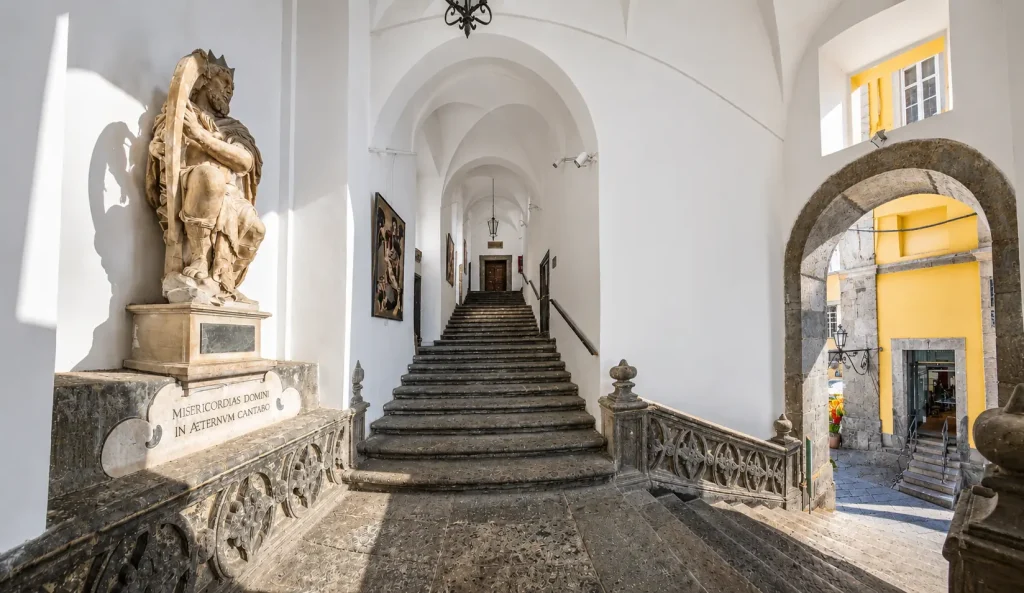
The elegant interior of Pio Monte della Misericordia leads visitors toward one of Naples’ greatest hidden artistic treasures — Caravaggio’s masterpiece “The Seven Works of Mercy.”
Many travelers visit Naples without realizing that one of Caravaggio’s greatest masterpieces hangs quietly inside a small church near the historic center.
Pio Monte della Misericordia houses The Seven Works of Mercy, painted by Caravaggio during his turbulent years in Naples. The dramatic composition combines multiple acts of compassion into a single emotionally intense scene.
Unlike major museums crowded with tourists, the atmosphere here often feels calm and meditative.
Practical Information
Best For: Caravaggio Fans, Art History Neighborhood: Historic Center Time Needed: 30–45 Minutes
The surreal blue interior of Toledo Metro Station transforms an ordinary subway stop into one of the world’s most beautiful underground art spaces.
Naples transformed one of the most ordinary parts of urban life into a work of art.
Toledo Metro Station is frequently called the most beautiful subway station in Europe — and sometimes the world. Designed by Spanish architect Oscar Tusquets Blanca, the station immerses travelers in blue mosaics, reflective surfaces, and dramatic lighting inspired by water and the sea.
Descending through the station feels almost cinematic.
Practical Information
Best For: Architecture, Photography, Modern Design Neighborhood: Via Toledo Time Needed: 15–30 Minutes
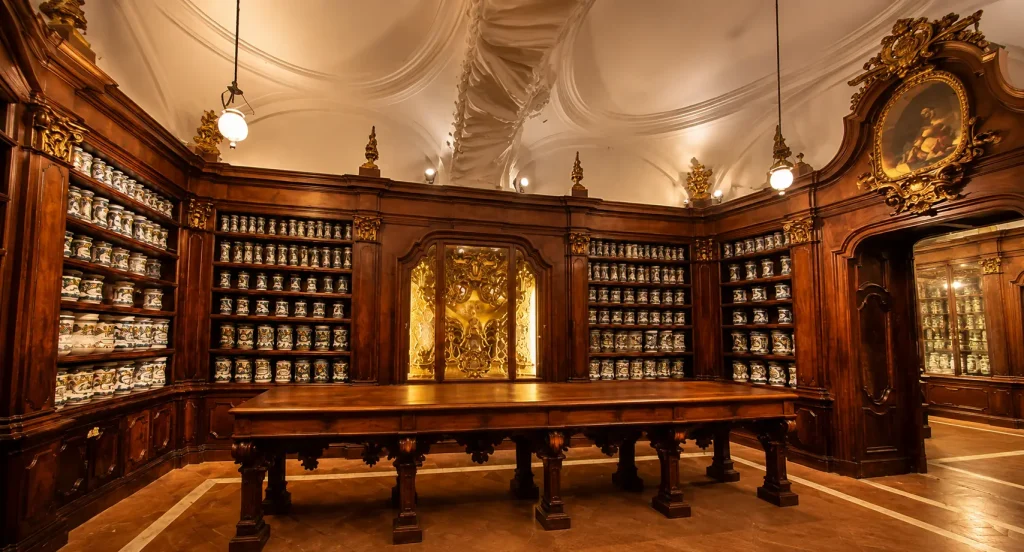
The magnificent Incurabili Pharmacy preserves one of the most beautiful historic medical interiors in Naples with Baroque woodwork and antique apothecary jars.
Hidden inside the historic Ospedale degli Incurabili complex stands one of the most extraordinary pharmacies in Europe.
Dating back to the 18th century, the Incurabili Pharmacy looks more like an aristocratic library or scientific laboratory than a medical space. Wooden cabinets, ceramic jars, gilded decorations, and frescoed ceilings preserve the atmosphere of Enlightenment-era medicine.
The pharmacy reflects a fascinating period when science, religion, medicine, and art existed side by side.
Practical Information
Best For: Medical History, Hidden Museums Neighborhood: Historic Center Time Needed: 30–45 Minutes
A dramatic sunset transforms the Bay of Naples into a glowing panorama beneath the silhouette of Mount Vesuvius.
Is Naples Safe?
Naples has a chaotic reputation, but most tourist areas are generally safe during the day and evening. As in any major city, remain aware of pickpockets in crowded places and avoid displaying valuables openly.
While the historic center is highly walkable, be prepared for cobblestones, narrow alleys, and steep climbs. Using the funiculars — especially when traveling to Vomero — is one of the best local tricks for saving energy while exploring the city.
Neighborhoods like Chiaia, Vomero, and much of the historic center are heavily visited by travelers and generally feel comfortable for tourists.
Best Areas to Stay in Naples
Historic Center → best for atmosphere and history
Chiaia → elegant and calmer
Vomero → quieter with panoramic views
Quartieri Spagnoli → immersive and authentic
Getting Around Naples
Naples is extremely walkable, but the city is steep and filled with staircases. Comfortable shoes are essential.
The metro system is affordable, efficient, and surprisingly artistic — especially the famous Toledo Metro Station.
Best Time to Visit Naples
Spring and early autumn offer the best combination of weather, manageable crowds, and comfortable temperatures.
Summer can become extremely hot and crowded, especially near the coastline and historic center.
Naples Beyond the Postcards
The Bay of Naples glows beneath a dramatic Mediterranean sunset, with illuminated streets, marinas, and coastal neighborhoods stretching along the shoreline.
Naples is not polished like Florence or monumental like Rome.
It is layered, chaotic, spiritual, aristocratic, loud, artistic, and deeply human all at once.
The real magic of Naples rarely reveals itself immediately. It hides underground, behind monastery walls, inside forgotten staircases, beneath churches, and within neighborhoods most tourists never truly explore.
That is why Naples stays with people forever.
FAQ
What are the best hidden gems in Naples?
Some of the best hidden gems in Naples include Napoli Sotterranea, the Fontanelle Cemetery, the Catacombs of San Gennaro, La Gaiola Island, and the Cloister of Santa Chiara.
Is Naples worth visiting beyond the famous attractions?
Absolutely. Many of Naples’ most unforgettable experiences are hidden underground, inside quiet monasteries, or within local neighborhoods most tourists never fully explore.
What is underneath Naples?
Beneath Naples lies an enormous underground network of ancient Greek-Roman tunnels, aqueducts, catacombs, cisterns, and wartime shelters carved into volcanic rock.
Are the Naples catacombs worth visiting?
Yes. The Catacombs of San Gennaro are among the most impressive early Christian burial sites in Italy and offer a unique perspective on Naples’ spiritual history.
What are the best non-touristy things to do in Naples?
Walking the Pedamentina staircase, exploring the Rione Sanità district, visiting hidden cloisters, and discovering local trattorias in Quartieri Spagnoli are among the best off-the-beaten-path experiences.
How many days do you need in Naples?
At least 3–4 days are ideal if you want to explore both the famous landmarks and the hidden side of Naples without rushing.