The haunting underground chambers of Fontanelle Cemetery preserve thousands of skulls and bones tied to Naples’ unique spiritual traditions and dark history.
Deep beneath the streets of Naples, inside a vast volcanic cave in the historic Sanità district, tens of thousands of human remains rest in silence. Fontanelle Cemetery — known in Italian as Cimitero delle Fontanelle — is not a traditional cemetery filled with marble tombs, flowers, and family chapels. Instead, it is a gigantic underground ossuary where the tragedies of Naples became intertwined with faith, folklore, and deeply human rituals.
For centuries, Neapolitans visited this hallowed place to care for anonymous skulls known as anime pezzentelle — the “poor souls.” In exchange for prayers and attention, believers hoped these forgotten dead could offer protection, healing, luck, or guidance from the afterlife.
Today, the Fontanelle Cemetery is one of the most atmospheric and poignant places in Naples, and an essential stop within our “Hidden Side of Naples: An Insider’s Atlas” — a curated guide to the city’s secret and lesser-known places.
More than a dark tourism destination, Fontanelle reveals Naples at its most emotional and mysterious. It is a journey into the city’s collective memory — one that leaves many visitors reflecting not only on death, but also on compassion, faith, and the fragile nature of human life.
What Is the Fontanelle Cemetery?
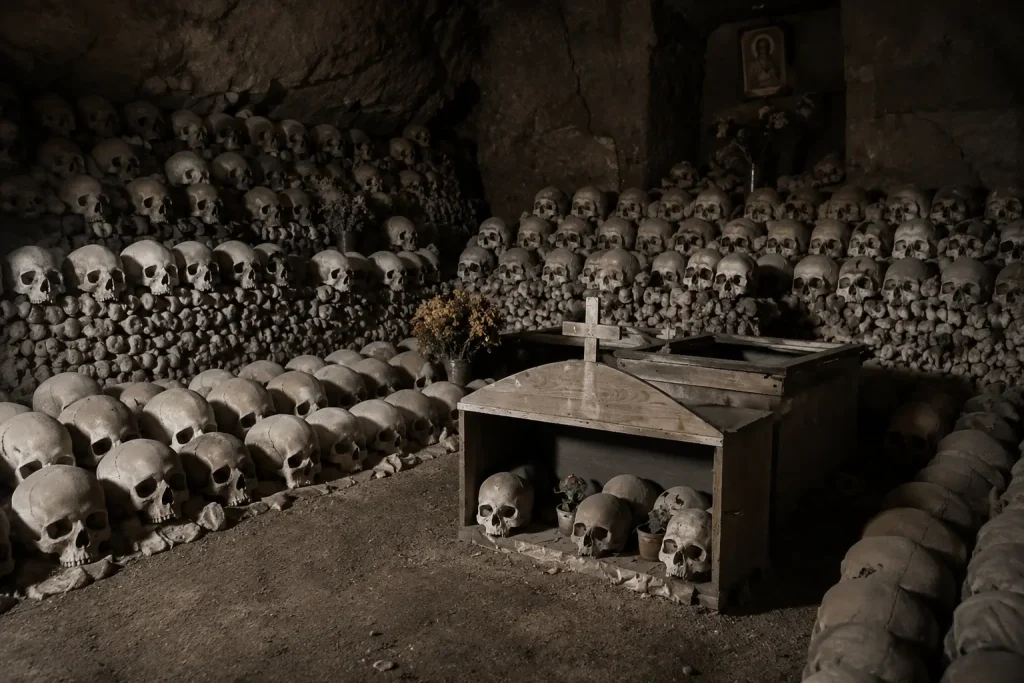
Rows of historic skulls and bones inside the ancient volcanic cave ossuary of Fontanelle Cemetery in Naples’ Rione Sanità district.
The Fontanelle Cemetery is an ancient ossuary located in a volcanic cave in Naples, housing the remains of thousands of victims of past plagues and epidemics. It is famous for the local tradition of “adopting” anonymous skulls in exchange for prayers.
Unlike the polished catacombs of saints and nobles, Fontanelle tells the story of ordinary Neapolitans — workers, mothers, children, plague victims, and the forgotten poor. The result is one of the most emotionally powerful historical sites in southern Italy.
A Brief History: From Volcanic Caves to City Ossuary
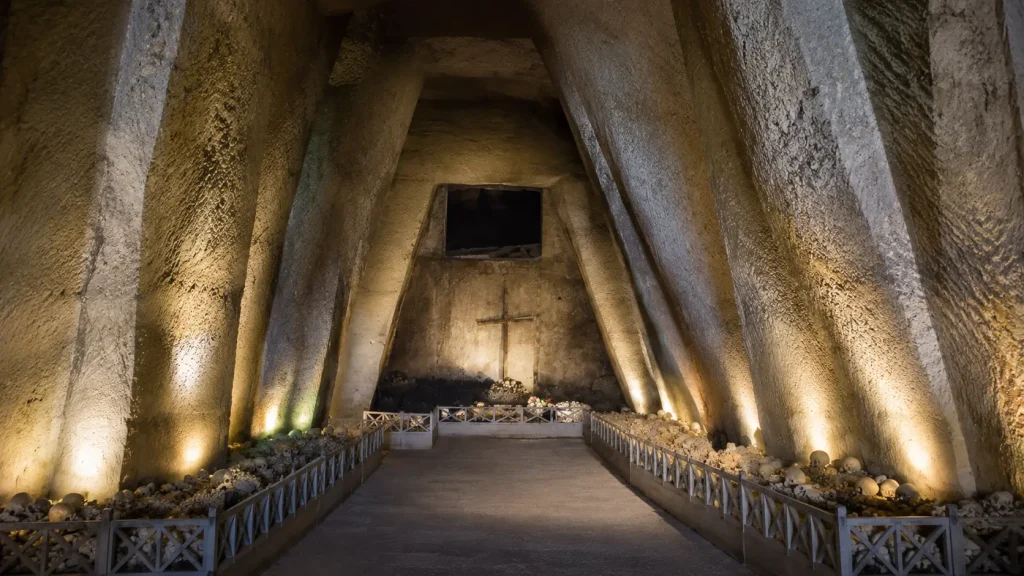
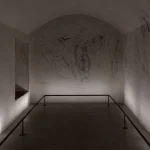
The atmospheric underground chapel inside Fontanelle Cemetery, carved into volcanic stone in Naples’ historic Rione Sanità district.
Long before it became an ossuary, the cave itself was part of Naples’ volcanic landscape. The enormous underground chambers were carved out of soft tuff stone, a porous volcanic rock widely used in Neapolitan construction.
During the 16th and 17th centuries, these abandoned quarries gradually became burial spaces for the poor. But the real transformation came after catastrophe struck the city.
The Plague of 1656
In 1656, one of the deadliest plague outbreaks in Italian history devastated Naples. Historians estimate that nearly half the city’s population died within months. Churches, cemeteries, and crypts quickly overflowed.
Thousands of bodies were transported into the Fontanelle caves, where they were buried in enormous communal pits. Many victims were never identified.
The cave became a silent archive of the city’s suffering.
Cholera and the Expansion of the Ossuary
Nearly two centuries later, another disaster arrived. During the cholera epidemics of the 19th century — especially the outbreak of 1837 — Naples once again struggled to bury its dead.
Additional remains were transferred into the Fontanelle ossuary, turning it into one of the largest underground bone repositories in Europe.
At one point, the cave contained the remains of an estimated 40,000 people.
A Cemetery Inside the Living City
What makes Fontanelle Cemetery unique is its connection to the surrounding neighborhood.
Rione Sanità was historically one of Naples’ poorest yet most culturally vibrant districts. Death was never fully separated from daily life here. The ossuary became part of the emotional and spiritual geography of the neighborhood itself.
Generations grew up seeing the cave not as something frightening, but as a sacred place tied to remembrance and dignity.
The Strange Cult of the “Anime Pezzentelle”
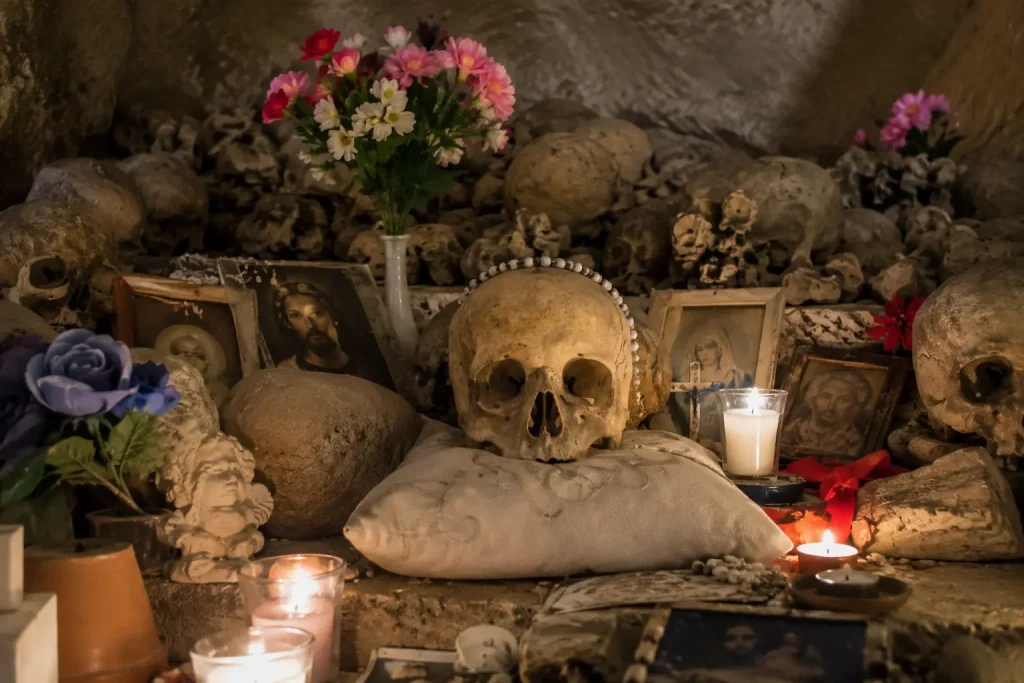
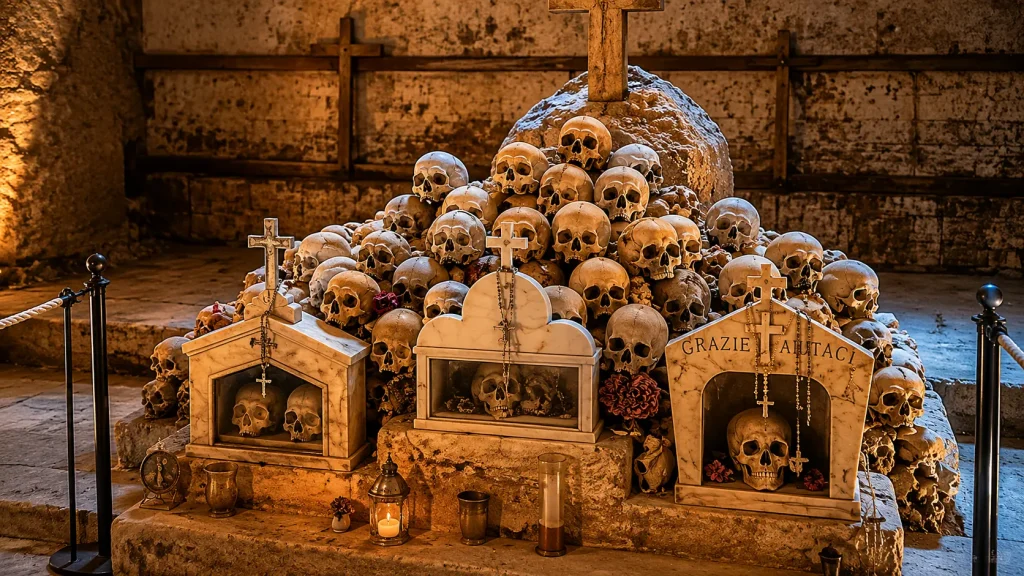
A traditional devotional skull altar connected to the anime pezzentelle folk tradition inside Fontanelle Cemetery in Naples.
Among all the traditions connected to Naples, few are as mysterious as the cult of the anime pezzentelle.
The phrase roughly translates to “poor souls” or “abandoned souls,” referring to the anonymous dead who had nobody left to pray for them.
The Tradition of “Adopting” a Skull
Beginning in the 19th century, local residents — especially women from the Sanità district — began informally “adopting” skulls inside the ossuary.
They would:
Carefully clean the skull
Place it on a cloth or cushion
Build miniature altars around it
Leave rosaries, candles, flowers, or handwritten notes
Pray for the soul of the deceased
In return, believers hoped the soul might intercede on their behalf.
People asked for:
Healing from illness
Protection for loved ones
Good fortune
Financial help
Safe childbirth
Guidance during difficult times
Some Neapolitans believed adopted skulls communicated through visions or signs. While these practices were far more common in the past, they remain a fascinating part of Neapolitan folklore, oral history, and urban legends today.
The Skull of “Lucia”
One of the most famous stories concerns a skull nicknamed “Lucia.”
According to local legend, visitors who sincerely prayed to Lucia sometimes experienced unusual coincidences or received help during difficult moments in life.
Even today, some visitors quietly leave flowers or notes near certain skulls despite official discouragement.
H3: Why the Catholic Church Banned the Practice
By the mid-20th century, church authorities became increasingly uncomfortable with the growing ritual culture surrounding the ossuary.
In 1969, the Catholic Church officially prohibited the cult practices associated with the anime pezzentelle. Clergy worried the rituals blurred the line between Catholic prayer and superstition.
Many personal altars were dismantled, though traces of the tradition still remain visible throughout the cave.
Despite the ban, the emotional connection many Neapolitans feel toward the anonymous dead never fully disappeared.
Why Fontanelle Cemetery Matters to Neapolitans
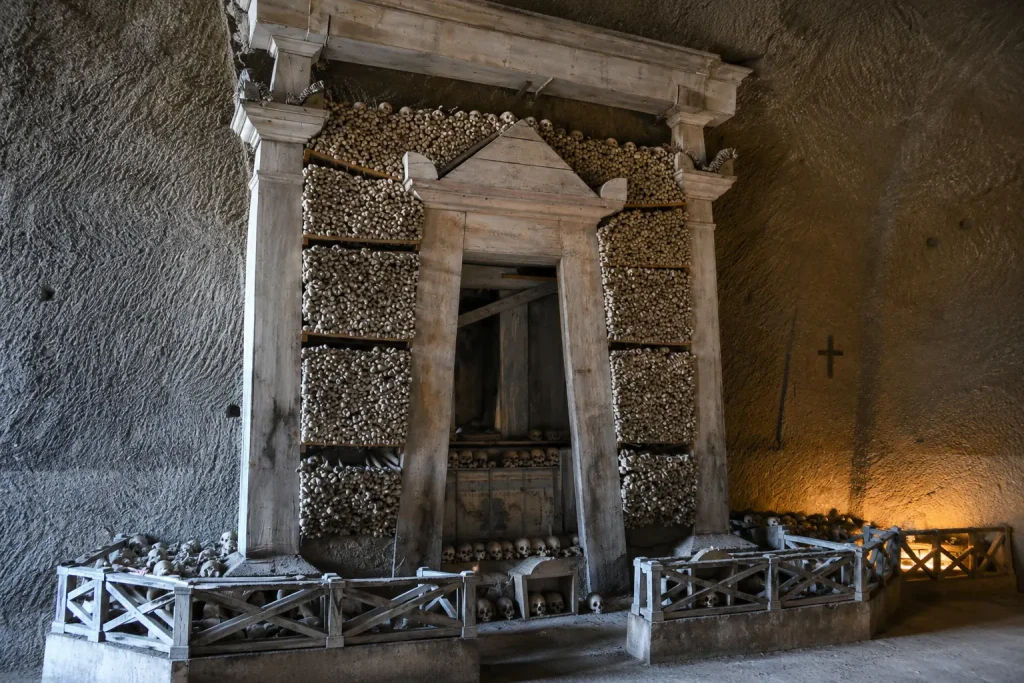
A monumental ossuary wall filled with human bones inside the underground volcanic chambers of Fontanelle Cemetery in Naples.
Unlike many historical ossuaries in Europe, Fontanelle Cemetery was never emotionally separated from the surrounding community.
For generations, families in the Sanità district treated the anonymous dead not as frightening relics, but as forgotten souls deserving dignity, remembrance, and prayers.
This relationship reflects a broader aspect of Neapolitan culture. Naples has long existed in the shadow of disasters — volcanic eruptions, epidemics, poverty, wars, and political instability. Rather than hiding death from everyday life, the city absorbed it into local traditions, religious rituals, and collective memory.
That emotional honesty is part of what makes Fontanelle Cemetery feel so different from many other dark tourism sites across Europe.
What to See: Walking Through the Ossuary
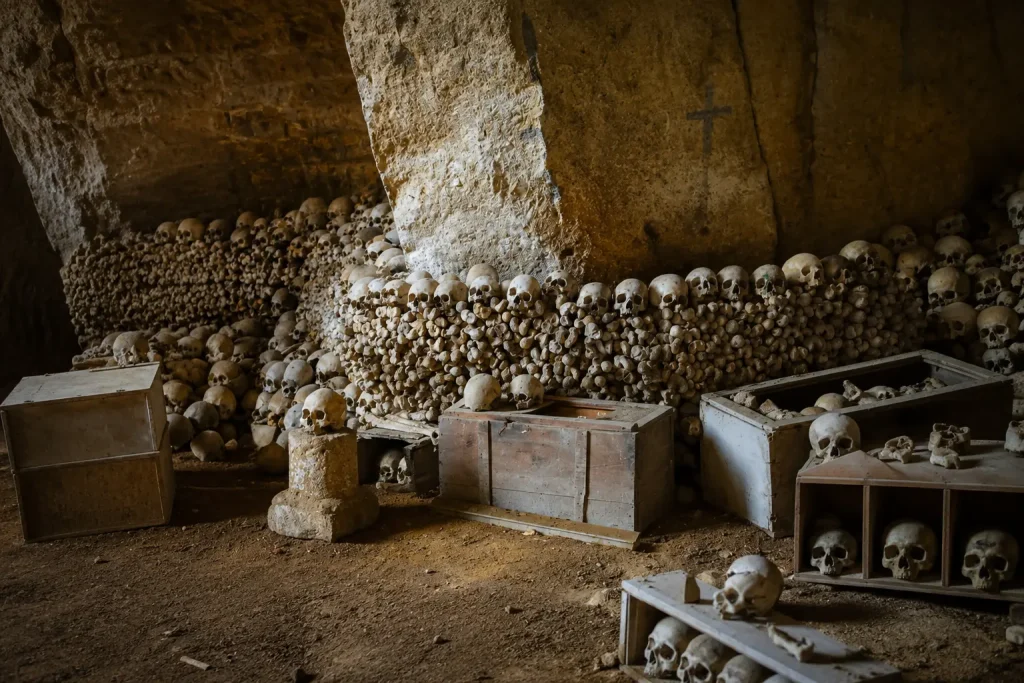
A historic devotional skull arrangement inside Fontanelle Cemetery, one of Naples’ most atmospheric underground ossuaries.
Visiting Fontanelle Cemetery is unlike visiting a conventional museum or catacomb.
The atmosphere is quiet, cool, and contemplative. Surprisingly, many travelers describe the site as peaceful rather than disturbing.
The Three Main Naves
The cave is divided into several enormous sections lined with skulls, bones, and memorial arrangements.
Navata degli Appestati
This “Nave of the Plague Victims” contains many of the remains associated with the 1656 epidemic.
Rows of skulls stretch into the darkness, creating one of the cemetery’s most unforgettable visual scenes.
Navata dei Preti
The “Nave of the Priests” includes clergy remains and more structured burial groupings.
Some areas still preserve traces of personal devotional objects left decades ago.
Navata dei Tribunali
This section historically received remains transferred from other burial sites around Naples.
It offers insight into how the city repeatedly struggled with overcrowded cemeteries and epidemics.
The Atmosphere Inside
Many visitors expect Fontanelle Cemetery to feel oppressive or horrifying.
Instead, the dominant feeling is often stillness.
Soft light filters through the cave entrances. The volcanic stone absorbs sound. Visitors naturally lower their voices.
The site feels less like a haunted attraction and more like a collective memory carved into stone.
This emotional contrast is one reason why many travelers consider Fontanelle Cemetery one of the most meaningful experiences in Naples.
Fontanelle Cemetery vs. Catacombs of San Gennaro
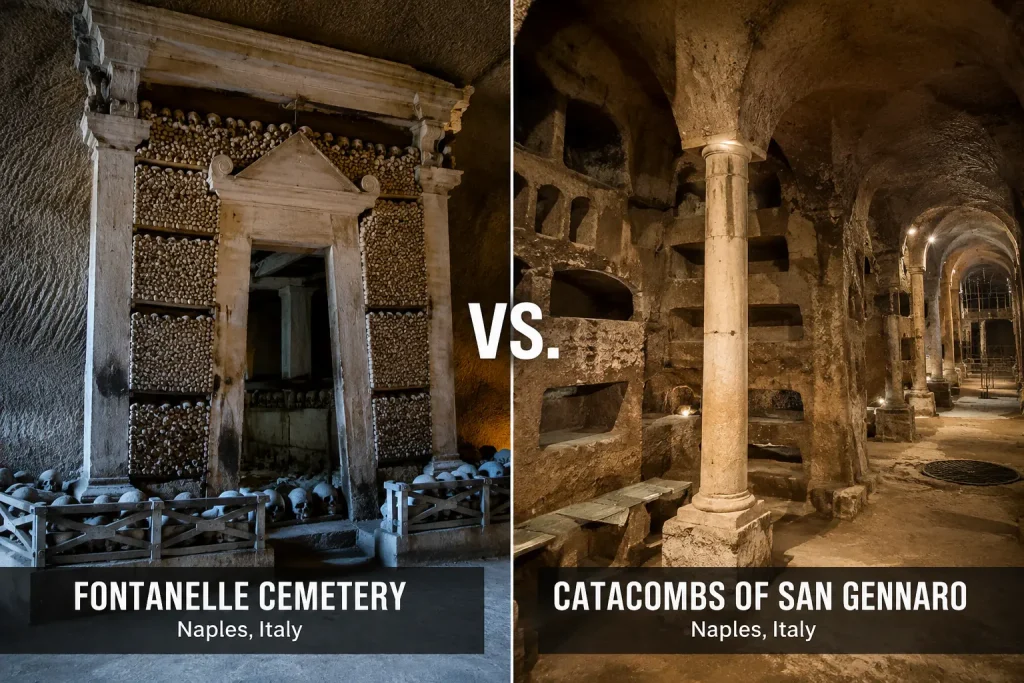
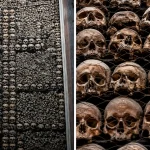
A visual comparison between Fontanelle Cemetery and the Catacombs of San Gennaro — two of Naples’ most fascinating underground historical sites.
Travelers often compare Catacombs of San Gennaro with Fontanelle Cemetery, but the two sites offer very different experiences.
The Catacombs of San Gennaro focus on early Christianity, bishops, frescoes, and formal underground burials. They are architecturally refined and historically tied to the Church.
Fontanelle Cemetery, by contrast, is deeply connected to ordinary Neapolitan life, folk beliefs, epidemics, and collective tragedy.
If the catacombs represent sacred order, Fontanelle represents the emotional soul of Naples itself.
For many travelers interested in Naples dark tourism, visiting both sites creates a powerful contrast.
Practical Visitor Guide
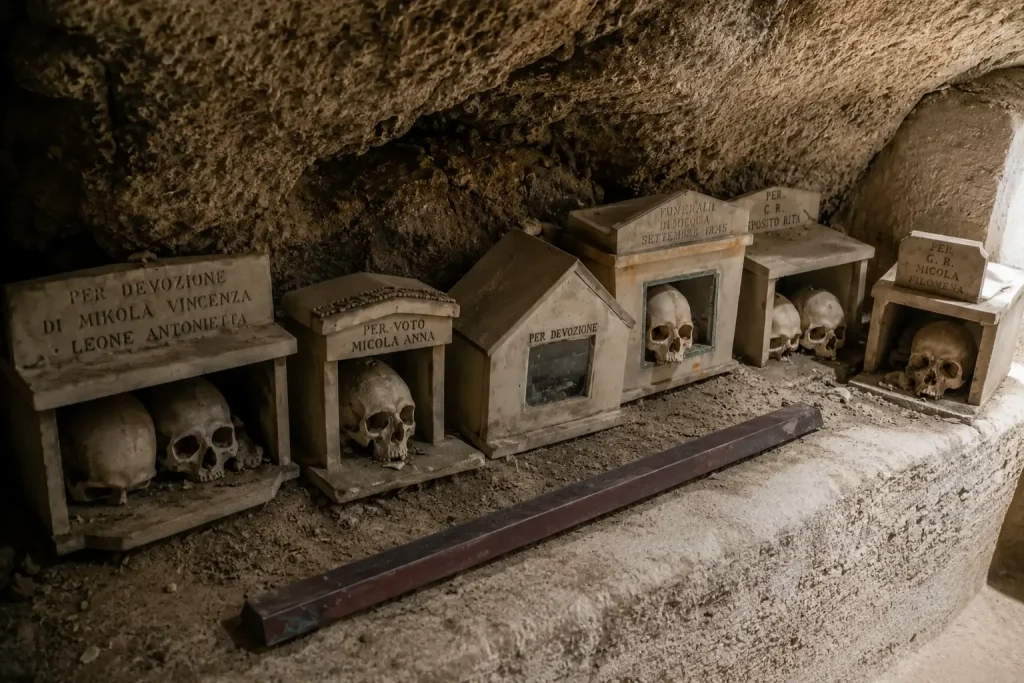
Small devotional skull shrines connected to the anime pezzentelle tradition inside Fontanelle Cemetery in Naples.
Location
Fontanelle Cemetery is located in the heart of Rione Sanità, one of Naples’ most historic and authentic neighborhoods.
The walk to the ossuary itself is part of the experience, passing through narrow streets filled with shrines, markets, laundry lines, and everyday local life.
How to Get to Fontanelle Cemetery
The easiest route is usually:
Metro Line 1 to Materdei Station
Then a short uphill walk into the Sanità district
Taxi access is also straightforward from central Naples.
Since you are already in the Sanità district, do not miss the chance to grab a coffee or a famous “fiocco di neve” pastry at Pasticceria Poppella, located just a short walk away. It is considered a true local institution in Naples.
Opening Hours & Entrance Fees
Opening schedules occasionally change depending on restoration work or local events.
In recent years:
Entry has often been free
Some visits required guided access or reservations
Guided tours were strongly recommended
Before visiting, always check current opening information through official Naples tourism resources or local tour operators.
Should You Visit With a Guide?
Yes — absolutely.
Without context, Fontanelle can appear to be simply a massive collection of bones.
But with a knowledgeable guide, the cemetery transforms into a story about plague, faith, poverty, local identity, superstition, and resilience.
The historical layers are what make the site extraordinary.
Safety & Respect
Although Fontanelle Cemetery is now a major cultural attraction, it remains a place of remembrance and human remains.
Visitors should:
Speak quietly
Avoid theatrical behavior or jokes
Never touch the skulls or bones
Avoid intrusive photography
Treat the site with respect
This is not a horror attraction. It is a deeply important historical and cultural site.
Hidden Gems in Naples
Beyond the pizza shops, chaotic traffic, and famous waterfront views, Naples hides ancient underground cities, forgotten Roman theatres, secret tunnels, mysterious churches, hidden palaces, and candlelit passages buried beneath centuries of history. Here are the hidden gems that reveal the city’s most fascinating and authentic side.
A visit to Fontanelle Cemetery works perfectly as part of a broader exploration of the Sanità district.
Nearby highlights include:
Palazzo dello Spagnolo
Catacombs of San Gennaro
Basilica di Santa Maria della Sanità
Together, these locations reveal a side of Naples most tourists never fully experience — layered, spiritual, chaotic, artistic, and intensely alive.
Fontanelle also pairs naturally with your broader “Hidden Side of Naples: An Insider’s Atlas” guide, creating a full walking route through one of the city’s most fascinating districts.
Why Fontanelle Cemetery Leaves Such a Strong Impression
Naples is a city that has always lived close to extremes — beauty and decay, celebration and grief, faith and superstition.
Nowhere is that duality more visible than at Fontanelle Cemetery.
The ossuary is not memorable because it is shocking. It remains unforgettable because it reveals how generations of ordinary people tried to build a relationship with death that was compassionate rather than fearful.
For many visitors, that emotional honesty becomes the most powerful part of the experience.
FAQ
Is Fontanelle Cemetery scary?
Not in the way many people expect. The atmosphere is mysterious and deeply atmospheric, but most visitors describe it as peaceful, solemn, and reflective rather than frightening.
Is it the same as the Catacombs of San Gennaro?
No. The Catacombs of San Gennaro are ancient Christian burial chambers connected to saints and bishops, while Fontanelle Cemetery is a massive public ossuary tied to epidemics and local folk traditions.
Can I touch the skulls?
Strictly no. Visitors are expected to respect the human remains and avoid physical contact with any skulls or bones.
Is Fontanelle Cemetery worth visiting?
Absolutely — especially for travelers interested in history, anthropology, religion, folklore, or atmospheric hidden places. It is one of the most unique and emotionally powerful experiences in Naples.
How much time do I need?
Most visitors spend: 45–60 minutes for a quick visit Around 90 minutes with a guided tour Combining the ossuary with other Sanità landmarks can easily fill half a day.