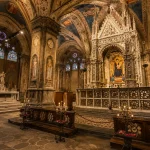
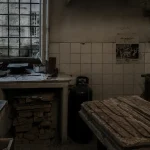
Inside La Specola — Florence’s historic natural history museum known for its mysterious scientific collections and atmospheric galleries.
Most people associate Florence with the flawless marble of Michelangelo and the dreamlike beauty of Botticelli.
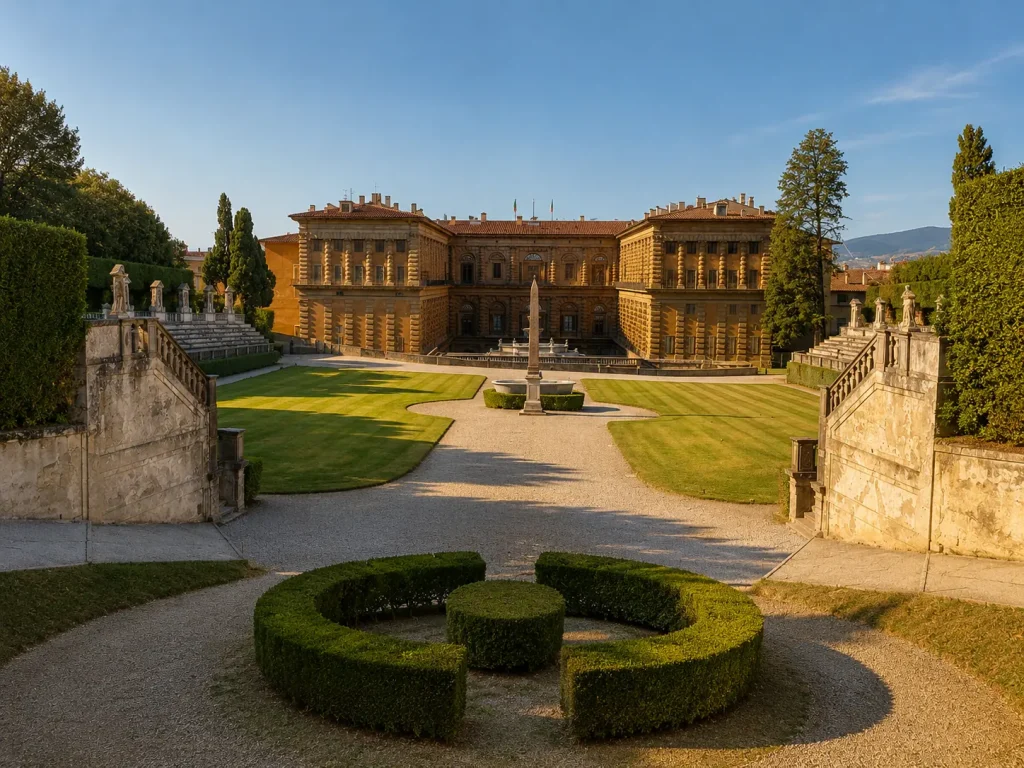
But just a few minutes from Palazzo Pitti, behind the elegant façade of Palazzo Bini Torrigiani, lies a completely different side of the city — unsettling, fascinating, scientific, and strangely beautiful.
This is La Specola — the oldest public science museum in Europe and one of the most unusual museums in Italy.
After a massive multi-year restoration, La Specola has reopened with expanded exhibitions, redesigned galleries, restored historical halls, and an even larger collection than before. Inside, you’ll find hyperrealistic anatomical wax bodies from the 18th century, glittering gemstones collected by the Medici, giant skeletons, exotic animals, botanical wax masterpieces, and rooms that feel closer to a surreal art installation than a traditional museum.
If you are searching for one of the best weird museums in Florence — or simply want to experience a side of the city most tourists completely miss — La Specola may become one of the highlights of your trip.
What is La Specola? The Enlightenment Dream of Grand Duke Pietro Leopoldo
La Specola officially opened in 1775 under the patronage of Grand Duke Pietro Leopoldo of Tuscany, a ruler deeply influenced by Enlightenment ideals.
His goal was radical for the time: create a scientific museum accessible not only to aristocrats and scholars, but also to ordinary citizens.
There was only one condition.
Visitors had to arrive “clean.”
That small historical detail perfectly captures the spirit of the era. Science was becoming public, but social etiquette still mattered enormously.
La Specola is often considered the oldest science museum in Europe open to the general public. Unlike private Renaissance collections hidden behind palace doors, this museum was designed as an educational institution from the very beginning.
The name “La Specola” comes from the Latin word specula, meaning “observatory.” The building once featured an astronomical tower on its roof where scholars studied the sky and celestial movements.
The museum itself occupies the historic Palazzo Bini Torrigiani in Florence’s Oltrarno district — an area already famous for artisan workshops, hidden courtyards, and quieter streets away from the tourist chaos around the Duomo.
What makes La Specola unique is that it combines several worlds at once:
Enlightenment science
Renaissance collecting culture
Medical history
Fine art craftsmanship
Natural history
Anatomical study
Very few museums in Europe blend all of those elements together so seamlessly.
And very few museums leave visitors saying both “That was beautiful” and “That was slightly terrifying” within the same hour.
The Grand Reopening: What’s New at La Specola?
For years, many travelers arrived in Florence only to discover that La Specola was partially closed or under restoration.
That has now changed.
After an extensive renovation and modernization project, the museum reopened with expanded exhibitions, improved visitor routes, restored historical interiors, and 13 new exhibition halls.
The reopening transformed La Specola from an already fascinating niche museum into one of the most ambitious cultural spaces in Florence.
The biggest change was the complete transfer of the museum’s mineralogy collection to the main complex on Via Romana. Previously displayed separately on Via La Pira, these collections are now fully integrated into the visitor experience.
New additions include:
Completely redesigned mineralogy halls
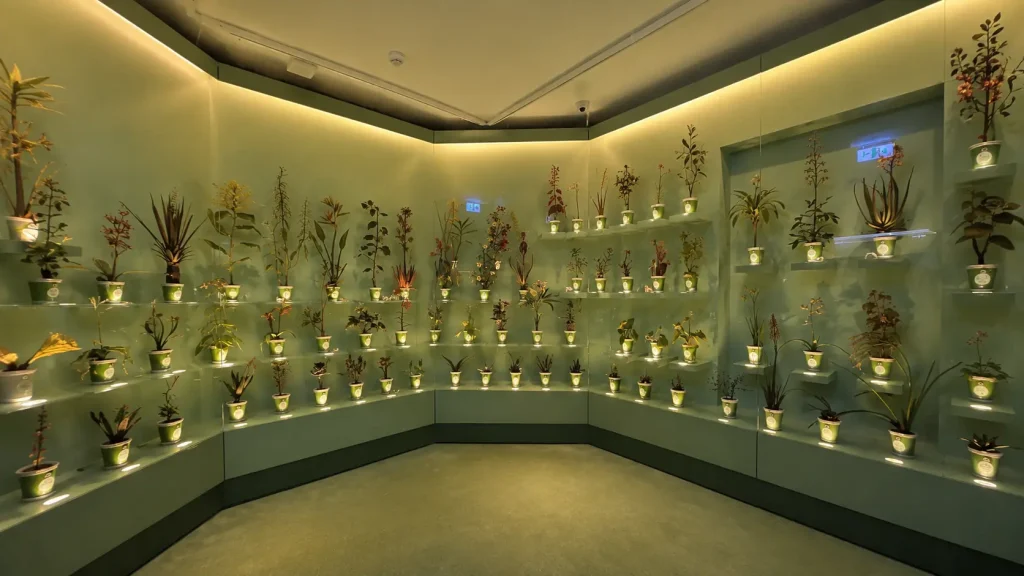
Expanded botanical wax displays
Updated zoological galleries
Restored historical interiors
Improved climate control systems
Modern lighting installations
Interactive multimedia sections
A new museum bookstore
A café area for visitors
The museum also improved accessibility and navigation, making the experience far easier for international visitors.
Importantly, the renovation preserved the historical atmosphere rather than replacing it with a sterile “modern museum” aesthetic. Many rooms still feel deeply connected to the 18th and 19th centuries.
That balance is part of La Specola’s magic.
You are not simply looking at scientific objects.
You are walking through the history of how humans tried to understand the body, nature, geology, and the universe itself.
What to See Inside: From Creepy Anatomical Waxes to Sparkling Minerals
La Specola is much larger than many visitors expect.
You could easily spend two to three hours inside if you enjoy museums, photography, science, or unusual historical collections.
The museum experience constantly shifts between beauty and discomfort — which is exactly why it becomes so memorable.
Botanical Waxes and the Tribuna di Galileo
The botanical wax models are often overshadowed by the anatomical collection.
That’s a mistake.
These pieces are astonishing.
Flowers, fruits, plants, and seeds were recreated in wax with microscopic precision for scientific teaching.
Some visitors walk past them too quickly before realizing they are not real plants.
The craftsmanship is extraordinary.
The museum also contains the spectacular Tribuna di Galileo — one of the most beautiful rooms inside La Specola.
Built in the 19th century to honor Galileo Galilei, the hall combines science, art, architecture, sculpture, and symbolism into one monumental space.
Expect:
Frescoes
Marble decoration
Scientific allegories
Statues of famous scientists
Elaborate neoclassical design
The room feels almost ceremonial — as if science itself had become a form of religion during the Enlightenment era.
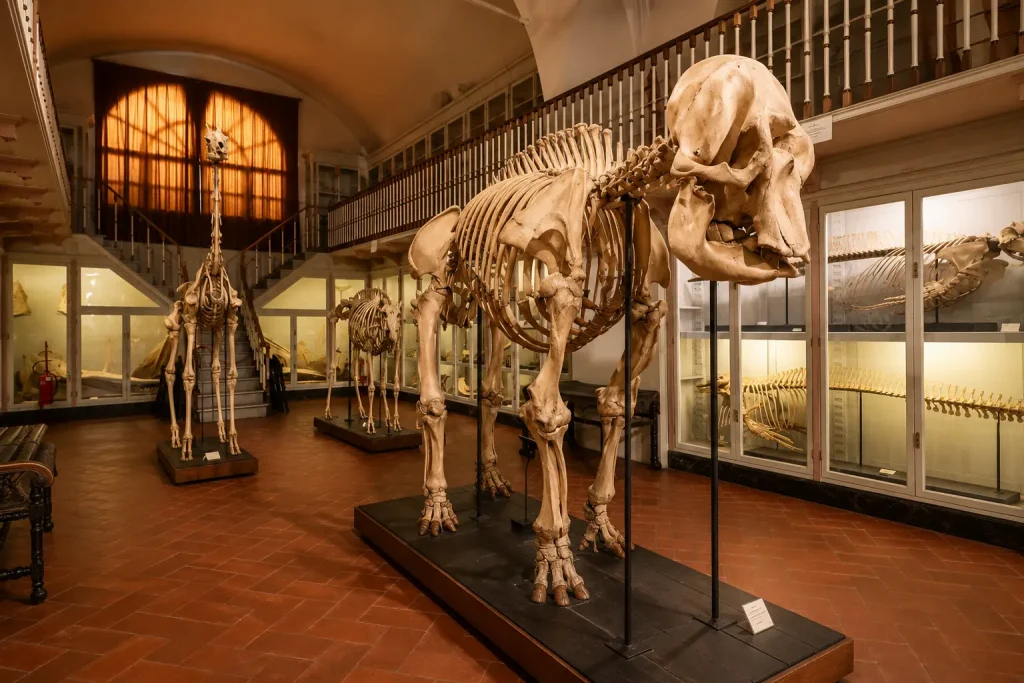
Zoology and the Skeleton Hall (Salone degli Scheletri)
The zoological collections at La Specola are enormous.
You’ll find thousands of preserved animals from across the world, displayed in historical cabinets that still retain their old scientific-museum atmosphere.
Some sections feel almost Victorian.
Others feel closer to a cabinet of curiosities.
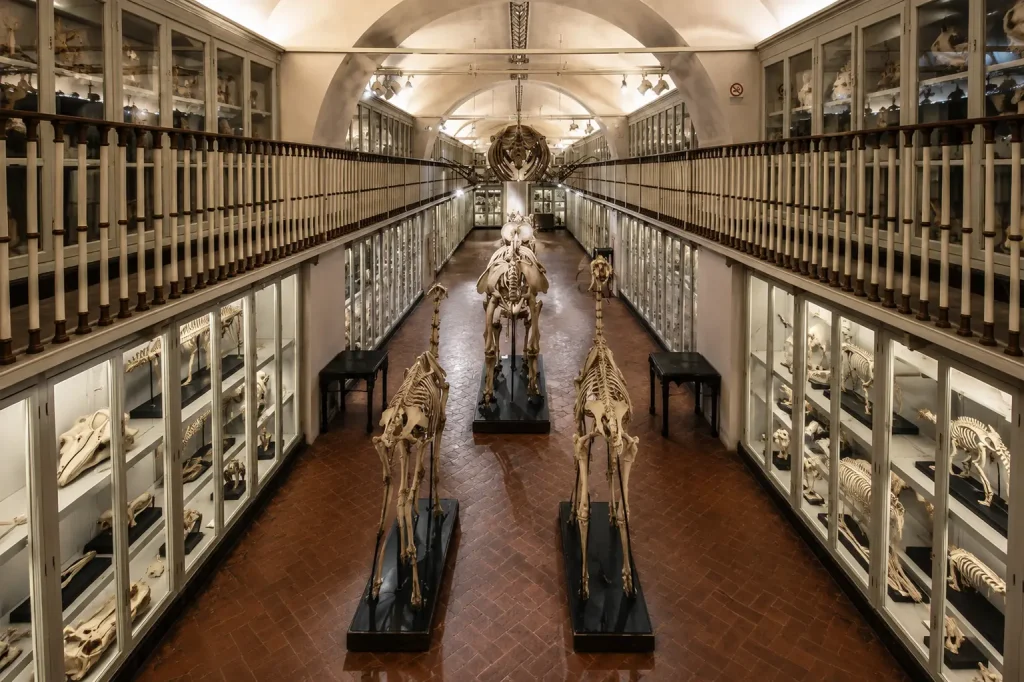
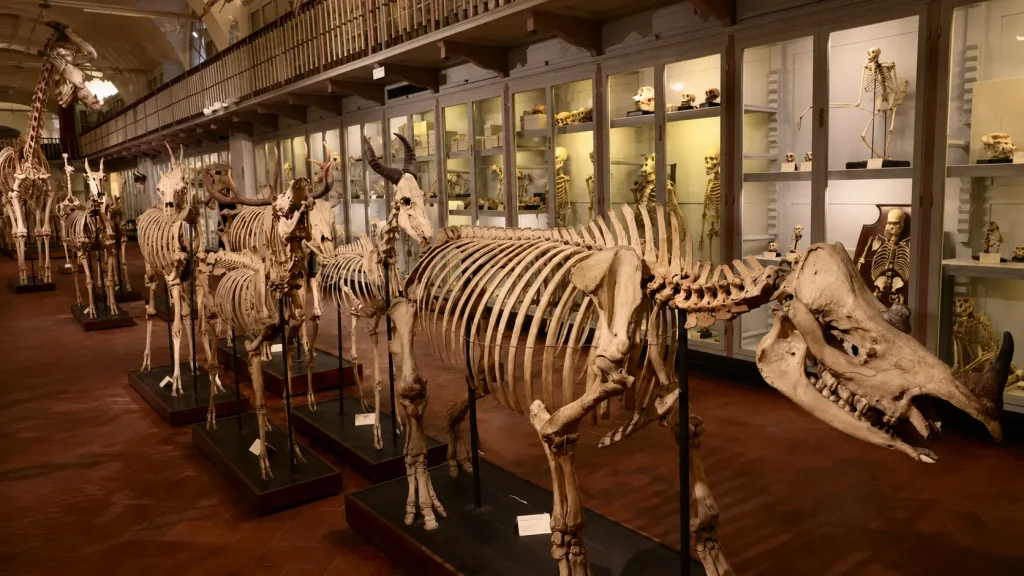
The most dramatic area is the famous Salone degli Scheletri — the Hall of Skeletons.
Towering skeletons line the room in an almost theatrical arrangement.
It is monumental, eerie, and incredibly photogenic.
One of the museum’s most famous stories involves the Medici hippopotamus.
Yes — an actual hippopotamus once lived in Florence.
The animal was kept in the Boboli Gardens as an exotic Medici curiosity centuries ago, and its preserved remains eventually became part of La Specola’s collections.
That bizarre historical detail perfectly captures Florence during the Medici era.
This was a city where rulers collected not only paintings and sculptures, but also rare animals, scientific instruments, fossils, and wonders from around the world.
The New Mineralogy Halls: Gems and Treasures from Space
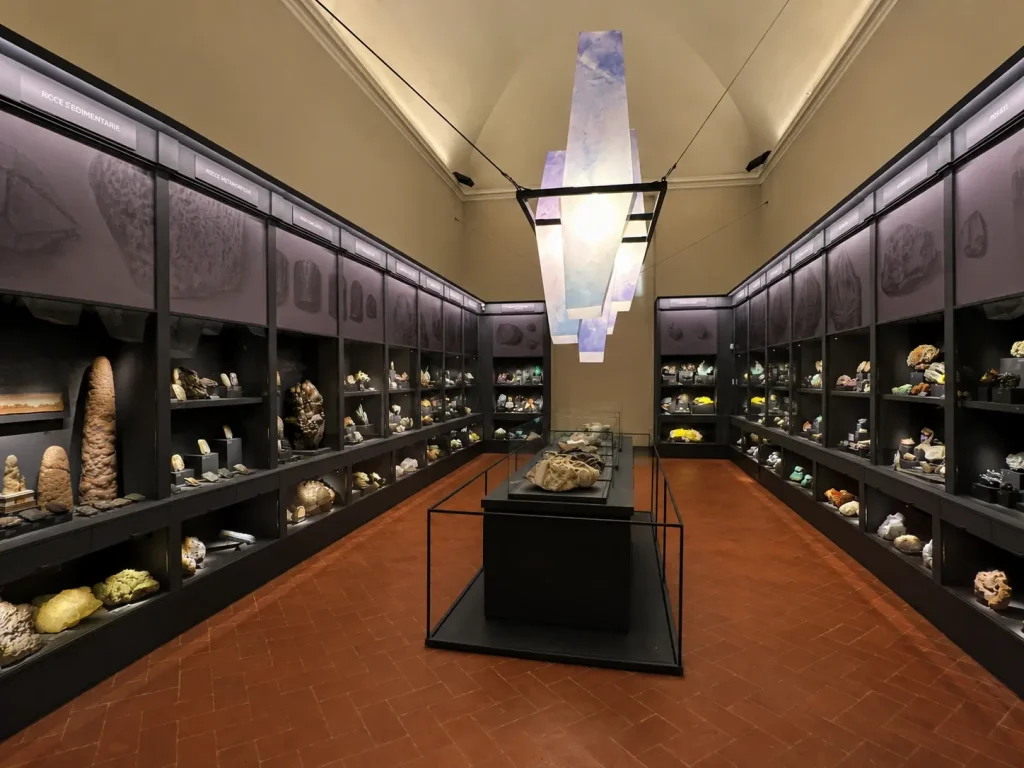
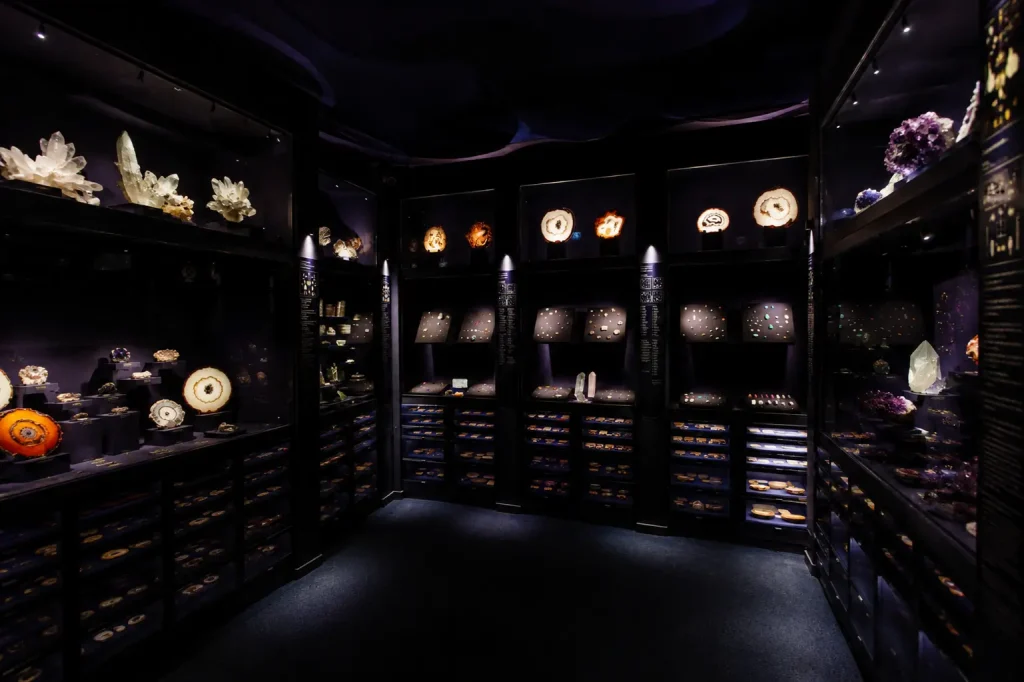
One of the most impressive additions after the reopening is the expanded mineralogy collection.
The new halls feel dramatically different from the anatomical galleries.
Instead of flesh and anatomy, you enter a world of:
Glowing crystals
Rare gemstones
Meteorites
Volcanic minerals
Enormous geodes
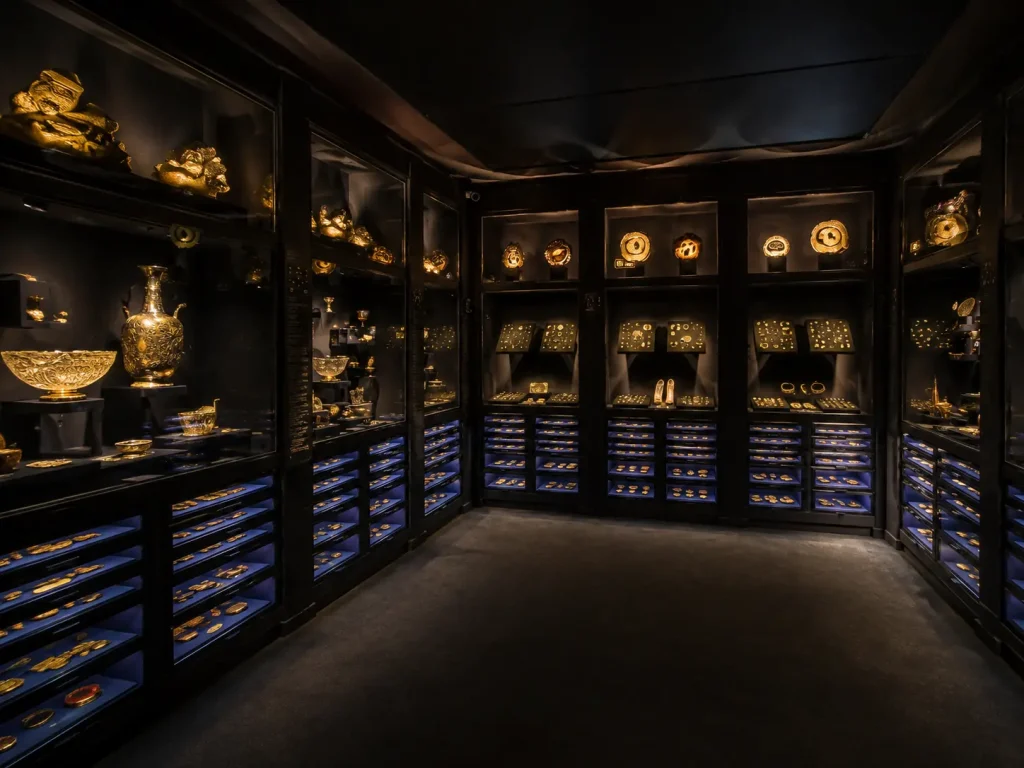
Precious Medici objects
Lighting and sound design create an almost cosmic atmosphere in some sections.
The museum’s meteorite displays are particularly fascinating because they remind visitors that some of these rocks are literally older than Earth itself.
One highlight is the extraordinary Medici jade vase — carved from a single massive piece of jade.
The object demonstrates how scientific collecting and aristocratic luxury often overlapped during the Renaissance and Enlightenment periods.
The mineral halls also help balance the emotional intensity of the anatomical section.
After seeing exposed organs and dissected wax bodies, sparkling amethysts and meteorites suddenly feel strangely calming.
The Anatomical Waxes: Masterpieces of Science and Art
This is the section that made La Specola world-famous.
And yes — it is every bit as strange as people say.
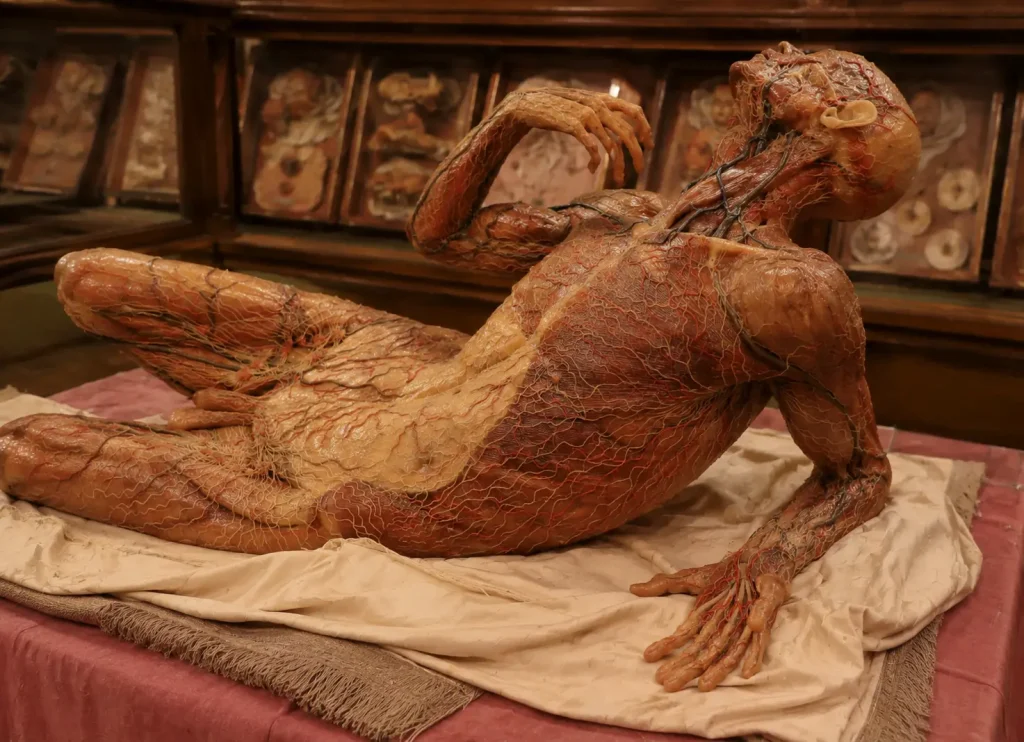
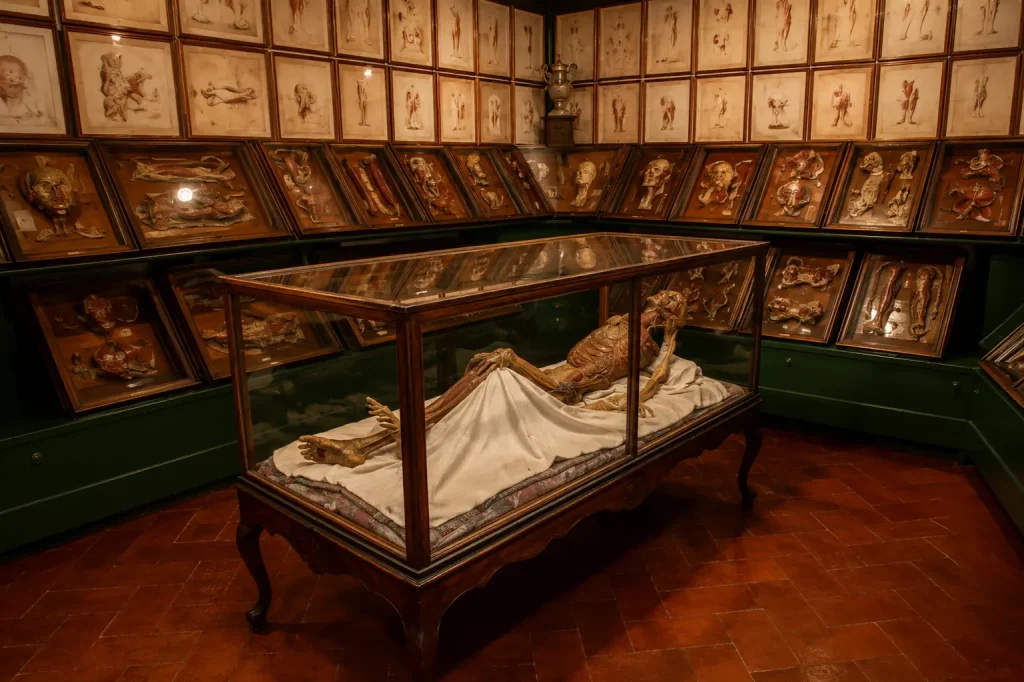
The anatomical wax collection contains hundreds of hyperrealistic human models created during the 18th century by Clemente Susini and his workshop.
At the time, universities faced a major problem:
Human dissection was difficult, expensive, temporary, and controversial.
Wax solved everything.
Artists and anatomists collaborated to create astonishingly accurate educational models that could survive indefinitely.
The results are almost impossible to forget. Skin, veins, muscles, organs, nerves, tendons, and arteries were recreated with disturbing precision, while some models can even be opened layer by layer like anatomical puzzles.
The most famous figure is the legendary “Anatomical Venus.” She appears almost peacefully asleep, with flowing hair, delicate facial features, a pearl necklace, and an elegant pose. But beneath the surface, her torso opens to reveal muscles, organs, reproductive anatomy, and intricate internal systems.
Beautiful and horrifying at the same time.
Many visitors compare the experience to seeing a Renaissance sculpture merged with a medical textbook.
The craftsmanship is so extraordinary that some modern viewers initially assume the models are contemporary creations.
They are not.
Most were made over 200 years ago.
Little-known fact: some wax artists reportedly worked directly beside decomposing cadavers during summer heat in Florence to achieve maximum anatomical accuracy.
That level of dedication explains why the collection still feels shockingly realistic today.
If you enjoy dark tourism, medical history, unusual museums, or hidden Florence experiences, this section alone makes La Specola worth visiting.
Collector’s Pro-Tip for Photographers
The historical glass cabinets inside La Specola are beautiful but notoriously reflective.
If you want clean photos of the anatomical waxes or the Hall of Skeletons without capturing your own reflection, wear dark clothing and place your camera lens directly against the glass whenever possible. A rubber lens hood also helps block ambient room light and dramatically reduces glare.
The trick works especially well in the darker anatomical galleries, where reflections can otherwise ruin close-up shots.
Hidden Gems in Florence
Beyond the Duomo and crowded piazzas, Florence hides secret pharmacies, forgotten towers, quiet libraries, surreal gardens, and Renaissance mysteries most tourists never see. Here are 11 hidden gems that reveal the city’s true soul.
How to Visit La Specola: Tickets, Booking, and Logistics
La Specola is located at Via Romana 23 in the Oltrarno district, just behind Palazzo Pitti.
It’s surprisingly easy to reach from central Florence.
And unlike the Uffizi or Accademia, crowds here are usually manageable even during high season.
That alone makes the experience far more relaxed.
Ticket Prices and Booking Options
Current standard admission prices are approximately:
Standard ticket: €10
Reduced ticket: €5
However, there is an important 2026 detail travelers should know.
The basic museum ticket usually includes access to:
Zoology collections
Mineralogy halls
Botanical waxes
But certain fragile historical spaces — including parts of the anatomical wax collection, the Hall of Skeletons, and the Torrino tower — may require timed entry slots or advance reservations.
This system exists primarily to protect delicate interiors and sensitive historical objects.
If La Specola is high on your Florence itinerary, booking ahead is strongly recommended, especially during summer and holiday periods.
Also worth noting:
This museum is significantly cooler than many historic Florence attractions during July and August thanks to updated climate systems introduced during the renovation.
That becomes a major advantage during brutal Tuscan heat waves.
How to Get to La Specola from Central Florence
From Ponte Vecchio, the walk takes roughly 10 minutes.
The route itself is beautiful:
Cross the bridge
Pass through the Oltrarno district
Walk beside Palazzo Pitti
Continue along Via Romana
You can also combine the visit with Boboli Gardens since the locations sit extremely close to one another.
Public transport options include:
Bus 11
Bus 36
Bus 37
The nearest stops are usually Pitti or Calza.
The Verdict: Is La Specola Worth It?
Absolutely — but not for everyone.
If your ideal Florence trip consists only of Renaissance paintings, luxury shopping, and postcard views, La Specola may feel too strange.
But if you enjoy:
Unusual museums
Hidden Florence attractions
Science history
Dark tourism
Anatomy
Curiosities
Rare collections
Places with strong atmosphere
then La Specola is one of the best alternative things to do in Florence.
The museum offers something increasingly rare in modern tourism:
A genuinely unforgettable experience.
Pros:
One of the world’s most unique anatomical collections
Recently restored galleries
Excellent summer escape from heat
Far fewer crowds than major museums
Extraordinary historical atmosphere
Fantastic for photography lovers and curious travelers
Cons:
Anatomical waxes can be genuinely disturbing
Some sections may overwhelm sensitive visitors
Very young children may find parts frightening
Still, that emotional reaction is partly why La Specola matters.
It reminds visitors that Florence was not only a city of painters and sculptors.
It was also a city of scientists, anatomists, astronomers, collectors, and radical thinkers trying to understand life itself.
What to See Next Nearby
One of the best things about La Specola is how easily it connects with other major Florence attractions.
Palazzo Pitti & Boboli Gardens
The Vasari Corridor ends near the magnificent Boboli Gardens, opening into one of the most elegant Renaissance landscapes in Florence.
Palazzo Pitti and Boboli Gardens are only a couple of minutes away on foot.
Together, they create an ideal half-day itinerary mixing science, Medici history, palace architecture, and gardens.
The Vasari Corridor
As the sun sets over Florence, the Vasari Corridor reveals one of the most breathtaking hidden perspectives above the Arno River.
The legendary Vasari Corridor historically connects the Uffizi area with Palazzo Pitti and the Boboli complex, making La Specola an easy addition to a larger Renaissance walking route.
Santo Spirito District
Sunny day in the Santo Spirito district, one of Florence’s most authentic and atmospheric neighborhoods.
After the museum, head into the Santo Spirito neighborhood.
This remains one of the most atmospheric parts of Oltrarno, filled with artisan workshops, quieter piazzas, wine bars, cafés, and far more local energy than the overcrowded historic center.
It’s the perfect place to decompress after spending an hour staring at dissected wax bodies and giant skeletons.
In Florence, beauty was never separated from curiosity. And nowhere is that more visible than inside La Specola — where Renaissance elegance meets the unsettling anatomy of the human body.
FAQ About La Specola Florence
Is La Specola worth visiting in Florence?
Absolutely — especially if you enjoy unusual museums, science history, anatomy, natural history, or hidden attractions beyond Florence’s classic Renaissance landmarks. La Specola offers one of the most unique museum experiences in Italy, combining anatomical waxes, giant skeletons, minerals, zoological collections, and Enlightenment-era scientific history in a single museum.
What is La Specola famous for?
La Specola is world-famous for its 18th-century anatomical wax models created by Clemente Susini and his workshop. The museum is also known for the Salone degli Scheletri (Hall of Skeletons), rare mineral collections, botanical waxes, and its status as one of Europe’s oldest public science museums.
How long does it take to visit La Specola?
Most visitors spend between 1.5 and 3 hours inside the museum, depending on their interest in anatomy, zoology, mineralogy, and photography. The anatomical wax collection alone can easily take over an hour to explore carefully.
Is La Specola suitable for children?
Partially. The zoological halls and mineral collections are generally family-friendly, but the anatomical wax galleries can be disturbing for younger children due to the realistic representation of muscles, organs, and dissected human bodies. Parents should use discretion depending on the child’s age and sensitivity.
Where is La Specola located?
La Specola is located on Via Romana in Florence’s Oltrarno district, just a short walk from Palazzo Pitti and Boboli Gardens.
Do you need to book La Specola tickets in advance?
Advance booking is recommended during high season, especially for timed-entry sections like the anatomical wax galleries or special exhibition areas. While La Specola is usually less crowded than the Uffizi or Accademia, some parts of the museum have limited visitor capacity.
Can you take photos inside La Specola?
Photography is generally allowed in many parts of the museum, although flash photography may be restricted in sensitive exhibition areas. The historical glass cabinets can create strong reflections, so wearing dark clothing and positioning your camera close to the glass helps capture cleaner photos.
What is the Anatomical Venus at La Specola?
The Anatomical Venus is the museum’s most famous wax model — a hyperrealistic 18th-century female anatomical figure designed for medical education. Beneath her elegant appearance are removable layers revealing muscles, organs, veins, and internal anatomy with extraordinary scientific precision.
Is La Specola one of the oldest museums in Europe?
Yes. La Specola opened in 1775 and is widely considered one of the oldest public science museums in Europe. It was created during the Enlightenment under Grand Duke Pietro Leopoldo to make scientific knowledge accessible to the public.
What can you see near La Specola?
La Specola is surrounded by some of Florence’s best attractions, including Palazzo Pitti, Boboli Gardens, the Vasari Corridor area, and the atmospheric Santo Spirito neighborhood filled with artisan workshops, cafés, and traditional trattorias.