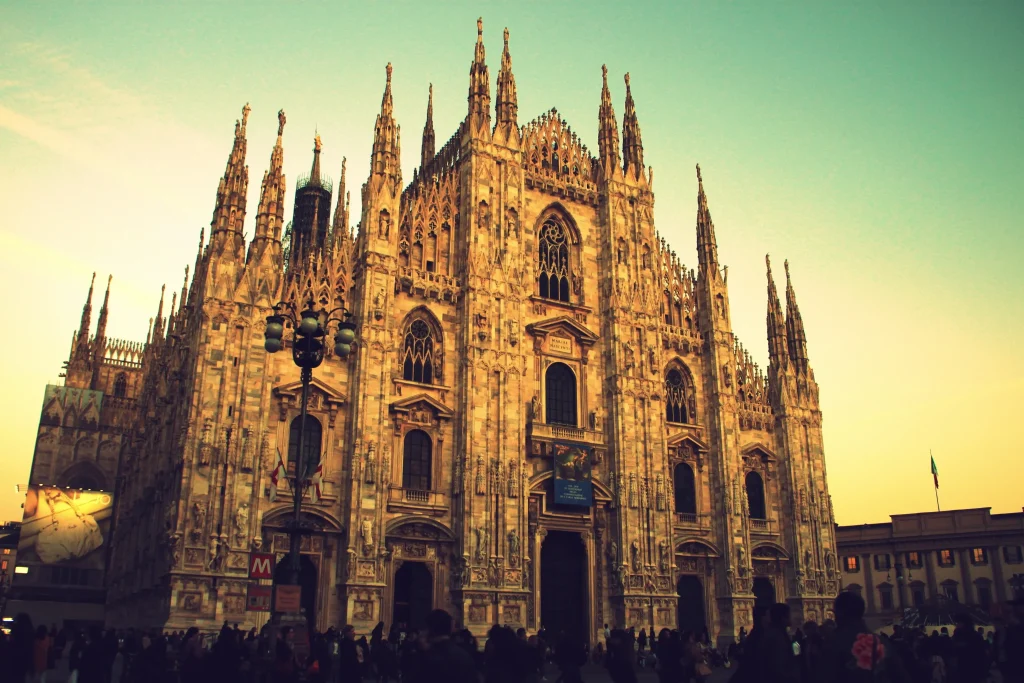
Milan is often associated with fashion runways, luxury boutiques, business districts, and the magnificent Duomo. Millions of visitors arrive each year to admire designer storefronts, Leonardo da Vinci’s masterpieces, and the elegant streets of Italy’s financial capital.
Yet beyond the glamorous image lies a completely different city. Hidden behind discreet church facades, inside quiet residential neighborhoods, beneath busy streets, and along forgotten canals, Milan preserves stories that many tourists never discover. Here you’ll find chapels lined with human skulls, secret flamingos living in private gardens, Renaissance optical illusions, underground crypts built over ancient Roman roads, and some of the most astonishing frescoes in Italy.
These hidden gems reveal a side of Milan that feels far older, stranger, and more mysterious than the polished city portrayed in travel brochures. If you’re looking for unusual things to do in Milan beyond the Duomo and Galleria Vittorio Emanuele II, these places offer an unforgettable alternative.
San Bernardino alle Ossa: The Chapel of Bones
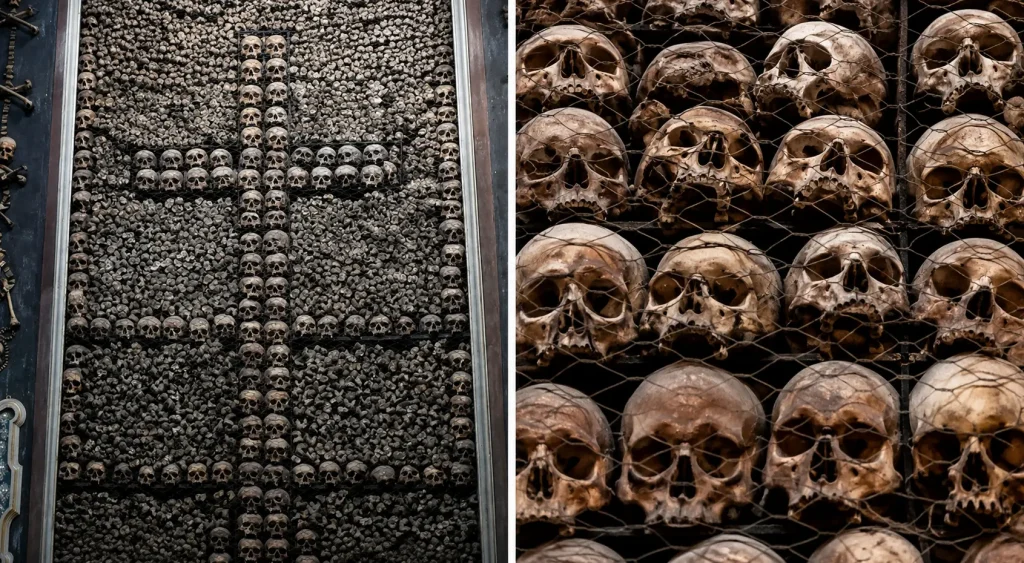
The eerie interior of San Bernardino alle Ossa, Milan’s famous Bone Chapel, featuring decorative walls made from human skulls and bones arranged in intricate Baroque patterns.
The Eerie Art of the Ossuary
Just a few minutes from the crowded Piazza del Duomo stands one of Milan’s most unsettling and fascinating landmarks. At first glance, San Bernardino alle Ossa appears to be an ordinary church tucked away on a quiet square. Most visitors walk past without realizing what waits behind its walls.
The true attraction is the ossuary chapel connected to the church. Step inside and you’ll immediately understand why it has become one of Milan’s most talked-about hidden places. The walls are covered with carefully arranged human bones and skulls that form intricate decorative patterns. Vertebrae, ribs, and femurs create elaborate Baroque designs that transform mortality into art.
A Medieval Crisis Turned Baroque Masterpiece
The chapel dates back to the 13th century when the nearby cemetery ran out of burial space. Human remains were transferred to a special chamber, which gradually evolved into the ornate ossuary visible today. During later renovations, architects incorporated the bones directly into the decorative scheme of the chapel.
The contrast with modern Milan is striking. Outside, luxury stores, trams, and office workers define daily life. Inside, visitors encounter a powerful reminder of mortality that feels more at home in medieval Europe than in Italy’s fashion capital.
Myths & Hidden Stories: The Dancing Skeletons
According to local folklore, a young girl dressed in white emerges from the chapel every year on the night of November 2nd, All Souls’ Day. It is said that she dances among the bones until dawn before disappearing again. While there is no historical evidence for the tale, it remains one of Milan’s most enduring ghost stories.
Insider Tip: Many first-time visitors accidentally miss the ossuary. Walk through the main church first and follow the narrow corridor on the right to reach the chapel.
Want to Explore More?
The bone chapel hides far more stories than most visitors realize. Discover its full history, origins, symbolism, hidden artistic details, and photography advice in our complete guide to [San Bernardino alle Ossa].
Villa Invernizzi: The Secret Flamingos of Milan
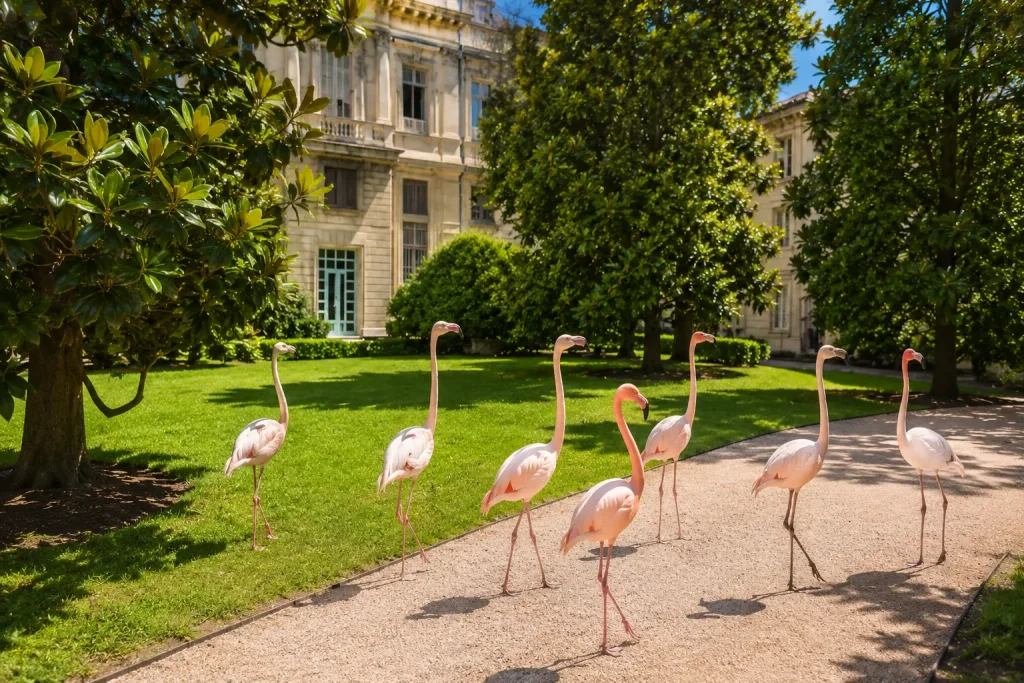
The famous pink flamingos of Villa Invernizzi wander through the elegant private garden, creating one of Milan’s most unexpected and photogenic hidden attractions.
An Unexpected Sanctuary in the Fashion Capital
One of the last things anyone expects to find in central Milan is a flock of pink flamingos. Yet inside the elegant Quadrilatero del Silenzio—literally the “Quadrilateral of Silence”—these exotic birds have quietly lived for decades behind the gates of Villa Invernizzi.
The neighborhood itself is worth exploring. Unlike the busy shopping streets nearby, the area feels almost frozen in time. Liberty-style mansions, tree-lined avenues, and remarkably little traffic create an atmosphere rarely found in major European cities.
Peering Through the Iron Gates
The flamingos live within the private gardens of Villa Invernizzi, a beautiful early twentieth-century residence hidden behind iron fences. Although visitors cannot enter the property, the birds are often clearly visible from the street, gracefully walking around ponds and manicured lawns.
The sight is surreal. In one direction stands a sophisticated Milanese villa. In the other, bright pink flamingos appear as if transported directly from Africa or South America.
Myths & Hidden Stories: The Cheese King’s Passion
The birds were introduced by Romeo Invernizzi, the wealthy dairy entrepreneur known throughout Italy as the “Cheese King.” Fascinated by flamingos, he created a carefully controlled environment to support them. Their diet was specifically managed to preserve their distinctive pink coloration, a protective curation practice that continues to this day.
Opening Hours: Visible from the street daily (Note: The villa interior and private gardens remain strictly closed to the public)
Cost: Free
Insider Tip: Visit early in the morning when the neighborhood is at its quietest and soft morning sunlight perfectly illuminates the garden pool.
Want to Explore More?
Curious about the history of the villa, the eccentricities of the Invernizzi family, and Milan’s most unexpected residents? Explore our full [Villa Invernizzi Guide].
San Maurizio al Monastero Maggiore: The “Sistine Chapel of Milan”
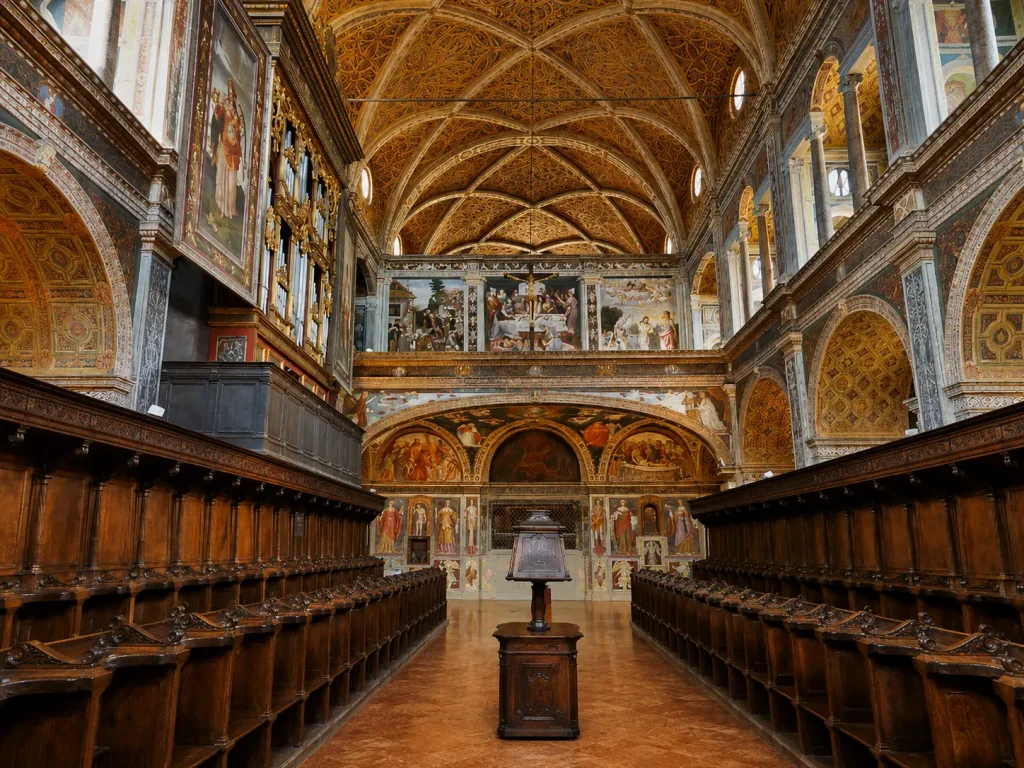
The breathtaking interior of San Maurizio al Monastero Maggiore, often called the “Sistine Chapel of Milan,” showcases magnificent Renaissance frescoes covering nearly every surface of the church.
The Great Renaissance Illusion
Many visitors spend hours waiting to see Leonardo da Vinci’s Last Supper while completely overlooking another artistic masterpiece nearby. San Maurizio al Monastero Maggiore hides behind an unassuming facade along Corso Magenta. From outside, nothing suggests that the church contains one of the most spectacular Renaissance interiors in Italy.
Every available surface is covered with frescoes. Vibrant biblical scenes, saints, decorative motifs, and architectural illusions transform the building into a breathtaking work of art. The church is often called the “Sistine Chapel of Milan” because of the sheer scale and quality of its painted decoration.
The Hall of the Cloistered Nuns
The majority of the frescoes were created by members of the Luini family, whose artistic style was heavily influenced by Leonardo da Vinci. Their mastery of color, expression, and composition remains extraordinary even by Italian Renaissance standards.
A unique feature of the church is its historical division. One section served ordinary worshippers, while another was reserved for cloistered Benedictine nuns who lived separated from the outside world. Today, visitors can walk through both spaces and experience a remarkable contrast between public worship and private monastic life.
Myths & Hidden Stories: The Unicorns of Noah’s Ark
Look closely at Aurelio Luini’s depiction of Noah’s Ark. Among the many animals boarding the vessel are several unicorns—mythical creatures included alongside lions, horses, and other real animals. Their presence reflects Renaissance beliefs that unicorns were real, exotic creatures that had simply managed to evade discovery.
Opening Hours: Tuesday–Sunday (10:00 AM–5:30 PM), Closed on Mondays
Cost: Free entry
Insider Tip: Don’t miss the hidden passage through the dividing wall that leads into the former nuns’ section—it contains the most impressive artwork in the entire complex.
Want to Explore More?
Planning a visit? Discover the frescoes, secret rooms, Leonardo’s artistic circle, and structural details most visitors miss in our complete [San Maurizio Guide].
Santa Maria presso San Satiro: Bramante’s Optical Illusion
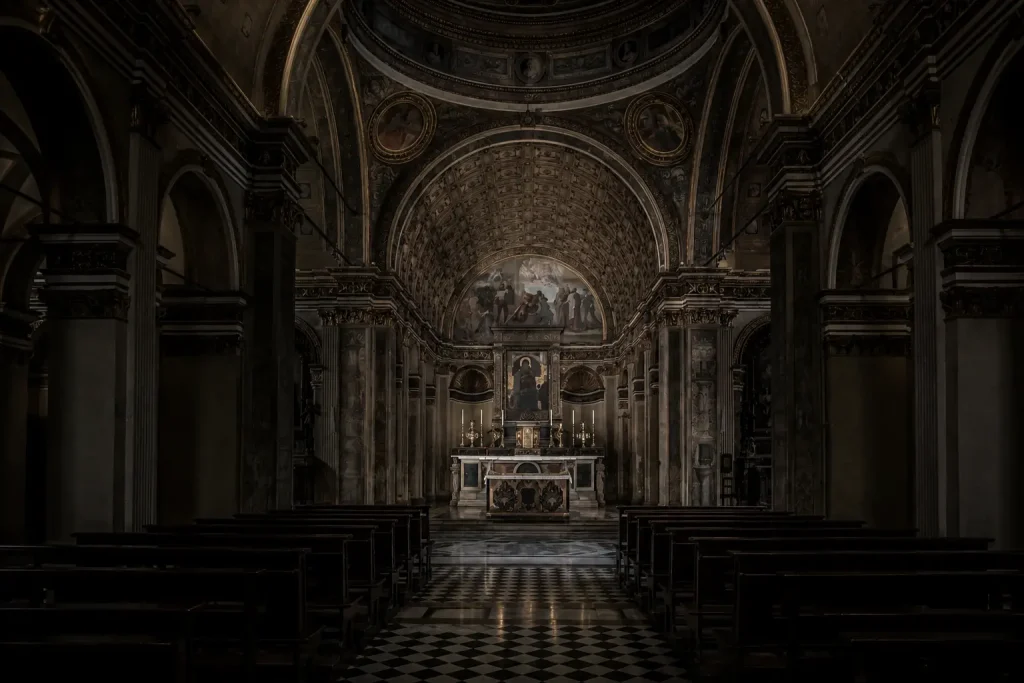
The mysterious interior of Santa Maria presso San Satiro, where Donato Bramante created one of the most remarkable optical illusions of the Renaissance, making a shallow apse appear dramatically deeper than it really is.
The 90-Centimeter Spatial Miracle
Few buildings demonstrate Renaissance ingenuity better than Santa Maria presso San Satiro. When architect Donato Bramante was commissioned to redesign the church in the late fifteenth century, he faced a major problem. A busy street running directly behind the building left almost no physical room for a traditional, deep altar apse.
Instead of accepting defeat, Bramante devised one of the greatest optical illusions in architectural history. Standing in the center aisle, visitors see what appears to be a deep, monumental, and richly decorated choir extending behind the altar. The space seems several meters long and perfectly proportioned.
Collapsing the Architectural Illusion
Walk closer, however, and the grand illusion completely collapses. The entire structure is actually a flat relief only around 90 centimeters deep. Through forced perspective, strategic sculptural relief, and careful geometry, Bramante created the visual impression of a full nine-meter apse where virtually no space existed at all. More than five centuries later, the illusion remains astonishingly effective.
Myths & Hidden Stories: The Exact Perspective Mark
Many architectural historians consider San Satiro one of the earliest and most successful examples of forced perspective ever created. The illusion works perfectly only when viewed from a single, precise point in the nave, demonstrating Bramante’s extraordinary mathematical understanding of human perception.
Opening Hours: Daily (9:30 AM–5:30 PM), visits restricted during active religious services
Cost: Free
Insider Tip: Find the small marker disk in the center aisle and view the altar from that exact position before walking forward to look at the wall sideways.
Want to Explore More?
Want to see how Bramante fooled generations of visitors? Read our detailed architectural analysis and visitor tips in our guide to [Milan’s Most Famous Architectural Illusion].
Crypt of San Sepolcro: The True Center of Mediolanum
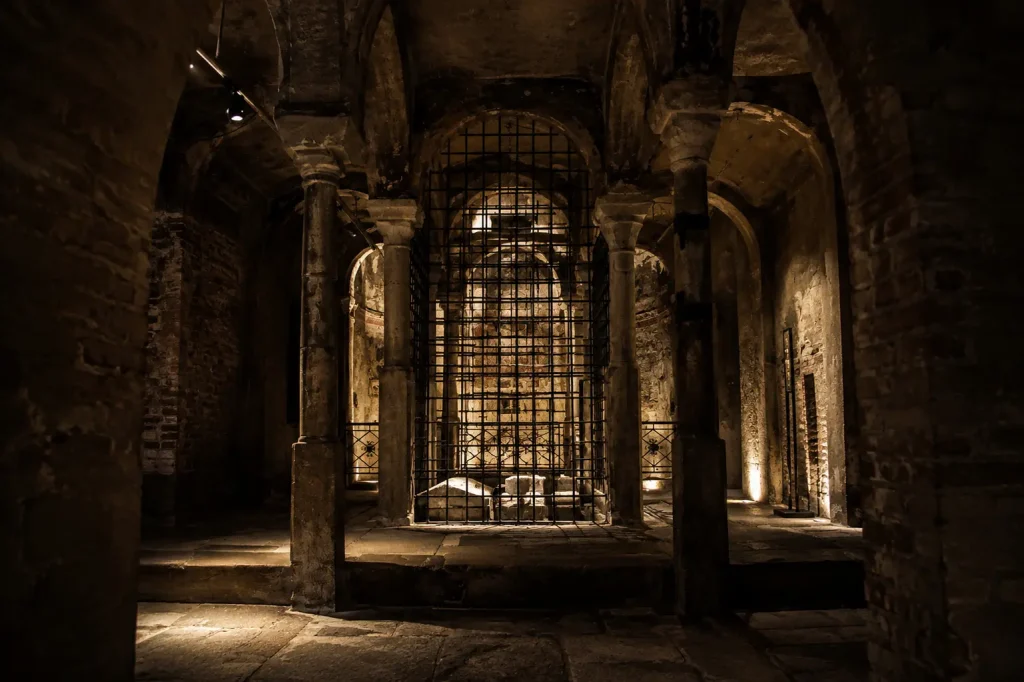
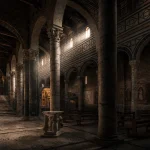
The ancient Crypt of San Sepolcro beneath Milan, where medieval architecture, Roman history, and centuries of mystery converge beneath the modern city.
Descending into Milan’s Deepest History
Beneath modern Milan lies another city entirely. The Crypt of San Sepolcro offers one of the most atmospheric journeys into the city’s ancient past. Descending underground feels like stepping directly through centuries of structural history.
The crypt dates largely to the eleventh century, though parts of the site occupy ground that was already highly important during Roman times. Massive stone columns support low vaulted ceilings illuminated by carefully positioned lights that create a solemn, reverent atmosphere.
Walking on Ancient Imperial Forums
What makes the site especially remarkable is its floor. The paving stones beneath visitors’ feet originated from the ancient Roman Forum of Mediolanum. Long before Milan became Italy’s financial powerhouse, Roman governors, merchants, and emperors walked across these exact same stones. The crypt connects medieval Milan directly to its imperial Roman predecessor, creating one of the city’s most tangible historical experiences.
Myths & Hidden Stories: Leonardo’s Sacred Map
Leonardo da Vinci was utterly fascinated by this site. In his famous Codex Atlanticus, he sketched the crypt and explicitly referred to the area as the true sacred center of Milan (il vero centro), highlighting its unique spiritual, geometric, and historical significance.
Opening Hours: Generally open from Friday to Sunday (Schedules can vary seasonally; checking the official site ahead of time is recommended)
Cost: Paid entrance ticket (Combined options with the Ambrosiana Library available)
Insider Tip: Look carefully at the wear on the large white floor stones—they are authentic remnants of the city’s 2,000-year-old Roman Forum.
Want to Explore More?
Interested in Milan’s underground history? Discover the hidden chambers, Roman remains, and the Leonardo connection in our complete [Crypt of San Sepolcro Guide].
L.O.V.E. (Il Dito): Maurizio Cattelan’s Provocative Sculpture
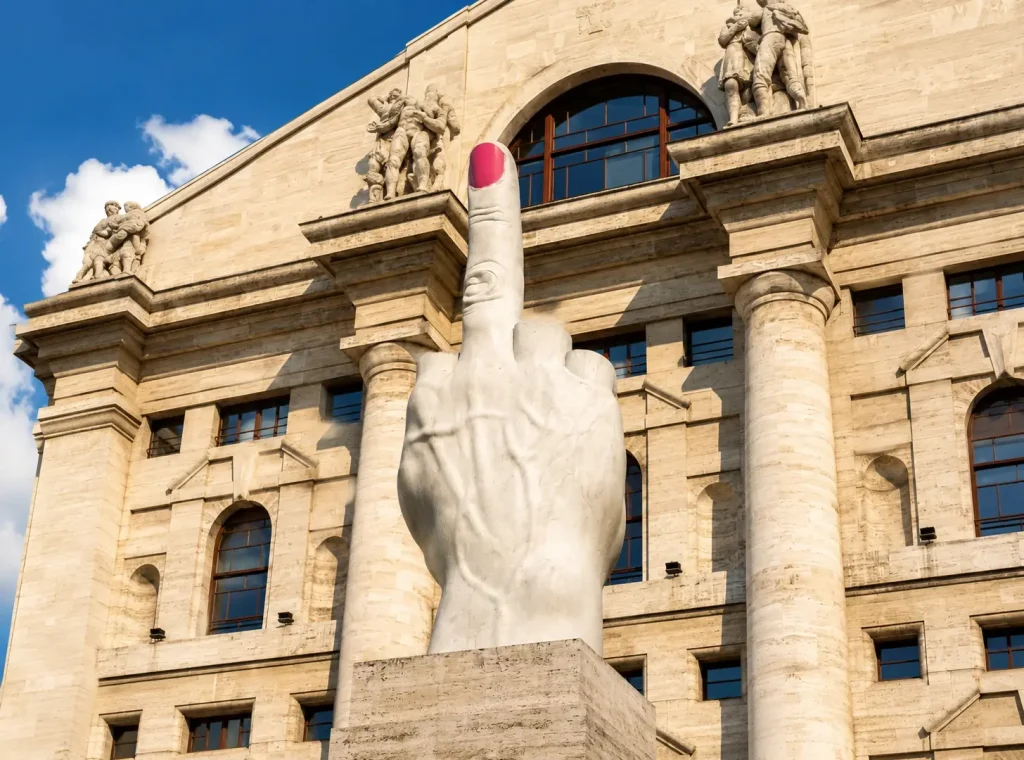
Maurizio Cattelan’s iconic L.O.V.E. sculpture stands in front of Milan’s Stock Exchange, blending provocative contemporary art with the city’s financial and historical heart.
Marble and Satire in the Financial District
Few public artworks in Europe generate as much debate as Milan’s giant marble middle finger. Standing in Piazza degli Affari directly in front of the Italian Stock Exchange, the sculpture officially bears the title L.O.V.E., but almost everyone simply calls it Il Dito—”The Finger.”
Created by contemporary Italian artist Maurizio Cattelan, the eleven-meter-high sculpture immediately grabs attention. Carved from pristine Carrara marble, it resembles a monumental hand making an unmistakable gesture toward the financial institutions surrounding it.
The Irony of Palazzo Mezzanotte
The location is no accident. The sculpture faces Palazzo Mezzanotte, the headquarters of the Italian Stock Exchange, a building completed during the Fascist era. By placing such a provocative artwork in the heart of Milan’s financial district, Cattelan transformed an ordinary square into one of the city’s most talked-about public spaces.
Some interpret the gesture as a fierce criticism of global finance. Others see it as satire aimed at political power, capitalism, or even society itself. The ambiguity is precisely what makes the artwork so effective.
Myths & Hidden Stories: The Fascist Salute Secret
The sculpture’s official name stands for Libertà, Odio, Vendetta, Eternità (Freedom, Hate, Revenge, Eternity). Even more intriguing, the hand actually mimics a historic Fascist salute, but all fingers except the middle one have been cleanly removed, creating a sharp and ironic commentary on both totalitarian history and corporate authority.
Insider Tip: Visit after sunset when the sculpture and the severe facade of Palazzo Mezzanotte are dramatically illuminated by spotlights.
Want to Explore More?
Wondering why Milan’s most controversial artwork was placed here? Explore the full story, local controversies, and hidden meanings in our complete [L.O.V.E. Sculpture Guide].
The Roman Circus and Imperial Palace Ruins
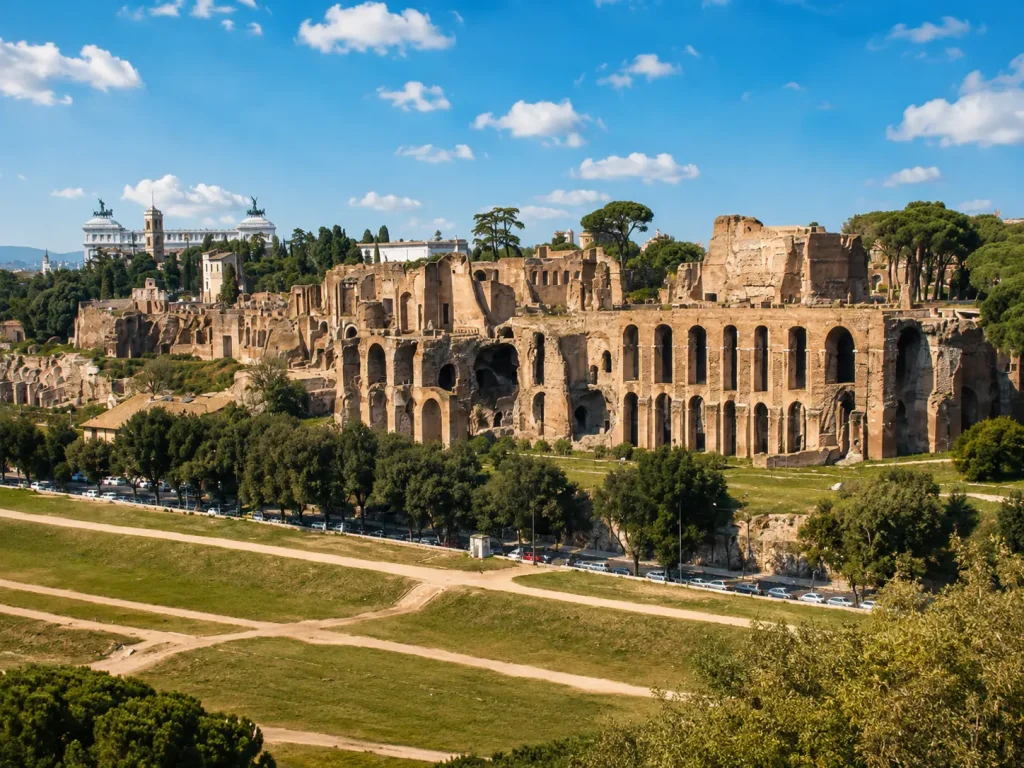
The remains of the Roman Circus and Imperial Palace reveal Milan’s forgotten past as the capital of the Western Roman Empire.
When Milan Ruled the Empire
Most travelers think of Rome when they imagine ancient Roman history. Few realize that Milan once served as the official capital of the Western Roman Empire. During the late Roman period, Mediolanum became one of the empire’s most important cities. Emperors ruled from here, major political decisions were made here, and some of the empire’s largest public buildings stood here.
Today, fragments of that forgotten world survive across the city. One of the most fascinating sites is the archaeological area on Via Brisa, where visitors can see remnants of the sprawling Imperial Palace complex. Nearby stood the Roman Circus, a massive arena used for chariot races and public spectacles.
The Survival of Torre di Ansperto
Even more impressive is the surviving Roman tower, commonly known as the Torre di Ansperto. Rising roughly 24 meters high, it remains one of the best-preserved Roman brick structures in northern Italy. Walking among these ruins completely changes the way visitors see Milan. Suddenly, the city reveals itself not merely as a modern financial center but as a former imperial capital.
Myths & Hidden Stories: The Ghostly Executioner’s Tower
During the Middle Ages, the Roman tower was incorporated into a local convent and reportedly served as a high-security prison. Local legends claim that important political prisoners were once confined within its thick walls, giving rise to long-standing stories of mysterious voices and ghostly apparitions heard on windy nights.
Opening Hours: Via Brisa ruins are visible 24/7; the adjacent Civic Archaeological Museum operates on a standard Tuesday–Sunday schedule
Cost: Via Brisa is free; a museum ticket is required for internal tower access
Insider Tip: Even if you don’t enter the museum, several nearby residential streets provide excellent, free elevated views of the Roman tower.
Want to Explore More?
Want to discover how Milan became an imperial capital? Read our complete historical guide to the [Roman Circus, Imperial Palace, and Ancient Mediolanum].
The Ear of Via Serbelloni: Milan’s Surreal Intercom
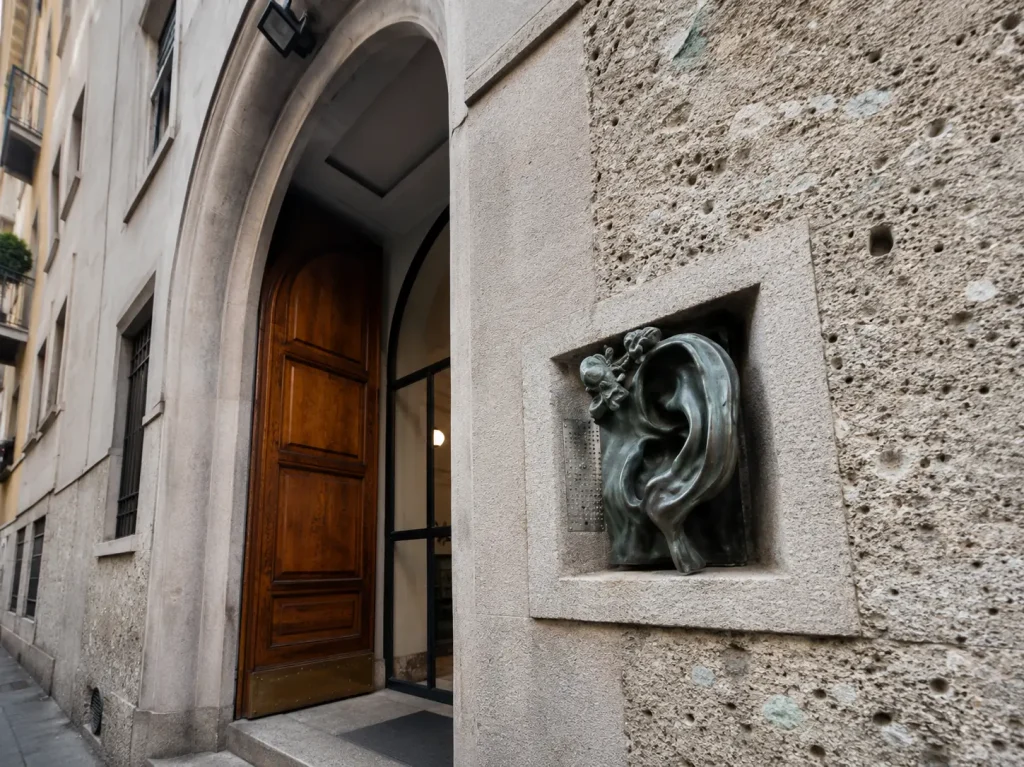
One of Milan’s most unusual hidden attractions, the bronze Ear of Via Serbelloni combines Art Nouveau design, early communication technology, and local urban legends.
Art Nouveau Meets Functional Technology
One of Milan’s strangest hidden attractions can easily be missed if you don’t look closely at the walls. Mounted beside the entrance of an elegant Art Nouveau building in the quiet Quadrilatero del Silenzio is a bronze sculpture shaped like a giant human ear.
At first glance, it appears to be a surreal work of modern art. In reality, it once served a surprisingly practical, high-tech purpose. Designed in the 1930s by architect Adolfo Wildt, the bronze ear functioned as one of Italy’s earliest outdoor intercom systems. Visitors would speak directly into the ear’s canal, allowing occupants inside the building to hear them before opening the door.
Playful Milanese Modernism
The design perfectly captures the playful creativity of Milanese architecture during the early twentieth century. Rather than hiding or disguising technology, the architect transformed it into a permanent conversation piece. Today, tourists frequently stop to photograph the unusual feature, while many locals pass by without giving it a second glance.
Myths & Hidden Stories: Whispering Wishes
According to local superstition, whispering your greatest wish directly into the bronze ear brings immense good luck and guarantees it will come true. Nobody knows exactly how the tradition began, but countless visitors continue the silent ritual today.
Opening Hours: 24/7 (Visible from the public sidewalk)
Cost: Free
Insider Tip: This is a perfect combo-stop. The “Ear” is located right on the adjacent wall of the very same intersection as the flamingos of Villa Invernizzi.
Want to Explore More?
Interested in Milan’s most unusual architectural curiosities? Discover the full story behind the famous [Bronze Ear of Via Serbelloni] in our dedicated guide.
Vicolo dei Lavandai: The Leftover Canals of Old Milan
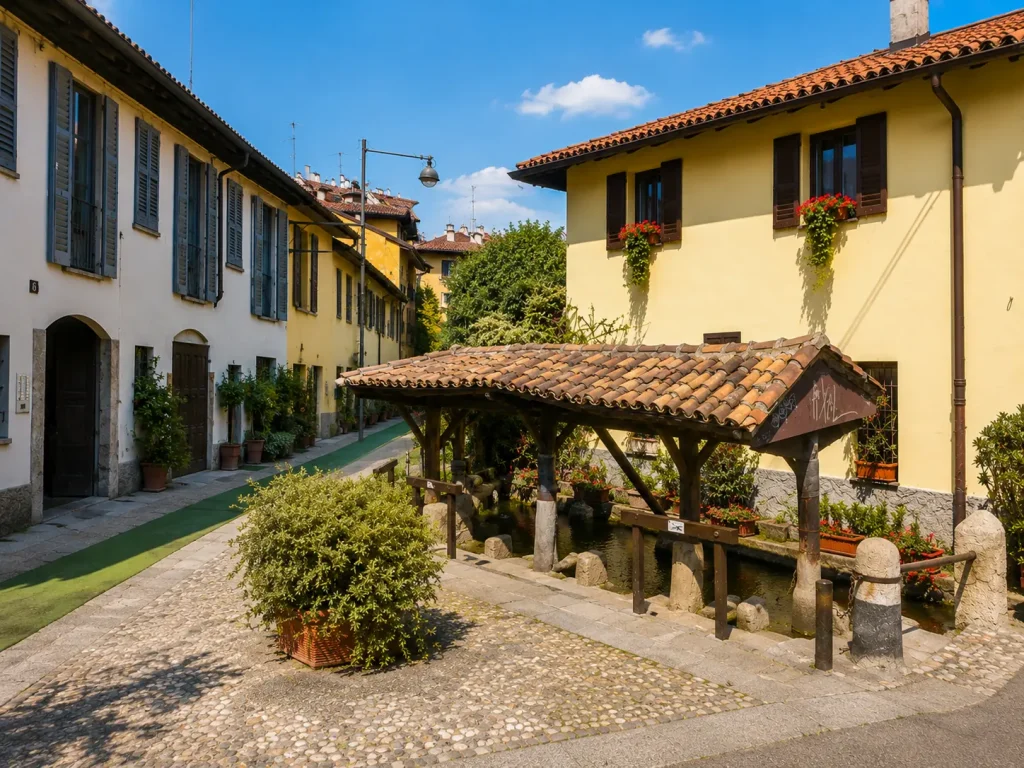
Vicolo dei Lavandai preserves a rare glimpse of old Milan, where washermen once worked along the city’s historic canal network.
The Lost Waterways of the Navigli
Long before roads and railways dominated transportation, Milan relied on an extensive, complex network of shipping canals. These waterways connected the landlocked city to surrounding rivers and played a crucial role in commerce, trade, and daily life. Much of that canal system has disappeared or been covered in asphalt, but one charming corner still preserves the raw atmosphere of old Milan.
Vicolo dei Lavandai, or “Alley of the Washermen,” is a tiny lane along the Naviglio Grande that feels completely frozen in the nineteenth century. Stone washing basins line the canal stream, while wooden structures and historic frames evoke a time when laundry was cleaned by hand using flowing water.
A Working-Class Past in a Trendy District
The surrounding Navigli district is now one of Milan’s trendiest neighborhoods, filled with modern restaurants, art galleries, and bustling aperitivo bars. Yet this small alley remains a quiet, historic reminder of the city’s working-class past. It is one of the most photogenic places in Milan and offers a glimpse into a side of local history that many visitors never encounter.
Myths & Hidden Stories: The Guild of Men Who Washed
Historical records indicate that professional laundry work along the canal was traditionally performed by men rather than women. The physically demanding process required hauling massive loads of wet fabrics and working for long hours in freezing mountain water, leading to the formation of a powerful, specialized washermen’s guild (Confraternita dei Lavandai).
Practical Information
Address: Vicolo dei Lavandai, 20144 Milano
Opening Hours: 24/7
Cost: Free
Insider Tip: Arrive around sunset to capture the best reflections on the historic stone washbasins, and stay afterward for an authentic aperitivo along the Naviglio Grande.
Want to Explore More?
Want to explore Milan’s forgotten canal history and hidden locks designed by Leonardo? Read our complete guide to [Vicolo dei Lavandai and the Navigli District].
Chiesa di San Cristoforo sul Naviglio: The Twin Churches
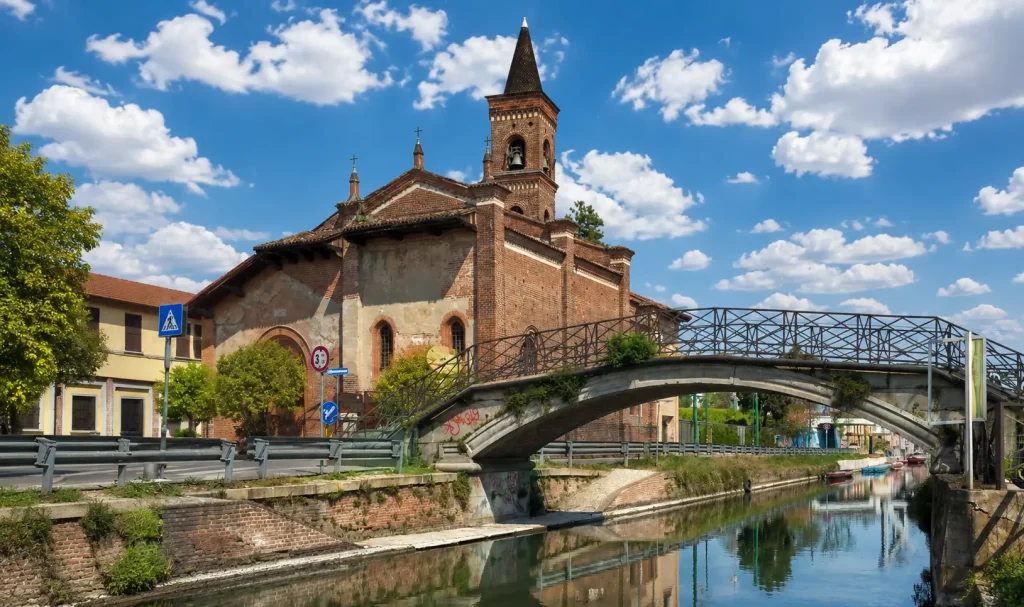
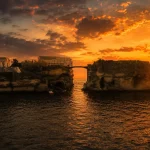
The picturesque Church of San Cristoforo sul Naviglio stands beside Milan’s historic canal, creating one of the city’s most photogenic hidden corners.
An Asymmetrical Gateway
At the western edge of the Naviglio Grande stands one of Milan’s most picturesque and underrated landmarks. San Cristoforo sul Naviglio is actually two separate churches joined together into a single, seamless architectural complex. The older section dates to the medieval period, while the newer gothic structure was added centuries later, creating the unusual asymmetrical appearance visible today.
For travelers entering Milan from the countryside, this church once marked an important gateway to the city. Merchants, pilgrims, and visitors arriving along the canal would see its distinctive red brick silhouette reflected in the water.
A Peaceful Canal Escape
Unlike many of Milan’s famous landmarks, San Cristoforo remains remarkably peaceful. The surrounding canal, historic bridges, and old trees create an atmosphere that feels far removed from the busy city center. Photographers especially love the church at golden hour, when sunlight reflects off the canal and beautifully illuminates the facade.
Myths & Hidden Stories: The Lighthouse of the Plague
The church’s tall bell tower reportedly served as a navigational landmark for canal traffic and functioned as an early warning point during periods of plague. Travelers arriving from outside the city were halted and monitored here before being allowed to enter Milan proper, helping authorities limit the spread of devastating diseases.
Opening Hours: Generally open daily during daylight hours
Cost: Free
Insider Tip: Rent a public bicycle and follow the Naviglio Grande cycle path out toward this church—it is one of the most scenic and non-touristy rides in the city.
Want to Explore More?
Looking for the perfect canal-side escape away from the crowds? Discover the history, legends, and best photo spots around [San Cristoforo sul Naviglio].
Hidden Gems in Naples
Beyond the pizza shops, chaotic traffic, and famous waterfront views, Naples hides ancient underground cities, forgotten Roman theatres, secret tunnels, mysterious churches, hidden palaces, and candlelit passages buried beneath centuries of history. Here are the hidden gems that reveal the city’s most fascinating and authentic side.
If you want to experience Milan beyond fashion boutiques and crowded tourist landmarks, these ten hidden gems can easily be organized into two rewarding, half-day walking routes.
The Mystic & Ancient Center Loop
Begin your day at San Bernardino alle Ossa, then continue toward the Duomo before visiting Santa Maria presso San Satiro and its famous optical illusion. From there, descend into the atmospheric Crypt of San Sepolcro, explore the provocative L.O.V.E. sculpture in Piazza degli Affari, and finish your journey among the remains of ancient Mediolanum’s Imperial Palace and Roman Circus on Via Brisa. This route combines Milan’s religious history, Roman heritage, and modern artistic provocations into a fascinating walk.
The Green & Bohemian Loop
Start in the peaceful Quadrilatero del Silenzio, where you can spot the famous flamingos of Villa Invernizzi and visit the mysterious Bronze Ear of Via Serbelloni. Continue to the breathtaking frescoes of San Maurizio al Monastero Maggiore before heading south toward the canals. Explore the historic Vicolo dei Lavandai and finish at the picturesque Church of San Cristoforo sul Naviglio, one of the most photogenic spots along the Naviglio Grande. This route showcases a quieter, more artistic side of Milan that most tourists never see.
If you’re exploring Italy’s lesser-known treasures, don’t miss our comprehensive guide to the hidden wonders of southern Italy, including the remarkable [Incurabili Pharmacy] or the historic underbelly of Naples.
Alternative Milan: FAQ
What is the best hidden gem in Milan?
San Bernardino alle Ossa is often considered Milan’s most unusual hidden attraction thanks to its extraordinary bone-lined chapel. However, San Maurizio al Monastero Maggiore (the “Sistine Chapel of Milan”) and the flamingos of Villa Invernizzi are equally unforgettable experiences.
Are Milan’s hidden gems free to visit?
The vast majority of the locations featured in this guide are completely free to enter. This includes San Maurizio, San Satiro, Villa Invernizzi, Vicolo dei Lavandai, and San Cristoforo. Only underground archaeological sites, such as the Crypt of San Sepolcro, require an entrance ticket.
How many days do I need to explore alternative Milan?
A well-planned two-day itinerary is ideal. This gives you enough time to comfortably visit all ten hidden gems listed here without rushing, while still allowing plenty of time to enjoy Milan’s main landmarks like the Duomo and the Galleria.
Is Milan worth visiting beyond the Duomo?
Absolutely. Milan contains ancient Roman ruins, hidden Renaissance masterpieces, eccentric public art, secret gardens, and historic canal districts that many travelers completely overlook because of the city’s modern commercial reputation.
What is the most unusual thing to do in Milan?
Visiting a chapel decorated entirely with thousands of real human bones, spotting a flock of bright pink flamingos in a private residential garden, or standing inside Bramante’s 90-centimeter optical illusion are among the city’s most unique alternative experiences.
Which hidden gems are best for photography?
Villa Invernizzi, San Maurizio al Monastero Maggiore, Vicolo dei Lavandai, and San Cristoforo sul Naviglio offer the best visual opportunities for photographers looking for unique angles of the city.
Can I visit all ten hidden gems without a car?
Yes. Every single location featured in this guide can be effortlessly reached using Milan’s excellent public transit system (metro and trams) combined with short, scenic walks.