The surreal blue interior of Toledo Metro Station transforms an ordinary subway stop into one of the world’s most beautiful underground art spaces.
Few travelers arrive in Naples expecting one of the city’s most extraordinary attractions to be hidden nearly 50 meters (164 feet) below street level. Yet Toledo Metro Station (Italian: Stazione Toledo) transforms an ordinary subway journey into an immersive artistic experience that feels more like descending into an underwater cathedral than entering a transportation hub.
If you’re wondering where to see Caravaggio in Naples or exploring nearby landmarks, this is a crucial transit point. Part of Naples’ famous Naples Art Stations (Stazioni dell’Arte) project, Toledo Metro Station has repeatedly been recognized among the most beautiful subway stations in Europe and the world. Designed by celebrated Spanish architect Oscar Tusquets Blanca and opened in 2012, it combines contemporary art, innovative architecture, archaeological discoveries, and natural light in a way rarely seen in public transportation.
Whether you’re a photographer, an architecture enthusiast, or simply searching for unique things to do in Naples, Toledo Metro Station is a destination worth visiting in its own right.
The Visionaries Behind the Masterpiece
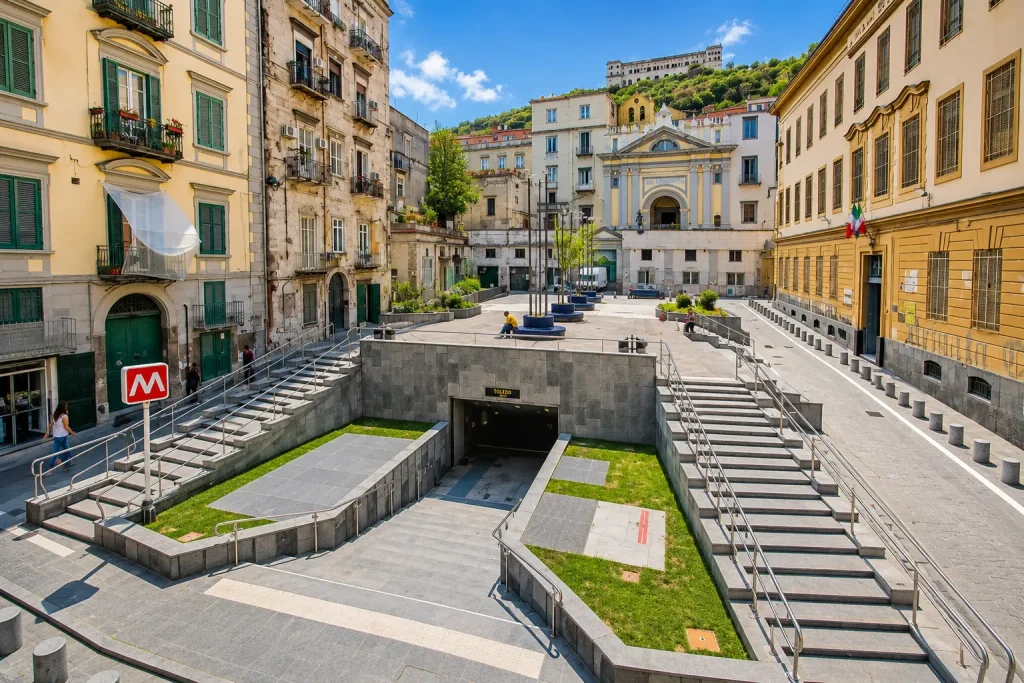
The main entrance of Toledo Metro Station in Naples, where contemporary architecture meets one of the world’s most celebrated metro art projects.
Why Toledo? The Historic Gateway to Naples
The station takes its name from Via Toledo, one of Naples’ most important streets. Created during Spanish rule in the sixteenth century, the avenue historically connected the old walled city with newer districts and remains one of the busiest, most vibrant pedestrian routes in southern Italy. Building Naples’ flagship Art Station beneath this historic artery was a deliberate choice by urban planners—a move that permanently linked the city’s deep history with its future.
Oscar Tusquets Blanca and the Stazioni dell’Arte Project
During the late twentieth century, Naples faced many challenges within its public transportation system. Rather than building purely functional, gray stations, city planners embraced an ambitious idea: transform the metro network into a vast underground museum. This initiative became known as the Stazioni dell’Arte (Art Stations) project.
The concept invited internationally renowned architects and artists to create spaces that would improve both the visual environment and the daily experience of commuters. Over time, Naples developed one of the world’s most celebrated collections of public art integrated into transit infrastructure. For Toledo Metro Station, the city commissioned acclaimed Spanish architect Oscar Tusquets Blanca, who envisioned a space deeply inspired by Naples’ relationship with the sea, light, and geological history.
One of Europe’s Deepest Urban Stations
Reaching approximately 50 meters (164 feet) below street level, Toledo Station ranks among the deeper metro stations in Europe. Navigating this immense depth is precisely the reason why the design team had to innovate. Its subterranean scale is one of the primary reasons the iconic Crater of Light became such a crucial, structural element of the final design.
Breaking the Darkness: The Concept of Light
Most underground stations are designed to minimize the feeling of being deep beneath the earth. Tusquets pursued the exact opposite approach. Instead of hiding the station’s depth, he transformed it into its defining feature. His goal was to guide visitors through a symbolic journey from the bustling surface of the city down toward the sea, while maintaining a constant connection with natural daylight.
The result was one of the station’s most famous engineering features: a giant vertical opening that allows sunlight to penetrate deep underground, dramatically changing the atmosphere inside the station throughout the day.
Decoding the Design: From Soil to the Deep Ocean
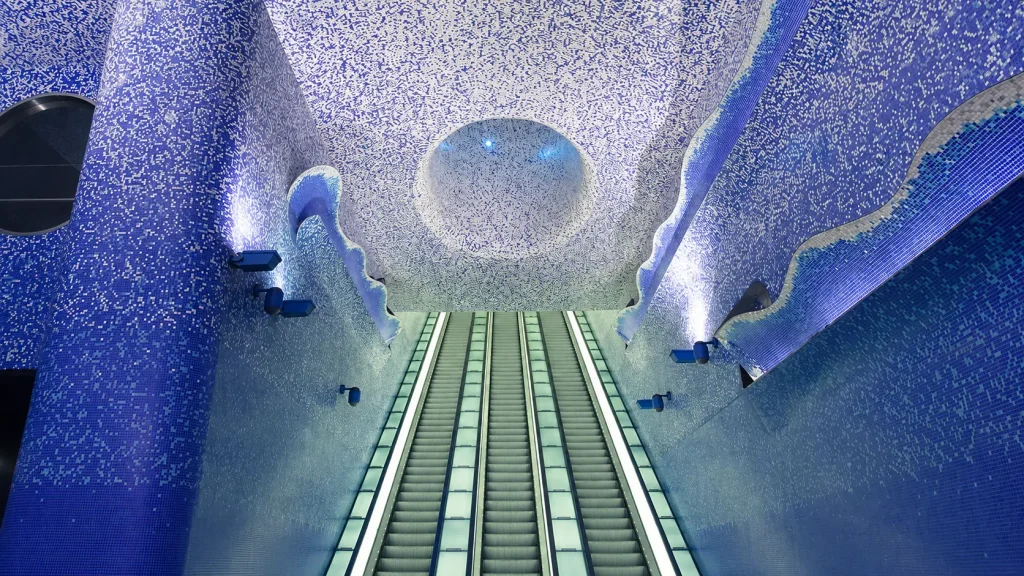
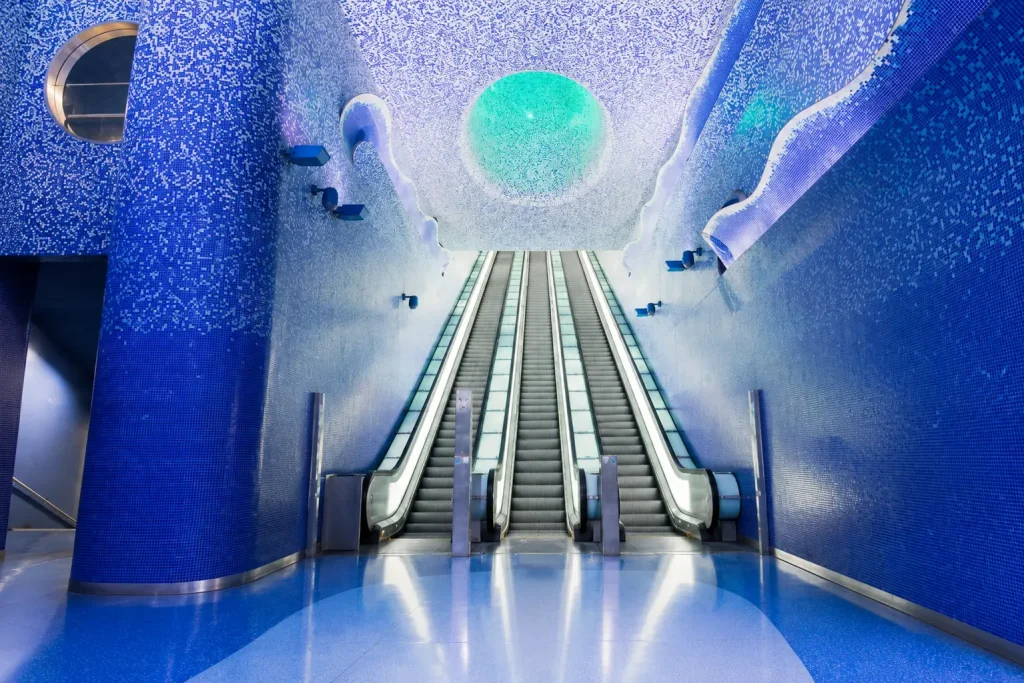
The iconic blue mosaic escalator hall inside Toledo Metro Station creates the illusion of descending beneath the sea, making it one of the most photographed spaces in Naples.
The station unfolds like a visual story as you descend. Each level represents a completely different layer of Naples itself.
The Earth Layer (Black and Yellow)
The upper levels are dominated by black, gold, and earthy tones. These colors reference:
The black asphalt of modern urban streets
The golden volcanic tuff stone (tufo) used to build historic Naples
The city’s hidden underground geological layers
The timeless connection between ancient and contemporary Naples
Large mosaic surfaces create an intentionally rugged atmosphere that reflects the city’s complex history. Visitors often rush past these levels, unaware that they are walking through a symbolic representation of the very ground beneath their feet.
The Crater of Light (Crateri di Luce)
The station’s most photographed feature is the spectacular Crater of Light. This enormous conical shaft cuts through multiple levels of the station, channeling natural sunlight almost 50 meters underground.
Looking upward from the escalators, visitors see a glowing, shifting circle of sky framed by futuristic layers of architecture. Throughout the day, changing sunlight creates moving patterns of shadows and reflections, making every single visit unique. For many travelers, this is the moment Toledo Metro Station truly becomes unforgettable.
H3: Sinking into the Sea (The Blue Mosaic) As passengers descend even further, below the groundwater level, the station undergoes a dramatic transformation. Dark earth tones completely give way to a vast world of blue.
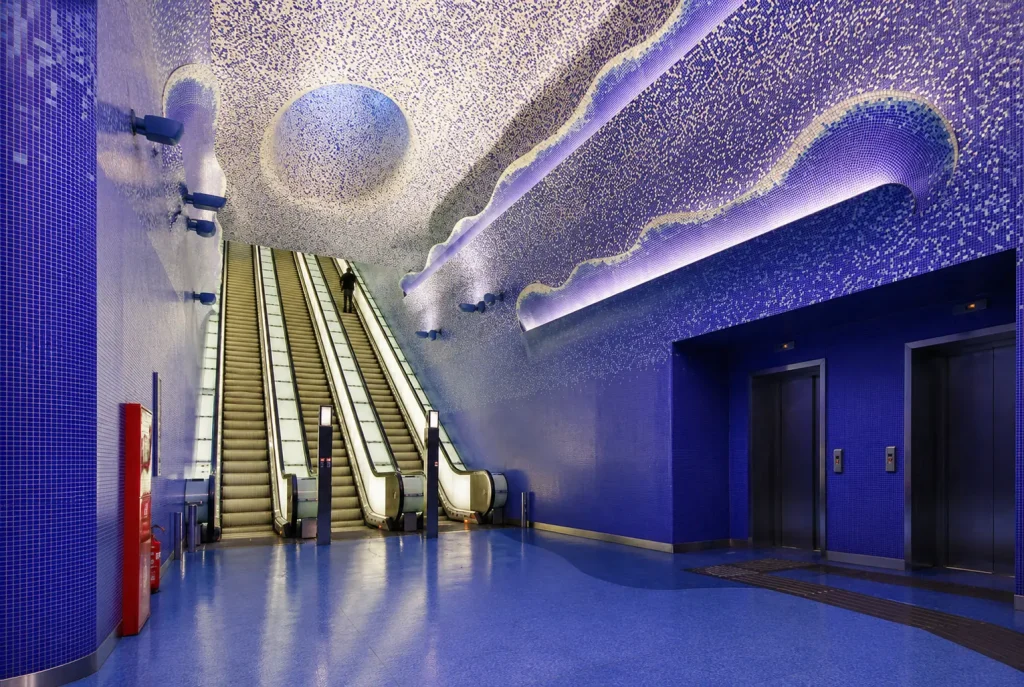
Thousands of stunning Bisazza mosaic tiles in varying shades of blue and white create the powerful illusion of being submerged beneath the Mediterranean Sea. The walls shimmer under artificial lighting, while reflective surfaces mimic the gentle movement of water. The effect is so convincing that many visitors describe feeling as though they are walking through an underwater tunnel rather than a busy transit station.
Awards and International Recognition
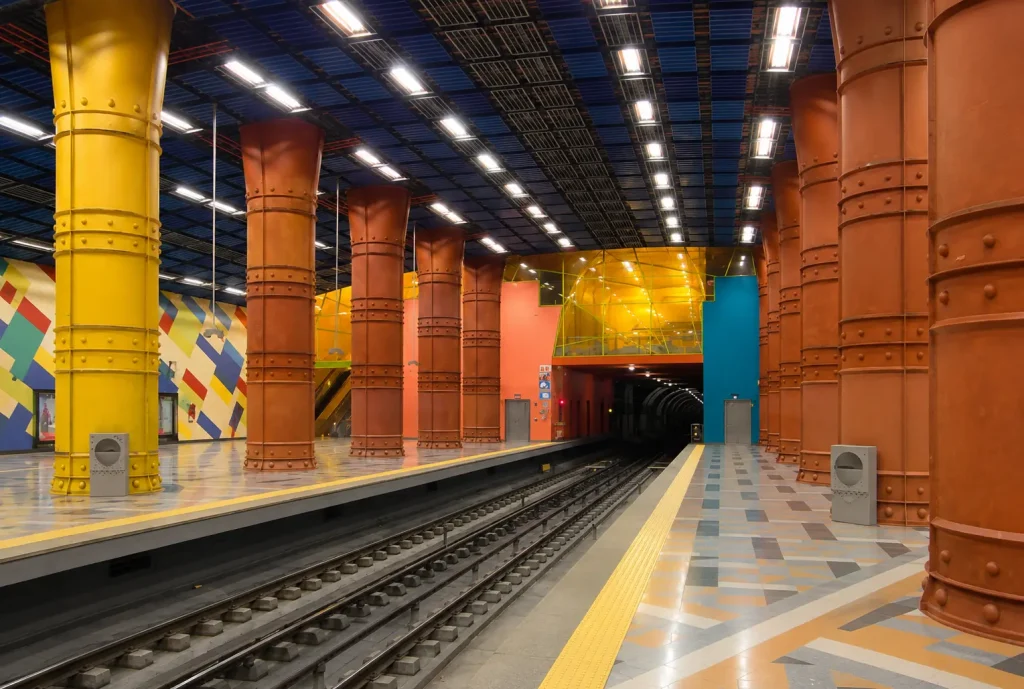
The platform level of Toledo Metro Station combines bold industrial design, vibrant colors, and contemporary architecture, making it one of the most distinctive metro stations in Europe.
Toledo Metro Station quickly attracted global attention immediately after opening. Over the years, it has topped numerous rankings of the world’s most beautiful subway stations by CNN, The Daily Telegraph, and various architectural societies.
What makes these accolades truly remarkable is that Toledo was never designed solely as a tourist attraction. It remains a fully functioning station used daily by thousands of Neapolitans. This seamless combination of practical urban infrastructure and world-class artistic design is precisely what makes the station unique.
Rare Legends & Lesser-Known Facts About Toledo Station
The iconic blue escalator hall of Toledo Metro Station creates the illusion of descending beneath the sea through shimmering mosaic-covered walls and futuristic design.
The Lost Aragonese Walls Beneath the Tiles
Construction crews made a remarkable archaeological discovery while excavating the station. Hidden beneath modern Naples were massive sections of defensive fortifications dating back to the Aragonese period of the fifteenth century.
Rather than removing or destroying these remains, planners chose to preserve and integrate them into the station’s design. Today, visitors can see fragments of Naples’ medieval past displayed directly within one of its most futuristic public spaces. Few metro stations anywhere in the world allow passengers to encounter both cutting-edge architecture and genuine medieval fortifications during their daily commute.
Building a Metro Inside an Archaeological Treasure Chest
One of the greatest challenges facing engineers was the simple fact that Naples never stops revealing its past. Almost every major excavation in the historic center (Centro Storico) uncovers precious archaeological remains.
During the construction of Line 1, workers constantly encountered layers of history spanning centuries, forcing engineers, urban planners, and archaeologists to work side by side. This slowed progress considerably, but it also ensured that valuable discoveries were preserved. Many locals jokingly say that in Naples, every simple construction project eventually becomes a major archaeological excavation.
William Kentridge’s Shadow Procession
Near the upper station entrances, visitors can find striking, monumental mosaics created by the famous South African artist William Kentridge. At first glance, these figures appear to be simple silhouettes.
A closer look reveals a highly symbolic procession representing laborers, historical figures, migrants, religious imagery, and everyday Neapolitans. The artwork reflects the continuous, chaotic movement of people through Naples across centuries. Many commuters pass these masterpieces daily without realizing how much historical storytelling is woven into the tiles.
The Hidden Sounds of the Sea
One of Toledo Station’s least noticed artistic elements is Bob Wilson’s multi-sensory installation titled “By the Sea…” Located near the lower levels, the installation combines light and sound to create a subtle sensory experience.
Colors slowly shift across illuminated LED panels while ambient sounds gently evoke waves and the rhythm of the sea. Unlike traditional museum exhibits, this artwork isn’t meant to demand your full attention. Instead, it quietly influences how visitors perceive the space, reinforcing the psychological sensation of being deep beneath the ocean.
Hidden Gems in Naples
Beyond the pizza shops, chaotic traffic, and famous waterfront views, Naples hides ancient underground cities, forgotten Roman theatres, secret tunnels, mysterious churches, hidden palaces, and candlelit passages buried beneath centuries of history. Here are the hidden gems that reveal the city’s most fascinating and authentic side.
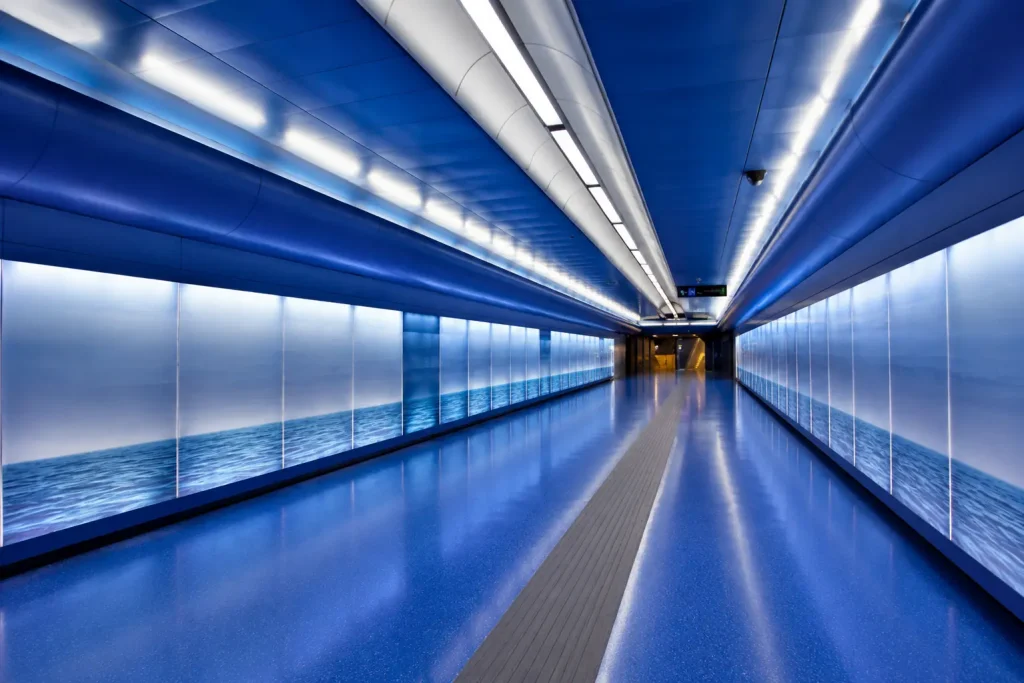
The striking blue corridor of Toledo Metro Station uses light, color, and perspective to create an immersive underground journey inspired by the sea.
Unlike traditional museums, Toledo Metro Station is open according to transit schedules, allowing you to enjoy world-class art for the price of a single train ticket.
Visitor Detail
Essential Information
Metro Line
Line 1 (The Yellow Line)
Location
Via Toledo / Quartieri Spagnoli, Naples, Italy
Ticket Price
Approximately €1.30 – €1.50 for a single ride (ANM ticket)
Best Time for Photos
10:30 AM – 1:30 PM (When the sun is highest for the Crater of Light)
Photography
Permitted for personal use (No tripods without a permit)
Accessibility
Fully accessible with modern elevators and escalators
Average Visit Time
20 – 40 minutes
Nearby Attractions
Quartieri Spagnoli, Galleria Umberto I, Piazza del Plebiscito
Insider Tips for Traveling Photographers
Capture the Crater from the Escalator Landing: Most visitors photograph the Crater of Light from the very bottom looking up. However, a much better composition is often found from the middle escalator landing. From here, the entire vertical shaft aligns perfectly with the station’s geometry, creating the dramatic, symmetrical image frequently seen in travel magazines.
Visit on a Sunny Day: The station is beautiful regardless of the weather, but direct sunlight dramatically enhances the effect of the Crater of Light. Clear skies create stronger contrasts, sharper light beams, and more vivid reflections within the deep blue mosaics.
Explore the Largo Montecalvario Exit: Many travelers leave through the main entrance on Via Toledo and miss the station’s secondary exit. The Largo Montecalvario exit leads directly into the heart of the colorful, chaotic Quartieri Spagnoli (Spanish Quarters). The long escalators along this specific route feature fascinating historical photographs of Naples and works by renowned photographer Oliviero Toscani, creating an additional artistic experience that costs nothing extra.
How to Integrate Toledo Station into Your Naples Itinerary
Via Line 1 (The Cultural Loop)
Line 1 connects many of Naples’ most important transport hubs and cultural landmarks. Visitors arriving from Napoli Centrale (Garibaldi Station) can reach Toledo quickly and then continue up toward the panoramic Vomero district, the Naples National Archaeological Museum, or down into the historic core. Because of its central location, Toledo naturally becomes a convenient stop during a full day of sightseeing.
A Perfect Walking Route from the Station
If you’re exploring nearby attractions such as the atmospheric Quartieri Spagnoli, the grand Galleria Umberto I, or the serene Cloister of Santa Chiara, Toledo Station makes an excellent starting point or transit hub. After exiting, consider following this highly rewarding walking route:
Via Toledo (Shopping and street food)
Galleria Umberto I (Grand 19th-century shopping gallery)
Piazza del Plebiscito (The city’s grandest public square)
Historical Caffè Gambrinus (Perfect for a traditional Neapolitan espresso)
The scenic Naples waterfront (Lungomare)
Everything on this list can be explored comfortably on foot. If you are already visiting the historic center and places such as Pio Monte della Misericordia or Naples Underground, Toledo Station provides a fascinating, refreshing contrast between the city’s ancient heritage and its modern creative spirit.
Why Toledo Station Reshapes the Way We Travel
In most cities, a metro station is simply a dreary place you pass through as quickly as possible. In Naples, Toledo Station has become a breathtaking destination in itself—proof that even a routine daily commute can be beautifully transformed into world-class art.
It successfully blends public transportation with an artistic journey through Naples’ geology, history, culture, and eternal relationship with the sea. Here, infrastructure becomes a living museum, an architectural landmark, and an immersive sensory experience all at once. Few places in Italy demonstrate so clearly how public spaces can enrich everyday life. For that reason, Toledo Metro Station is far more than a subway stop — it is one of Naples’ most remarkable artistic triumphs hidden right beneath the city streets.
FAQ
Do I need a special ticket to see the art?
No. A standard single-ride metro ticket is completely sufficient because all major artistic features, mosaics, and installations are located inside the turnstiles of the station itself.
Is Toledo Metro Station safe?
Yes. Toledo is one of the best-maintained and most heavily trafficked stations in Naples. It features regular security personnel, surveillance systems, excellent lighting, and a constant flow of passengers throughout the day.
Can I pay with a contactless card?
Yes. Naples Metro Line 1 fully supports Tap & Go contactless payment systems (credit cards, smartphones, smartwatches) at the station entry gates.
What is the best exit at Toledo Station?
It depends on your destination! The main Via Toledo exit puts you right on the main shopping avenue near Galleria Umberto I. However, if you want a scenic, art-filled path straight into local culture, take the Largo Montecalvario exit, which features incredible photography installations and leads directly into the historic Quartieri Spagnoli.
How long does it take to visit Toledo Metro Station?
If you are visiting purely for photography and architecture, expect to spend about 20 to 40 minutes exploring the different levels, riding the escalators to see the changing light patterns, and viewing the historic wall remains.
Is Toledo Metro Station worth visiting even if I don’t need to take the train?
Absolutely. Many travelers buy a single ticket solely to pass through the gates, take photos of the architecture, explore the different design layers, and exit without ever boarding a train.