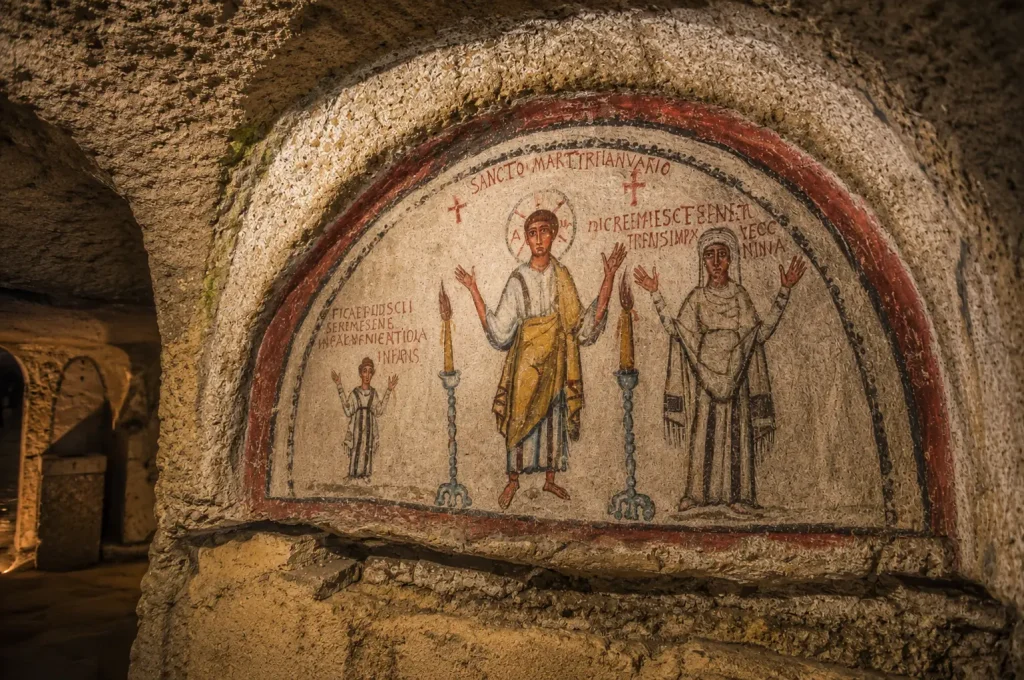
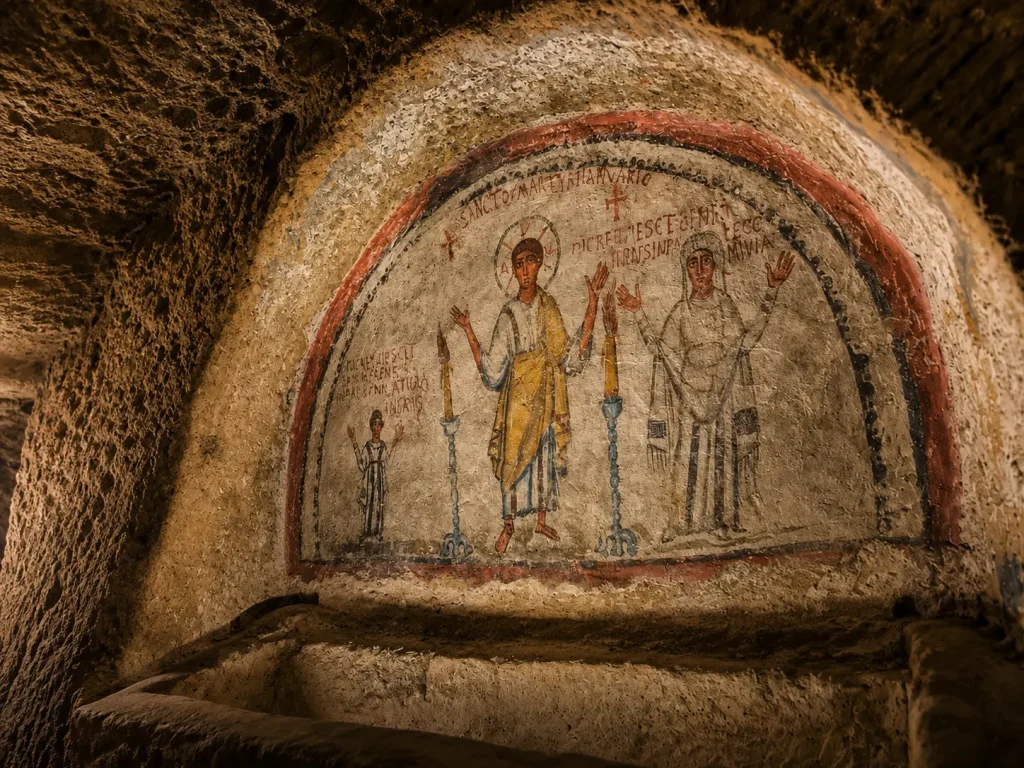
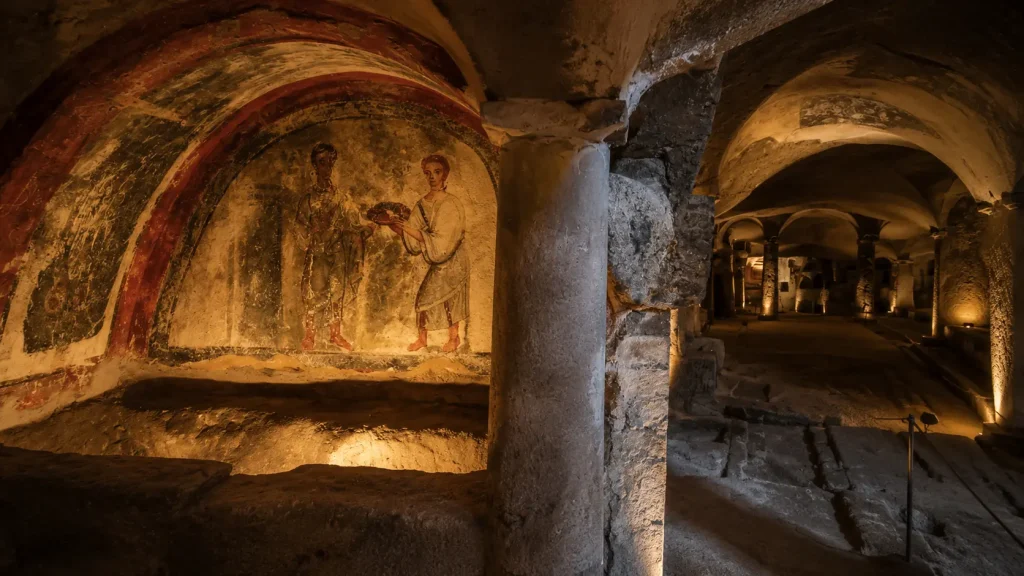
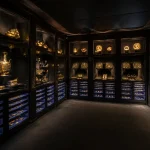
An ancient Christian fresco preserved inside the Catacombs of San Gennaro reveals the spiritual and artistic heritage hidden beneath Naples.
Beneath the busy streets of Naples’ Sanità district, where scooters weave through narrow lanes and local life unfolds at every corner, lies a completely different world. Silent, monumental, and deeply spiritual.
The Catacombs of San Gennaro (Italian: Catacombe di San Gennaro) are far more than an ancient underground cemetery. They are the largest and most important Early Christian monument in Southern Italy, offering visitors a rare journey through nearly two thousand years of history.
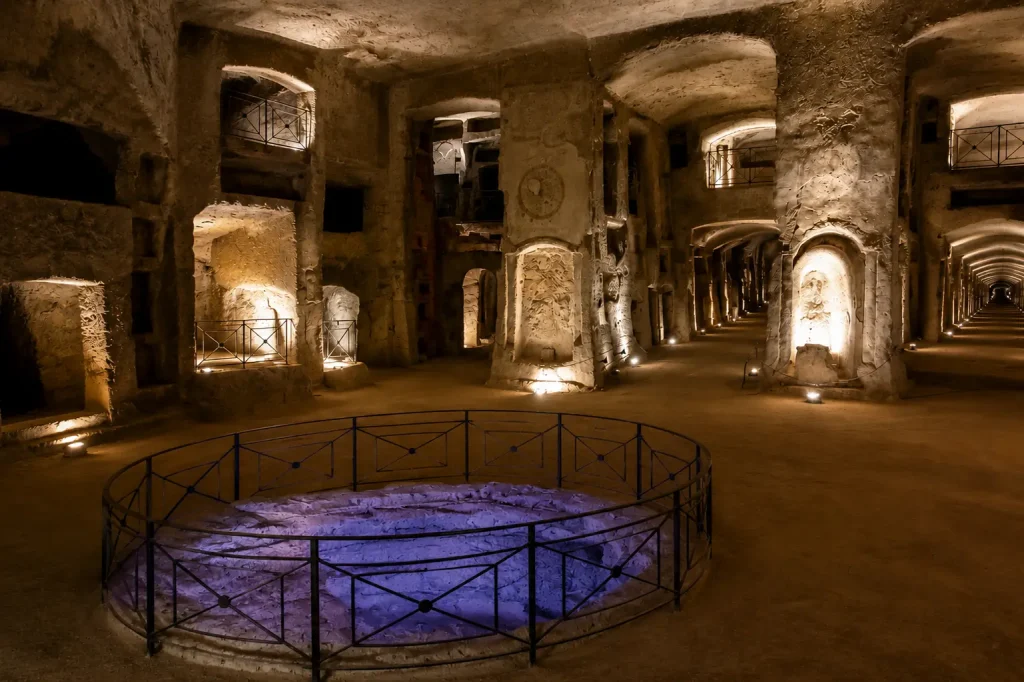
Unlike the narrow, tunnel-like catacombs found in Rome, the Catacombs of San Gennaro are surprisingly spacious and majestic, featuring enormous halls, ceilings reaching up to six meters high, underground basilicas, and remarkably preserved frescoes dating from the 2nd to the 10th centuries.
Located just downhill from the magnificent Capodimonte Palace and Museum, the catacombs provide one of Naples’ most unforgettable cultural experiences. Whether you’re fascinated by archaeology, religious history, ancient art, or simply looking for unique things to do in Naples, this underground city deserves a place at the top of your itinerary.
The Fascinating History: From Pagan Tombs to a Saint’s Resting Place
The Origins: From Noble Roman Tombs
Before becoming a major Christian pilgrimage site, the Catacombs of San Gennaro began as noble Roman family tombs carved into Naples’ volcanic bedrock during the 2nd century AD.
The story of the Catacombs of San Gennaro begins in the 2nd century AD, when the area served as a burial site for wealthy Roman families.
At the time, Christians were still a minority within the Roman Empire. Rather than constructing large cemeteries above ground, communities often expanded existing burial chambers carved into the soft volcanic tuff beneath Naples.
Over time, these family tombs evolved into an extensive underground necropolis that would eventually become one of the most important pilgrimage destinations in Italy.
The Turning Point: The Arrival of San Gennaro
The transfer of Saint Januarius’ relics to the Catacombs of San Gennaro in the 5th century transformed this underground necropolis into one of the most important pilgrimage sites in Southern Italy.
Everything changed during the 5th century.
The remains of Saint Januarius (San Gennaro), Naples’ beloved patron saint, were transferred here from another burial site. The arrival of the saint’s relics transformed the catacombs into a major pilgrimage center, attracting visitors from across Southern Italy and beyond.
Pilgrims traveled great distances to pray near the tomb of the martyr bishop whose legacy remains deeply connected to Naples today. Even now, the famous Miracle of the Blood of San Gennaro continues to draw attention from believers around the world.
Interestingly, San Gennaro’s relics no longer rest inside the catacombs. They were transferred several times throughout history before eventually finding their permanent home in Naples Cathedral. Nevertheless, the catacombs remain inseparable from the story of the city’s patron saint.
The Architecture: An Underground City
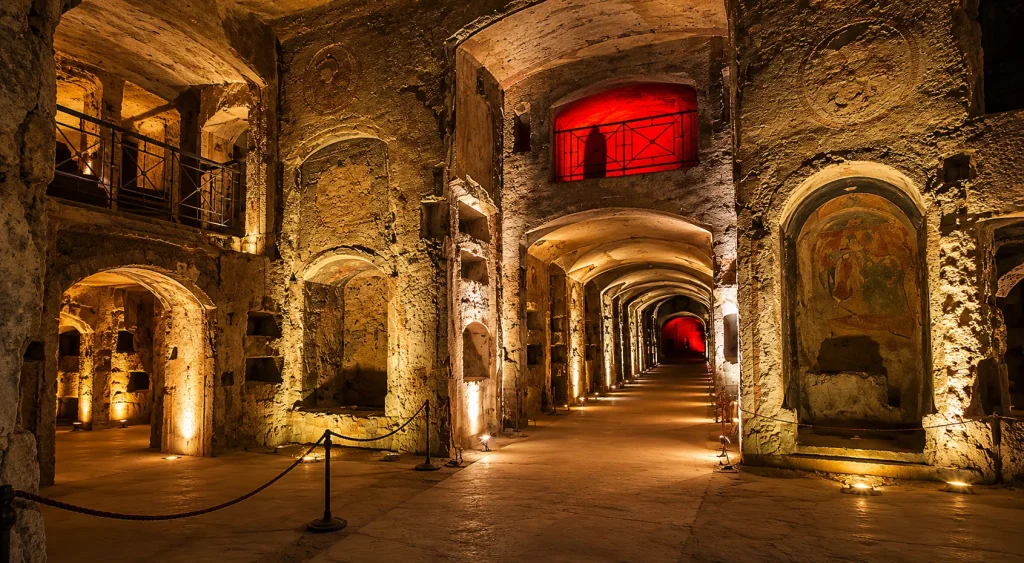
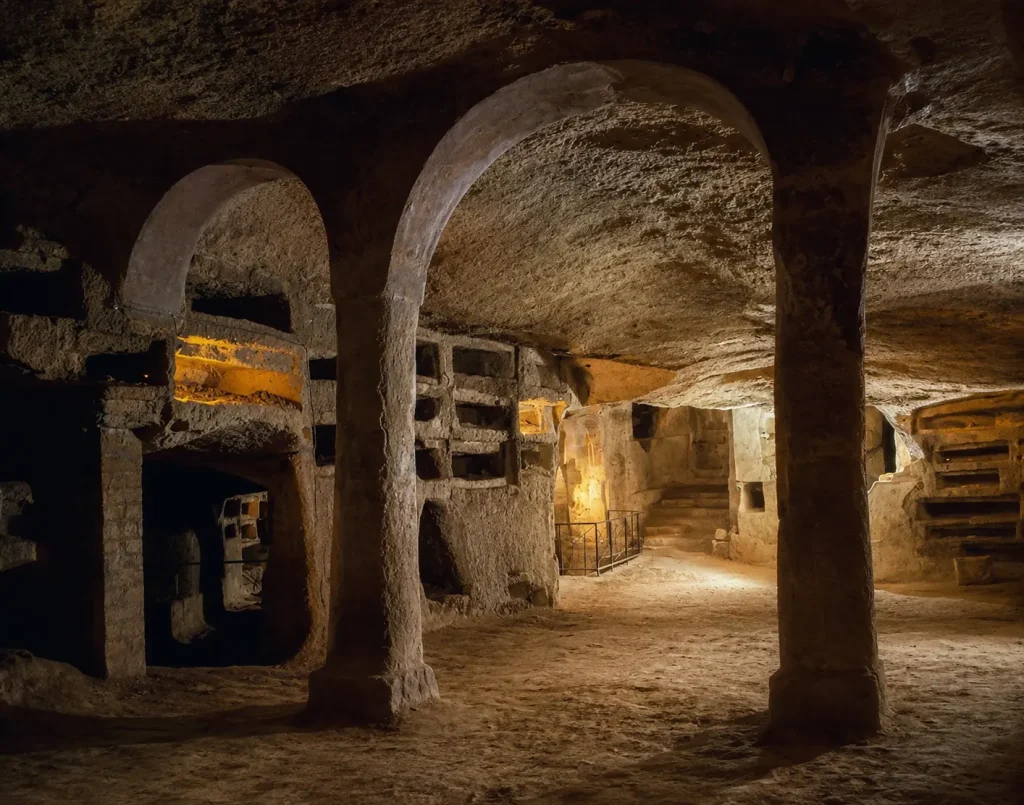
The monumental underground halls of the Catacombs of San Gennaro reveal why this Early Christian site is considered one of the most impressive hidden attractions in Naples.
One of the most remarkable aspects of the Catacombs of San Gennaro is their scale.
Instead of narrow passages designed purely for burials, visitors encounter wide galleries, monumental chambers, and vast open spaces carved directly into volcanic rock.
The complex consists of two distinct levels:
The Upper Catacombs: This level contains large communal burial areas, important frescoes, and some of the site’s most famous Early Christian artwork.
The Lower Catacombs: This level includes older burial chambers and several of the earliest sections of the complex, dating back to Roman times.
The softness of Naples’ volcanic tuff made excavation relatively easy, allowing builders to create unusually spacious halls that feel more like underground churches than traditional catacombs.
Unmissable Highlights Inside the Catacombs
The Upper Catacombs and the Bishops’ Crypt
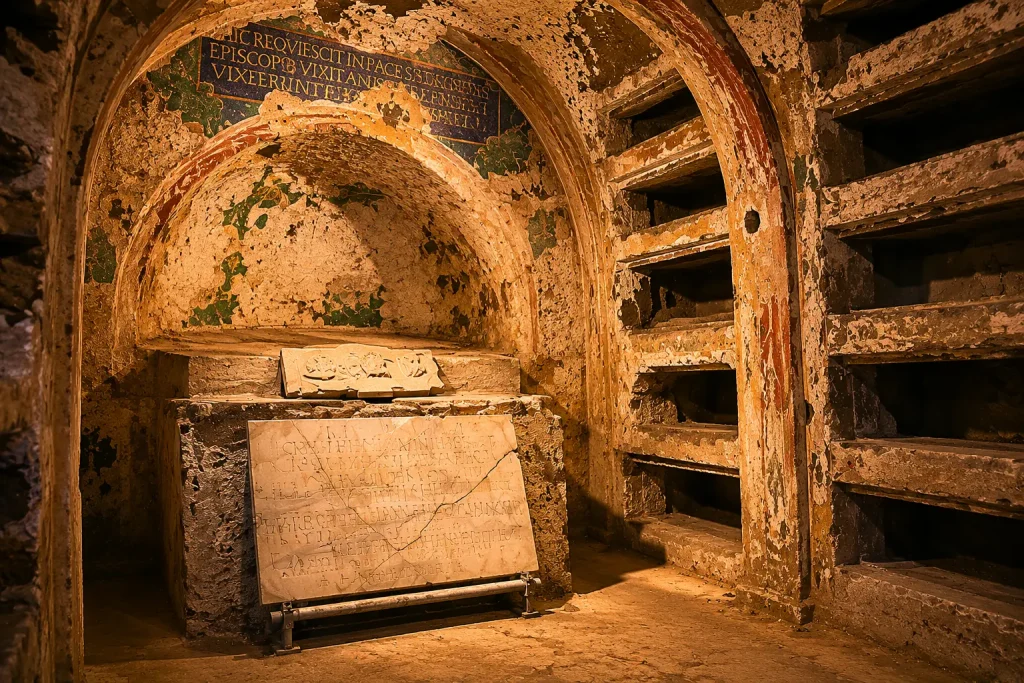
The Upper Catacombs of San Gennaro contain some of the most important burial chambers in Naples, including areas associated with the city’s earliest bishops and Christian communities.
One of the most significant areas is the Crypt of the Bishops, where several early bishops of Naples were buried.
Ancient frescoes still survive here, offering a rare glimpse into Early Christian art and religious symbolism. These paintings are among the oldest visual records of Naples’ Christian community.
For historians and art lovers, this chamber alone justifies the visit.
Early Christian Art and Byzantine Influences
Ancient frescoes preserved inside the Catacombs of San Gennaro offer a remarkable glimpse into the development of Early Christian art and Byzantine influences in Naples.
The catacombs preserve some of the finest Early Christian artwork in Italy.
Visitors can admire frescoes showing saints, bishops, biblical scenes, and symbolic imagery that reveal how Christianity developed in the centuries following the fall of the Roman Empire.
One particularly famous image depicts Saint Januarius between Mount Vesuvius and the Capodimonte hill, visually linking the saint to the city he continues to protect.
Many paintings display strong Byzantine influences, demonstrating Naples’ historical connections with the Eastern Mediterranean world.
The Underground Basilicas
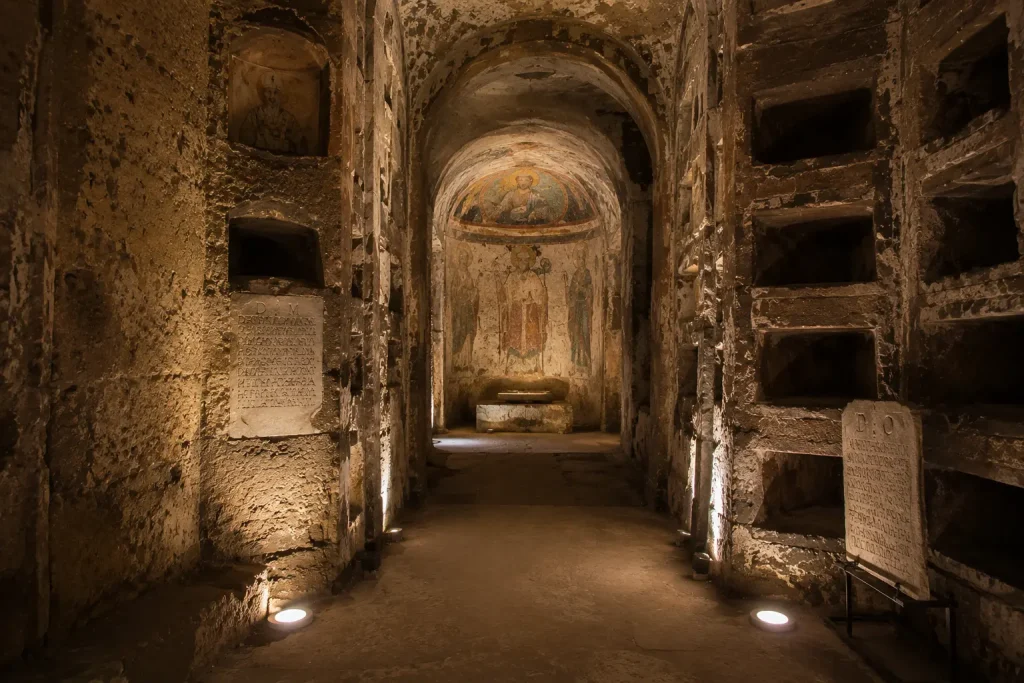
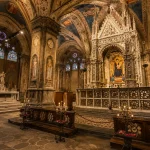
The underground basilicas of the Catacombs of San Gennaro are among the most impressive Early Christian spaces in Southern Italy, carved directly into Naples’ volcanic rock.
Perhaps the most breathtaking feature of the entire complex is the presence of underground basilicas.
These vast worship spaces contain columns, altars, and architectural elements carved directly into the surrounding rock.
Standing inside one of these chambers, it becomes easy to understand why visitors often describe the catacombs as an underground city rather than a cemetery.
The scale is genuinely surprising, especially for travelers expecting the cramped tunnels commonly associated with catacombs.
A Rare Portrait from Ancient Naples
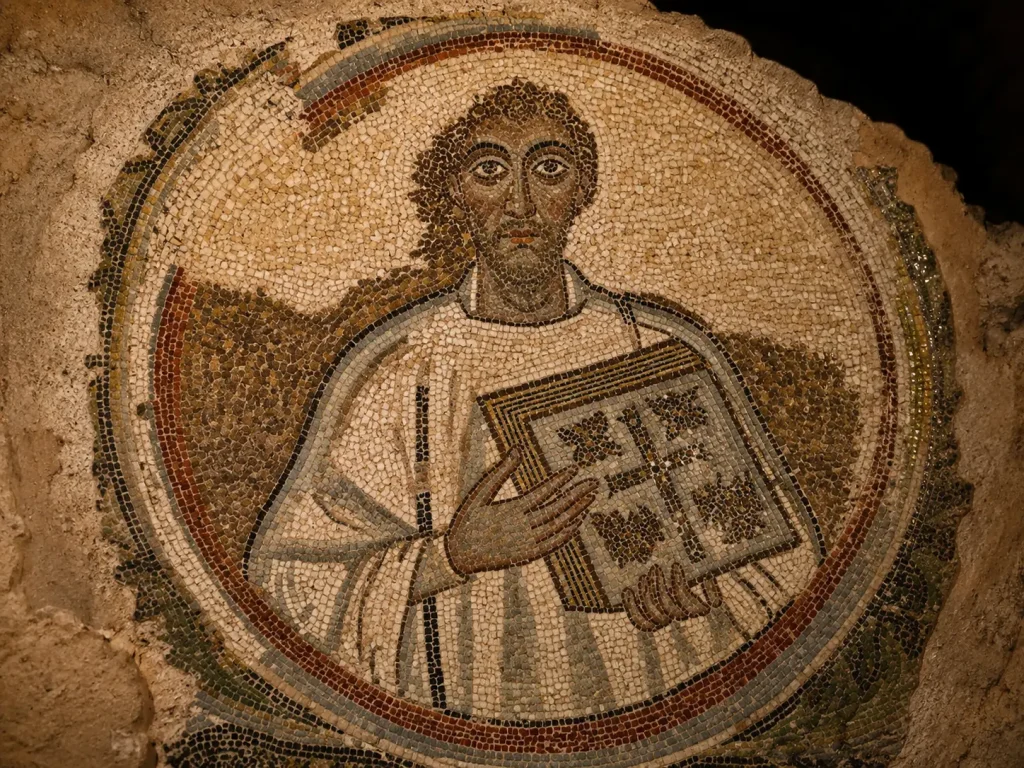
Rare portrait mosaics preserved in the Catacombs of San Gennaro provide a fascinating glimpse into the artistic traditions and people of ancient Naples.
Among the site’s hidden treasures is the famous Portrait of Theotecnus, dating to the 6th century.
It is considered one of the earliest realistic portraits preserved in Naples. Unlike many stylized religious images of the period, it provides a remarkably human glimpse into the people who once lived here.
It is a small detail that many visitors overlook, but one that fascinates historians and archaeologists alike.
Practical Visitor Guide
Location and Entrance
The entrance is located near the Basilica of Madre del Buon Consiglio, at the foot of Capodimonte Hill in the Sanità district.
The site can be reached by bus, taxi, or a pleasant walk from central Naples.
Many visitors combine their visit with nearby attractions such as the Capodimonte Museum or the historic streets of Sanità.
Guided Tours Only
A crucial detail for travelers:
The Catacombs of San Gennaro can only be visited as part of a guided tour.
Independent exploration is not permitted.
Fortunately, the guides are knowledgeable and provide valuable historical context that greatly enhances the experience. Tours are typically available in multiple languages, including English.
The “Two-for-One” Ticket
One of Naples’ best cultural bargains is the combined catacombs ticket.
Admission to the Catacombs of San Gennaro also includes entry to the nearby Catacombs of San Gaudioso, valid for up to four months after your first visit.
Many tourists miss this detail, but it effectively allows you to explore two extraordinary underground sites for the price of one.
What to Wear
Although Naples can be extremely hot during summer, temperatures inside the catacombs remain relatively constant throughout the year at around 15°C (59°F).
Bring a light jacket or sweater, even if visiting during July or August.
Comfortable walking shoes are also recommended, as some surfaces may be uneven.
Hidden Gems in Naples
Beyond the pizza shops, chaotic traffic, and famous waterfront views, Naples hides ancient underground cities, forgotten Roman theatres, secret tunnels, mysterious churches, hidden palaces, and candlelit passages buried beneath centuries of history. Here are the hidden gems that reveal the city’s most fascinating and authentic side.
How to Combine Your Visit with the Sanità District
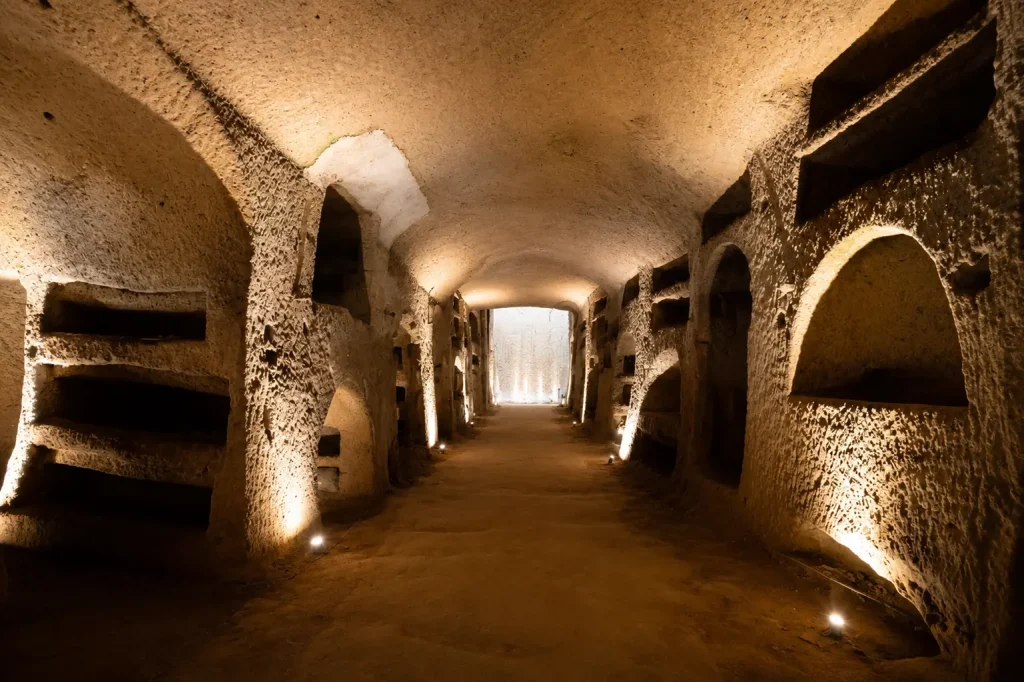
The vast chambers of the Catacombs of San Gennaro reveal why this underground complex is considered the largest and most impressive Early Christian burial site in Southern Italy.
One of the best aspects of visiting the Catacombs of San Gennaro is that your tour naturally ends in the heart of Naples’ fascinating Sanità district. Here is a simple route that combines history, architecture, and local food into one memorable experience:
Exit into the Sanità District As your tour concludes, take a moment to explore one of Naples’ most authentic neighborhoods, known for its vibrant street life, colorful traditions, and rich cultural heritage.
Marvel at Palazzo dello Spagnolo Just a short walk away stands one of the city’s most beautiful hidden landmarks, famous for its dramatic Baroque staircase and elegant courtyard. It remains one of the architectural gems of Naples that many tourists never discover.
Taste a Fiocco di Neve at Poppella Stop at the legendary pastry shop that created Naples’ beloved Fiocco di Neve, a light cream-filled pastry that has become a local icon.
Enjoy Pizza at Concettina ai Tre Santi Finish your visit with authentic Neapolitan pizza at one of the Sanità district’s most celebrated restaurants.
For travelers looking to explore beyond Naples’ famous landmarks, this route offers a perfect introduction to the city’s hidden side.
Why the Catacombs Feel Different from Every Other Underground Site
Ancient frescoes preserved within the Catacombs of San Gennaro reveal the artistic and spiritual traditions of Naples’ earliest Christian communities.
Many travelers arrive expecting a dark and intimidating cemetery.
Instead, they discover something entirely different.
The Catacombs of San Gennaro feel open, peaceful, and surprisingly uplifting. Natural ventilation, high ceilings, broad galleries, and abundant artistic decoration create an atmosphere that is contemplative rather than frightening.
This unique character explains why many visitors rank the catacombs among the most memorable experiences in Naples—even above some of the city’s more famous attractions.
Final Thoughts
The Catacombs of San Gennaro are not simply a burial site hidden beneath Naples. They are a vast underground world where Roman history, Early Christian faith, Byzantine art, and local tradition converge.
Spacious, majestic, and remarkably accessible, they offer a completely different perspective on Naples—one that most visitors never see. If you’re searching for an experience that goes beyond the city’s famous pizza, castles, and waterfront views, few places reveal the soul of Naples more powerfully than the Catacombs of San Gennaro.
To continue exploring the city’s lesser-known treasures, discover more destinations in our Hidden Side of Naples: An Insider’s Atlas.
FAQ
Are the Catacombs of San Gennaro claustrophobic?
No. Unlike many underground sites, the Catacombs of San Gennaro feature wide passageways and ceilings reaching up to six meters high. Most visitors who normally dislike confined spaces find them surprisingly comfortable.
How long does the tour take?
Most guided tours last approximately one hour, though visitors often spend additional time exploring the surrounding Sanità district afterward.
Is the site accessible for disabled visitors?
Yes. The Catacombs of San Gennaro are among the few major catacomb complexes in Europe that are accessible to wheelchair users.
Can you visit without a guide?
No. Entry is only permitted as part of an official guided tour.
Are the Catacombs of San Gennaro suitable for children?
Yes. Because the site is spacious, well-lit, and historically fascinating rather than frightening, many families find it an engaging educational experience.
What makes these catacombs different from Rome’s catacombs?
The Catacombs of San Gennaro are significantly larger and more open than most Roman catacombs. Their monumental underground basilicas, extensive frescoes, and strong connection to Naples’ patron saint create a completely different atmosphere and historical experience.