The magnificent courtyard of Palazzo dello Spagnolo showcases one of Naples’ most iconic examples of Baroque architecture hidden within the historic Rione Sanità district.
Naples is often called a city of contrasts — chaotic yet elegant, rough yet deeply artistic. But some of its greatest treasures hide behind ordinary facades in neighborhoods many tourists barely explore. In the heart of Rione Sanità stands Palazzo dello Spagnolo, one of the most extraordinary examples of Neapolitan Baroque architecture.
At first glance, the palace almost disappears into the dense streets of the district. Then the entrance opens, and suddenly visitors find themselves facing one of the most theatrical staircases in Italy. The famous “winged” staircase is not merely an architectural feature — it is a masterpiece of movement, symmetry, illusion, and dramatic design created during the golden age of 18th-century Naples.
For travelers searching beyond crowded tourist routes, Palazzo dello Spagnolo offers something rare: a glimpse into the artistic soul of Naples, where aristocratic grandeur still survives inside a living neighborhood.
The Architectural Wonder: What Makes It Special?
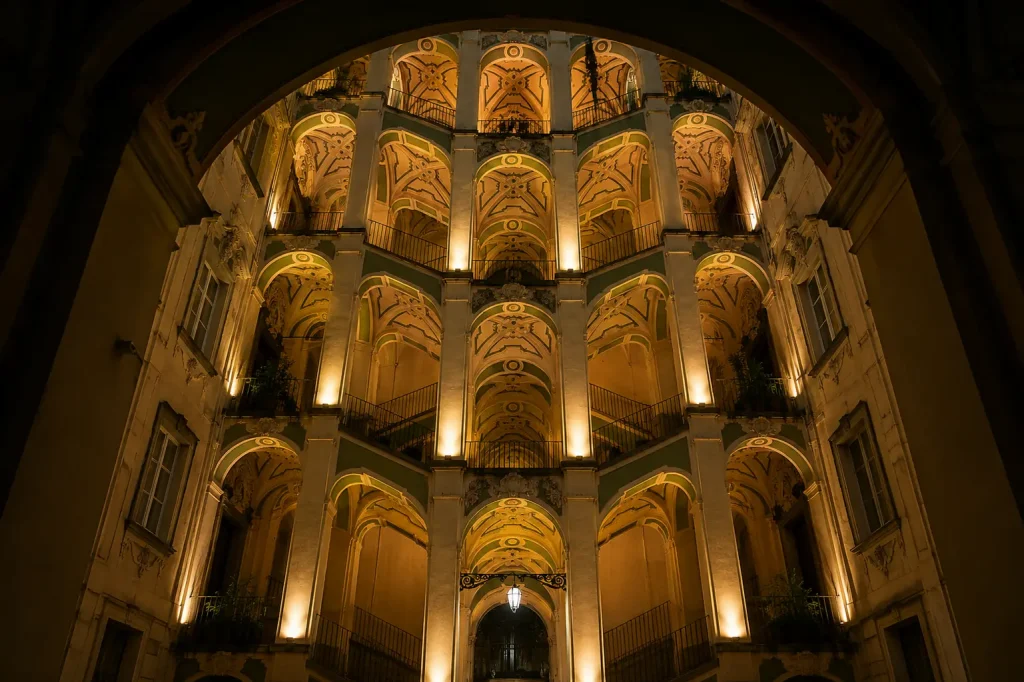
The iconic “winged” staircase of Palazzo dello Spagnolo glowing at night in the historic Rione Sanità district of Naples.
The Famous “Winged” Staircase
The true centerpiece of Palazzo dello Spagnolo is its spectacular open double staircase, designed by renowned architect Ferdinando Sanfelice in the early 18th century.
Instead of hiding staircases inside walls, Sanfelice transformed them into dramatic visual centerpieces. The stairways rise symmetrically through the courtyard like giant stone wings, creating constantly changing perspectives from every angle below.
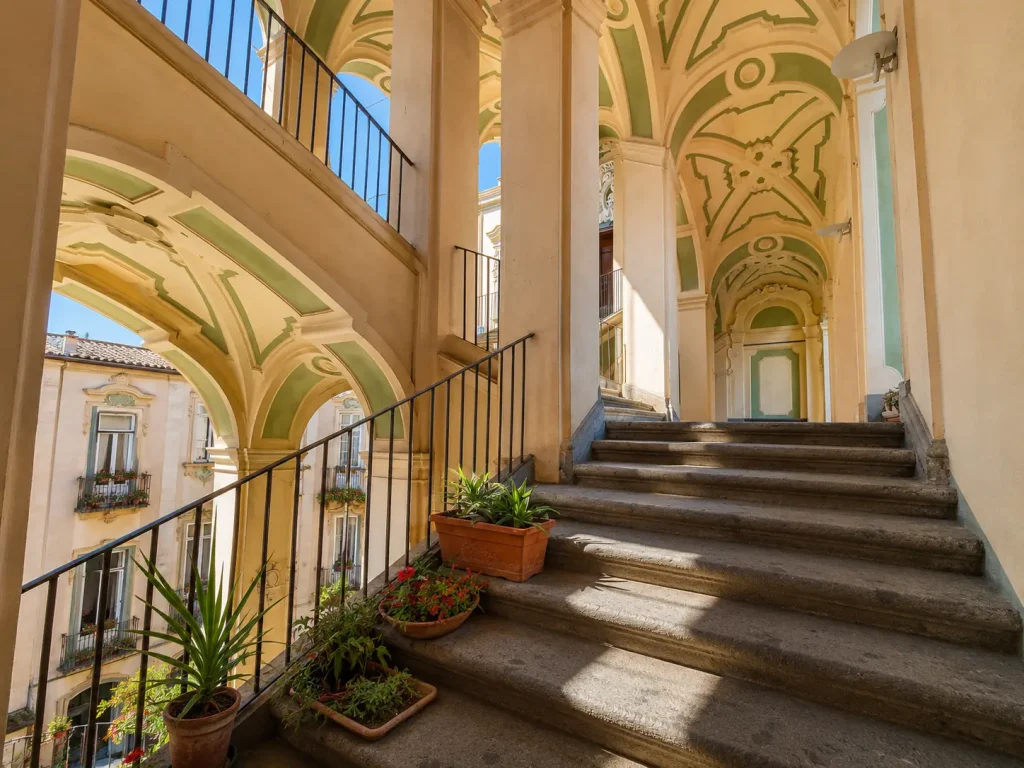
Light pours through arches and balconies throughout the day, turning the staircase into a constantly shifting play of shadows and geometry. The effect feels almost cinematic.
The staircase was not designed only for beauty. In aristocratic Naples, architecture was also performance. Before visitors even entered the noble apartments above, the staircase itself was meant to impress them with wealth, sophistication, and theatrical grandeur.
Today, the staircase remains one of the most photographed architectural details in Naples.
What is Palazzo dello Spagnolo famous for?
Palazzo dello Spagnolo is world-renowned for its elaborate, symmetrical “winged” double staircase designed by architect Ferdinando Sanfelice. It is considered one of the finest examples of Neapolitan Baroque architecture.
The Spirit of Neapolitan Baroque
Baroque architecture in Naples feels different from the monumental style of Rome.
Here, Baroque became emotional, dramatic, and almost theatrical. Naples was a crowded city of narrow streets, hidden courtyards, and dense urban life. Architects embraced illusion, movement, curves, balconies, and dramatic staircases to transform even limited spaces into visual spectacles.
Palazzo dello Spagnolo perfectly captures this uniquely Neapolitan spirit. The building does not overwhelm visitors with a grand exterior facade. Instead, it hides its masterpiece inside — rewarding those curious enough to step through the entrance.
This hidden beauty is one reason Naples feels so different from Florence or Rome. Some of the city’s greatest wonders remain invisible until you discover them yourself.
A Step Back in Time: The History of the Palace
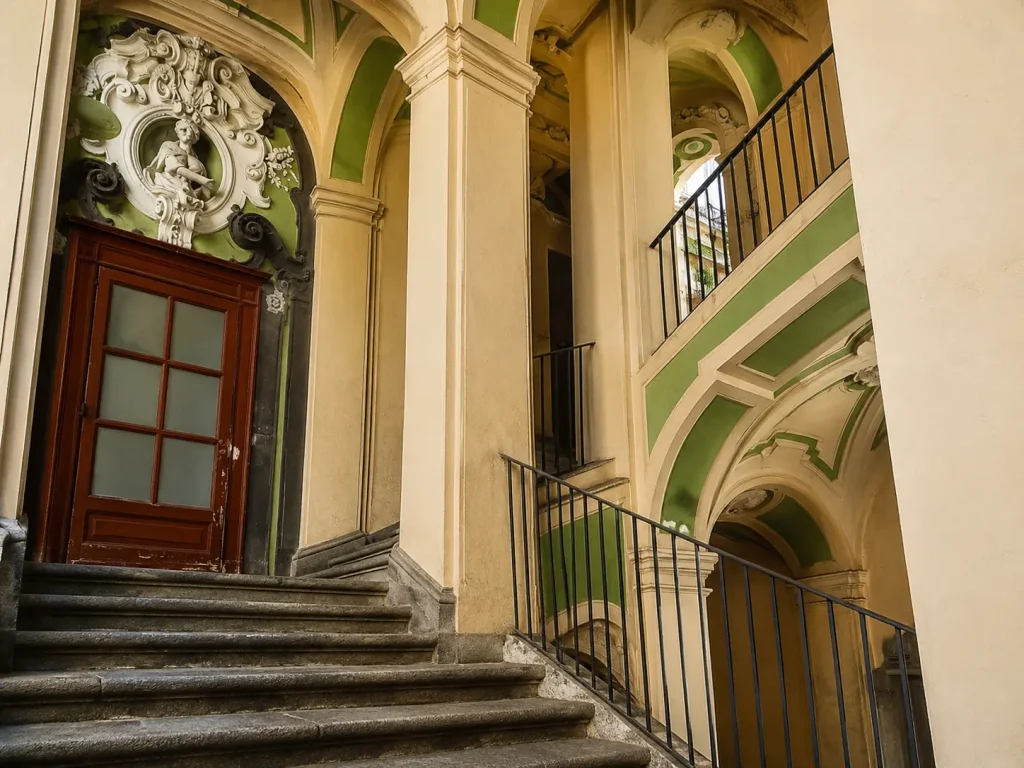
A close-up view of the elegant staircases and decorative Baroque architecture inside Palazzo dello Spagnolo in Naples.
Who Built Palazzo dello Spagnolo?
The palace was commissioned in 1738 by the wealthy nobleman Nicola Moscati, during a period when Rione Sanità was considered one of Naples’ prestigious aristocratic districts.
To create the residence, Moscati hired Ferdinando Sanfelice, one of the city’s most innovative architects. Sanfelice became famous for transforming ordinary architectural elements — especially staircases — into sculptural works of art.
Many architectural historians believe his designs were heavily inspired by theater stage scenery, which explains the palace’s dramatic sense of movement and visual illusion.
Why Is It Called “dello Spagnolo”?
The palace did not originally carry its modern name.
It later became associated with Tommaso Atienza, a resident nicknamed “Lo Spagnolo” (“The Spaniard”). Over time, locals began referring to the building as Palazzo dello Spagnolo, and the name remained.
Like many places in Naples, the identity of the palace became shaped not only by official history, but also by local memory and neighborhood storytelling.
A Palace That Survived the Centuries
Unlike many aristocratic residences across Europe that became museums, Palazzo dello Spagnolo remained a living residential building.
The palace survived revolutions, epidemics, economic decline, earthquakes, and World War II bombings while continuing to function as part of everyday Neapolitan life.
Today, laundry hanging above one of Italy’s greatest Baroque staircases creates a uniquely Neapolitan contrast between historical grandeur and daily life.
Exploring the Palace Today
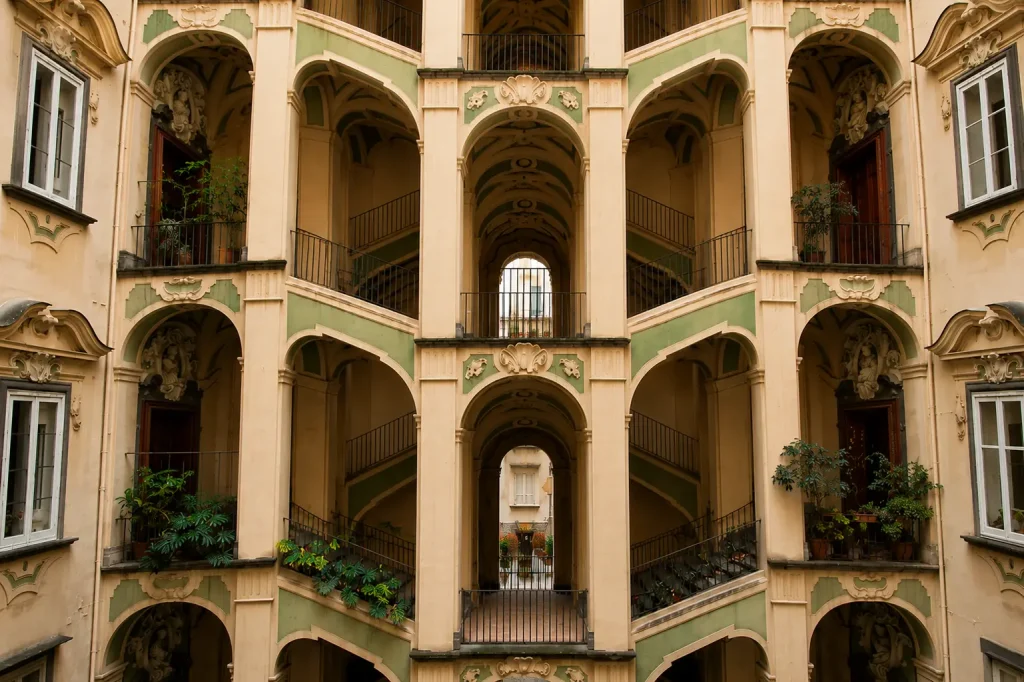
The famous symmetrical staircase courtyard of Palazzo dello Spagnolo, one of the finest hidden examples of Neapolitan Baroque architecture in Rione Sanità.
Living History Inside Rione Sanità
One of the most fascinating aspects of Palazzo dello Spagnolo is that people still live here today.
Residents walk the same staircases visitors come to admire. Children play inside the courtyard. Everyday life unfolds beneath one of the city’s most important architectural masterpieces.
This creates a rare atmosphere that feels authentic rather than museum-like.
Etiquette: How to Visit Respectfully
Because the palace is still residential, respectful behavior is extremely important.
Keep Noise to a Minimum
The courtyard amplifies sound significantly. Quiet conversation is appreciated.
Do Not Block Stairways or Entrances
Residents constantly move through the building, so visitors should avoid obstructing passageways.
Avoid Intrusive Photography
Casual photography is generally acceptable, but large professional shoots or drones should be avoided without permission.
Remember That People Live Here
Palazzo dello Spagnolo is not simply a tourist attraction — it is also someone’s home. Respectful tourism helps preserve access for future visitors.
Photography Tips
For photographers, the palace is one of the most visually rewarding locations in Naples.
Best Angles
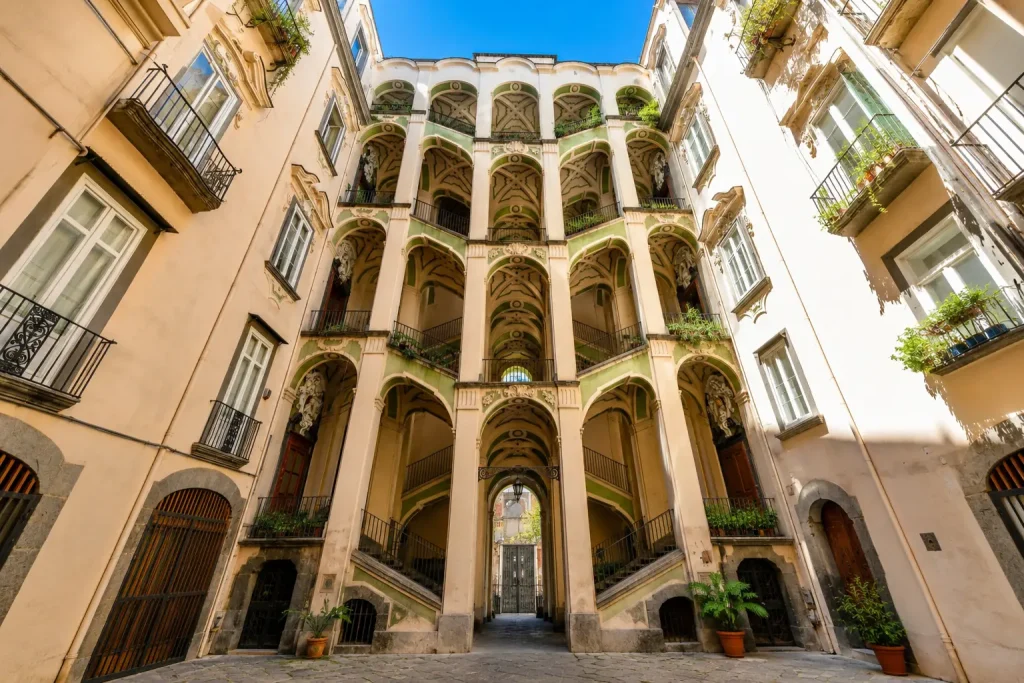
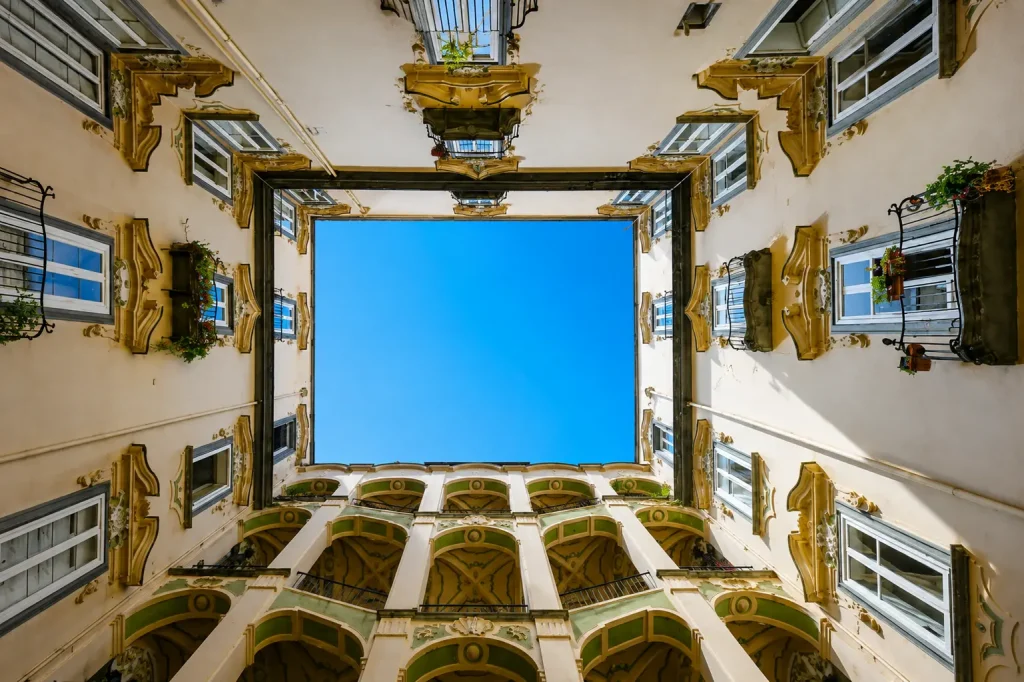
Stand in the center of the courtyard and shoot upward to capture the staircase symmetry.
Use vertical framing to emphasize the dramatic height.
Wide-angle lenses work especially well here.
Best Lighting
Morning is usually the ideal time to photograph the staircase. Soft sunlight enters from above and creates beautiful contrasts between illuminated stone and deep shadow.
Why Photographers Love It
The repeating arches, layered balconies, and geometric staircases naturally create cinematic compositions even for smartphone photography.
Hidden Gems in Naples
Beyond the pizza shops, chaotic traffic, and famous waterfront views, Naples hides ancient underground cities, forgotten Roman theatres, secret tunnels, mysterious churches, hidden palaces, and candlelit passages buried beneath centuries of history. Here are the hidden gems that reveal the city’s most fascinating and authentic side.
A dramatic upward perspective of Palazzo dello Spagnolo’s Baroque courtyard framed by elegant arches and a bright blue Neapolitan sky.
Location
Address: Via dei Vergini, 19, Naples, Italy.
The palace is located in the historic Rione Sanità district, one of Naples’ most fascinating and culturally rich neighborhoods.
How to Get There
By Metro
Take Metro Line 1 to Museo Station, then walk approximately 10–15 minutes into Rione Sanità.
From Museo Station, the route along Via dei Vergini offers a small glimpse into everyday Naples. Along the way, you will pass local pastry shops, tiny espresso bars, traditional bakeries, and neighborhood food stores filled with the smell of fresh sfogliatella and strong Neapolitan coffee — making the walk itself part of the experience.
By Walking
Many travelers combine the palace with a larger walking route through Rione Sanità’s hidden churches, catacombs, local markets, and historic streets.
Accessibility
Entry to the courtyard is generally free, but visitors should remember that this is private residential property rather than a formal museum.
Access conditions may occasionally vary depending on restoration work or local events.
Best Time to Visit
Morning is usually the best time to experience the palace.
Why?
Softer lighting for photography
Fewer visitors
Cooler temperatures during summer
A quieter atmosphere inside the courtyard
Late afternoon can also create dramatic shadows, though the space is often busier.
Hidden Details Most Visitors Miss
Warm sunlight illuminates the elegant Baroque staircases and vaulted arches inside Palazzo dello Spagnolo in Naples.
The Staircase Was Designed Like Theater Scenery
Many historians believe Sanfelice intentionally designed the staircase to resemble theatrical stage architecture.
In 18th-century Naples, opera and public spectacle were central parts of aristocratic culture. Standing in the courtyard almost feels like standing inside a giant Baroque theater set.
A Favorite Location for Filmmakers and Photographers
Because of its surreal geometry and cinematic atmosphere, Palazzo dello Spagnolo has appeared in Italian films, documentaries, fashion photography, and modern art projects.
The staircase is especially popular among directors trying to capture the mysterious beauty of historic Naples.
Rione Sanità Was Once an Aristocratic District
Although today Rione Sanità is often associated with authentic local street life, the neighborhood was once one of Naples’ elite residential areas.
Palazzo dello Spagnolo remains one of the clearest reminders of this forgotten aristocratic past.
How to Combine Your Visit
One of the best ways to experience Palazzo dello Spagnolo is as part of a larger walking route through Rione Sanità.
Suggested Walking Route
Stop 1:
Palazzo dello Spagnolo
Stop 2:
Fontanelle Cemetery — the mysterious ossuary famous for the historic “anime pezzentelle” skull devotion rituals.
Stop 3:
Basilica di Santa Maria della Sanità — one of the most beautiful churches in Naples, built above ancient catacombs.
Together, these locations reveal the true spirit of Rione Sanità: a neighborhood where architecture, faith, history, death, and daily life exist side by side.
Palazzo dello Spagnolo is far more than a beautiful staircase.
It represents the soul of Naples itself — dramatic, layered, imperfect, elegant, and alive. Behind an ordinary doorway lies one of the city’s greatest architectural treasures, where Baroque imagination still survives inside the rhythm of everyday life.
For travelers willing to step beyond the usual tourist path, Palazzo dello Spagnolo offers something increasingly rare in modern travel: not simply a monument to history, but history that still breathes.
FAQ
Is Palazzo dello Spagnolo open to the public?
The courtyard is generally accessible to visitors because it is part of a residential building. However, it is private property rather than a traditional museum, so respectful behavior is essential.
Can I take photos inside?
Yes, casual photography is usually allowed inside the courtyard. Visitors should avoid intrusive equipment or disturbing residents.
How long does it take to visit?
Most visitors spend around 15–30 minutes exploring and photographing the palace itself. Many combine it with a longer walk through Rione Sanità.
Is Palazzo dello Spagnolo worth visiting?
Absolutely. For travelers interested in architecture, photography, hidden gems, and authentic Naples beyond mainstream tourist routes, it is one of the city’s most rewarding places to discover.