The magnificent Incurabili Pharmacy preserves one of the most beautiful historic medical interiors in Naples with Baroque woodwork and antique apothecary jars.
Naples is famous for underground tunnels, royal palaces, and spectacular churches, but hidden within the historic center lies one of the most extraordinary medical treasures in Europe. The Incurabili Pharmacy (Italian: Farmacia Storica degli Incurabili) is far more than an old pharmacy—it is a breathtaking fusion of science, art, charity, and Enlightenment-era innovation.
For years, this remarkable site remained difficult to visit and was overshadowed by more famous attractions such as the Cappella Sansevero. Following extensive restoration efforts after the structural collapse that affected part of the complex in 2019, the pharmacy has re-emerged as one of Naples’ most fascinating cultural experiences. Today, visitors can once again admire an 18th-century medical masterpiece where medicine was practiced among gilded woodwork, hand-painted majolica jars, and grand Baroque frescoes. The restoration and reopening have made the site particularly relevant for travelers seeking fresh hidden gems in Naples.
If you’re searching for an authentic alternative to crowded tourist landmarks, the Incurabili Pharmacy offers a journey into a forgotten world where healing, faith, science, and even a touch of alchemy once existed side by side.
The Origins: From a Sanctuary for the “Incurable” to a Scientific Hub
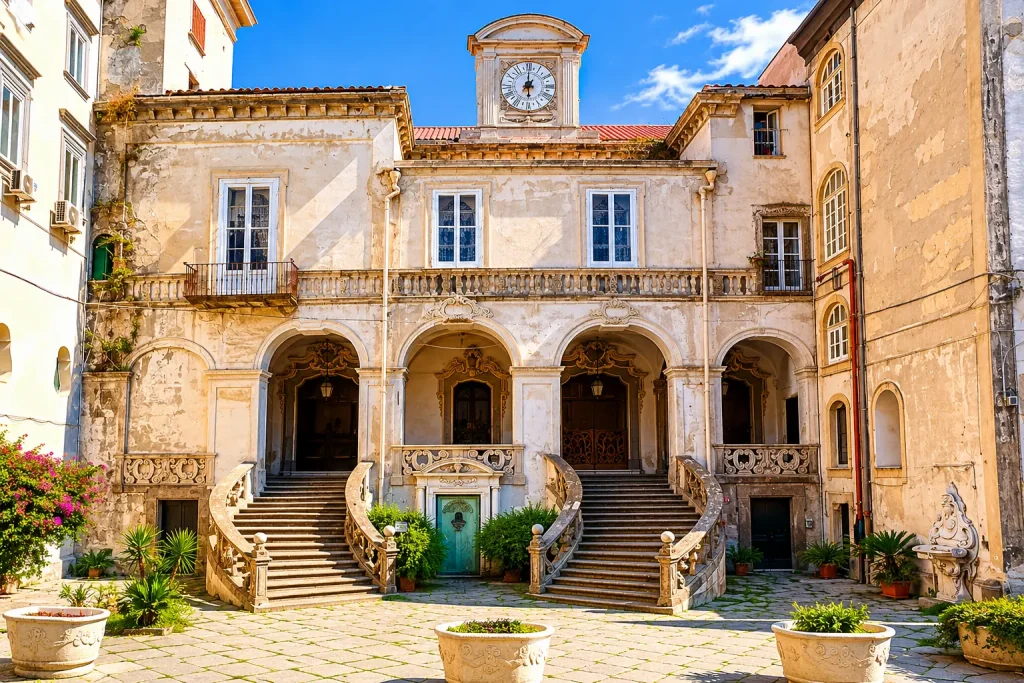
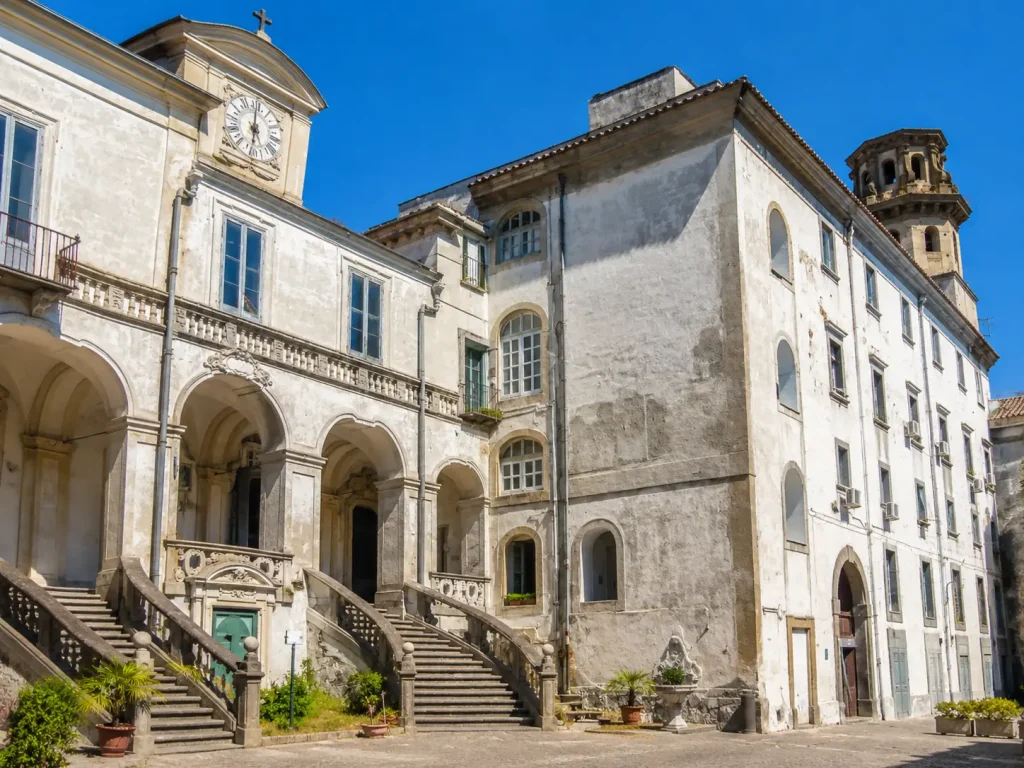
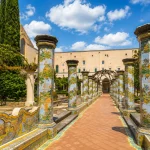
The historic courtyard of the Incurabili Pharmacy (Farmacia Storica degli Incurabili), one of Naples’ most fascinating hidden gems and medical landmarks.
Maria Lorenza Longo and a Renaissance Vision
The story begins in 1521 with Maria Lorenza Longo, a Catalan noblewoman whose life was transformed by illness. According to tradition, she suffered from paralysis and experienced a remarkable recovery after visiting the thermal baths of Pozzuoli. Inspired by her experience, Longo dedicated herself to helping society’s most vulnerable members. She founded the Ospedale degli Incurabili, a hospital intended for people suffering from diseases considered untreatable at the time.
The institution quickly became one of the most respected hospitals in southern Italy, serving:
Patients with syphilis (the prominent “incurable” disease of the era)
The city’s poorest and homeless populations
Pilgrims and weary travelers
Abandoned orphans
Women without family or financial support
Victims of devastating local epidemics
People suffering from aggressive, chronic illnesses
At a time when many hospitals offered little more than basic shelter, the Incurabili complex actively pursued advanced medical treatment and research. Over the following centuries, it evolved into one of Naples’ leading centers of healthcare and scientific education.
The 18th-Century Upgrades: Art Meeting Medicine
By the mid-1700s, Naples was one of Europe’s largest and wealthiest cities. Medical knowledge was advancing rapidly, and the hospital leadership sought to create a pharmacy worthy of the institution’s premier reputation. Around the 1740s, architect Bartolomeo Vecchione designed the spectacular pharmacy visitors admire today.
This was not merely a commercial dispensary. It functioned dynamically as:
A high-end pharmaceutical laboratory
A secure center for medical experimentation
A teaching facility for young students and physicians
A storage space for rare, exotic, and imported medicinal ingredients
A grand visual symbol of Naples’ scientific ambitions
Medicine during the Enlightenment was increasingly connected to chemistry, botany, and anatomy. The Incurabili Pharmacy became one of the finest surviving examples of how science and art seamlessly merged during this golden period.
Decoding the Baroque Laboratory: Wood, Gold, and Majolica
Entering the pharmacy feels less like entering a medical facility and more like stepping into a royal palace. Every surface reflects the historical belief that empirical knowledge and absolute beauty could coexist.
The Counter and the Walnut Cabinets
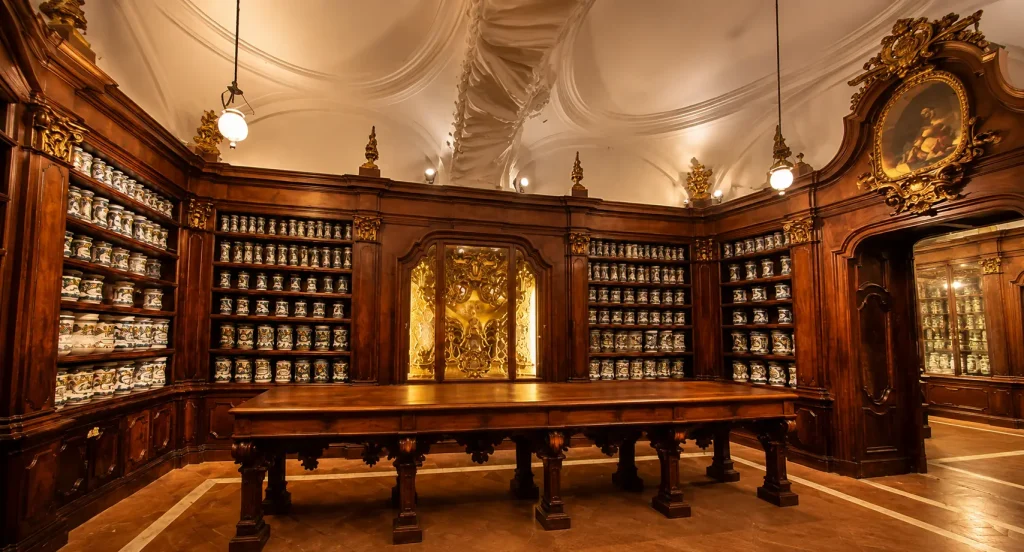
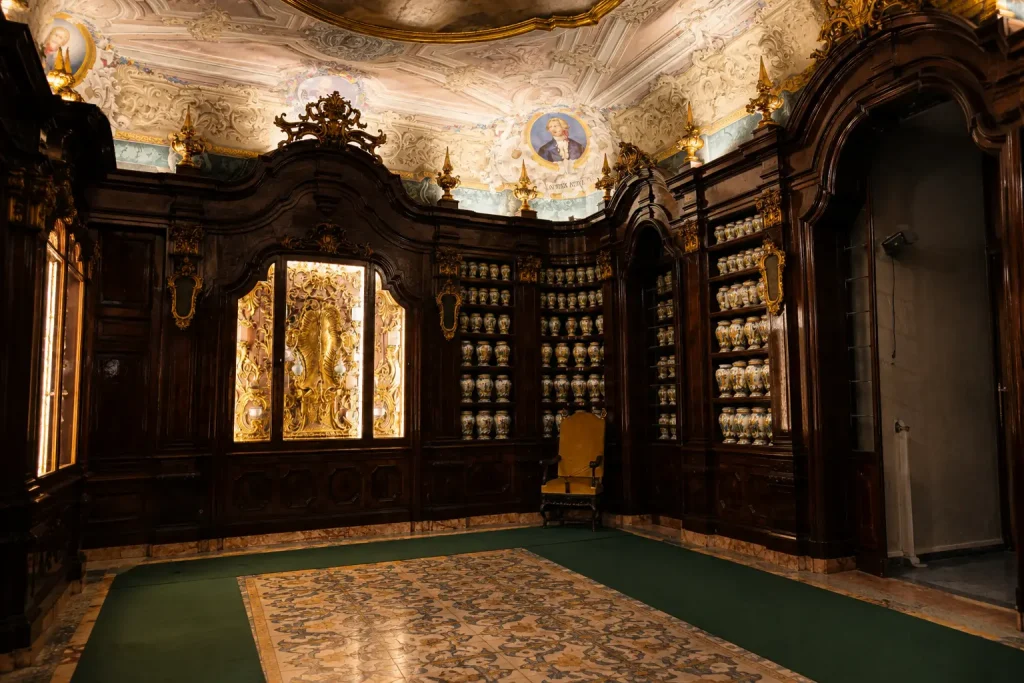
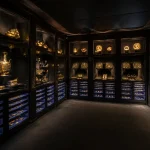
Richly carved walnut cabinets lined with hundreds of majolica jars demonstrate the craftsmanship, prestige, and scientific heritage of the historic Incurabili Pharmacy in Naples.
The first feature visitors notice is the magnificent wooden interior. The pharmacy’s walls are completely lined with elaborate cabinets crafted from richly carved walnut and other fine woods. For centuries, these cabinets safely stored medicinal herbs, minerals, toxic powders, oils, tinctures, and rare imported ingredients. The craftsmanship alone easily rivals many aristocratic residences of the era.
Look closely and you’ll notice:
Delicate, hand-carved floral motifs
Dramatic Baroque decorative elements
Ingeniously hidden drawers and secure compartments
Elegant, strict symmetry spanning throughout the entire room
The wooden furnishings were designed not only for practical storage but also to inspire confidence in elite patients and demonstrate the institution’s immense prestige.
The Sea of Majolica Jars (Albarelli)
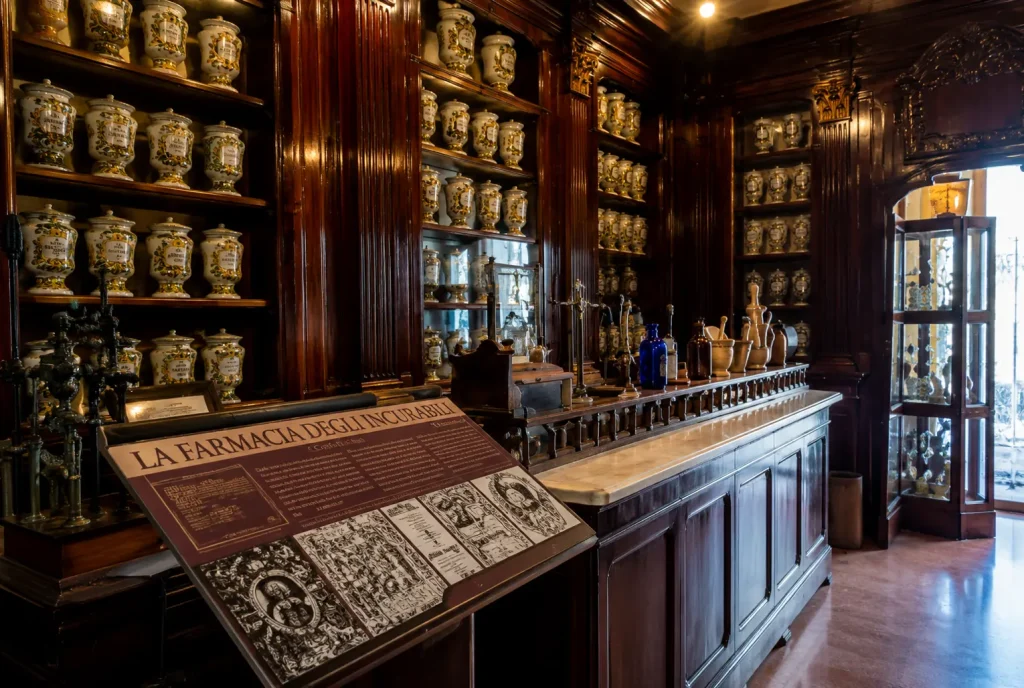
Richly carved walnut cabinets lined with hundreds of majolica jars demonstrate the craftsmanship, prestige, and scientific heritage of the historic Incurabili Pharmacy in Naples.
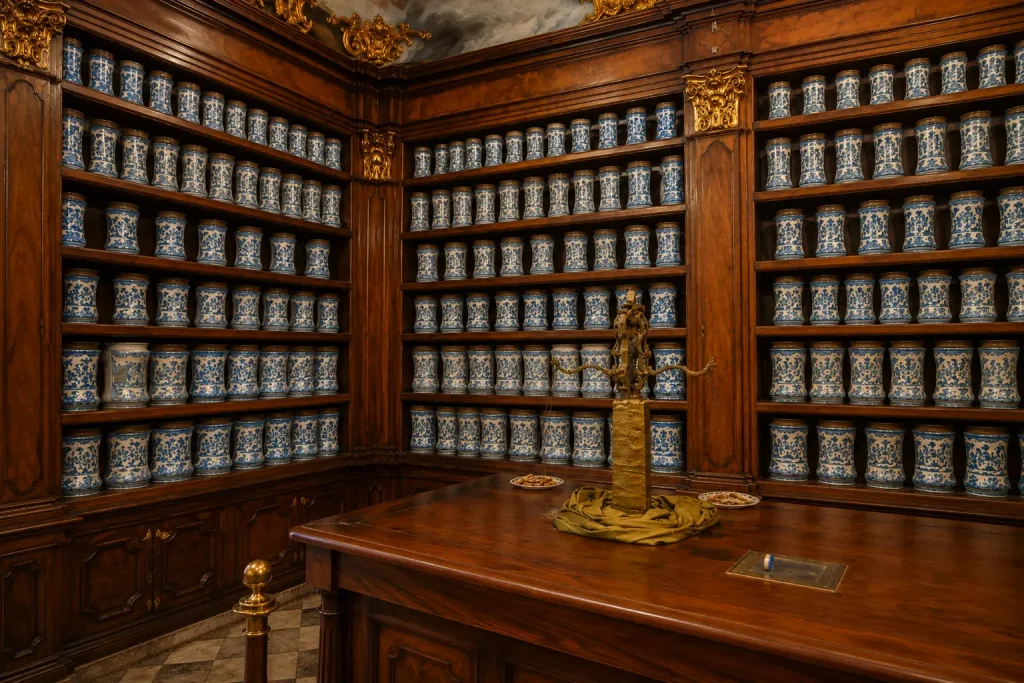
The true stars of the pharmacy are its famous majolica jars, known as albarelli. Roughly 400 hand-painted vessels fill the wooden shelves, creating one of the most impressive surviving pharmaceutical collections in Europe.
These colorful containers feature:
Dramatic biblical scenes
Classical and historical allegories
Royal coats of arms of the ruling dynasties
Intricate floral decorations and patterns
Mythological imagery and figures
Traditional medical and alchemical symbols
Many jars still clearly bear the names of the ancient medicines once stored inside. One fascinating detail often overlooked by visitors is that some jars still preserve faint traces of chemical substances prepared centuries ago. These silent remnants offer a tangible connection to the pharmacy’s daily operations during the 18th century.
Hidden Gems in Naples
Beyond the pizza shops, chaotic traffic, and famous waterfront views, Naples hides ancient underground cities, forgotten Roman theatres, secret tunnels, mysterious churches, hidden palaces, and candlelit passages buried beneath centuries of history. Here are the hidden gems that reveal the city’s most fascinating and authentic side.
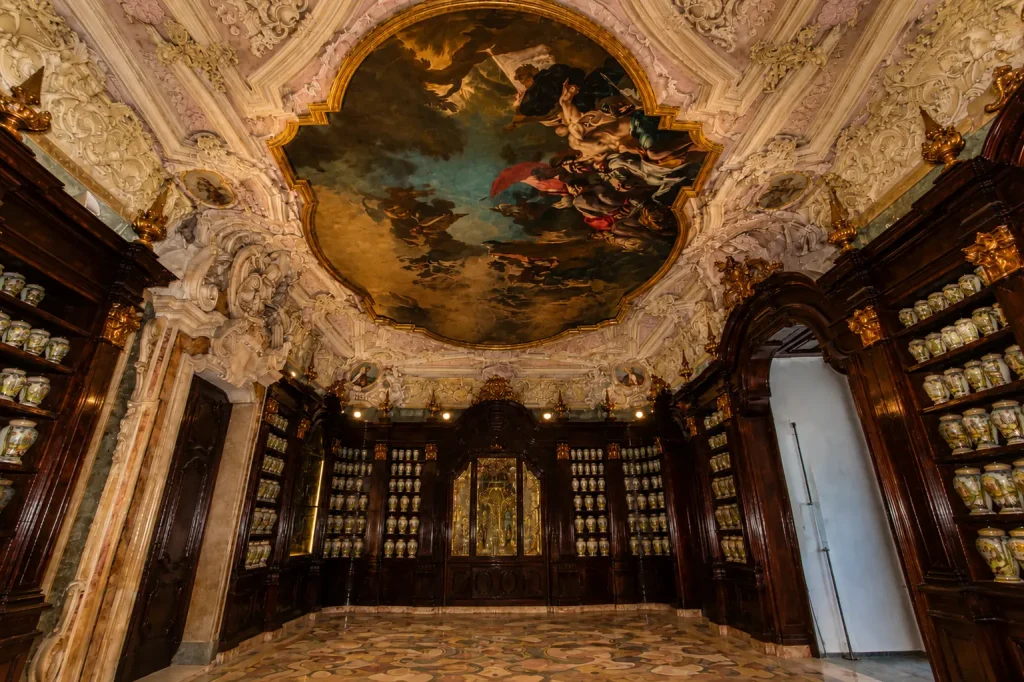
The spectacular ceiling fresco by Pietro Bardellino crowns the historic Incurabili Pharmacy, celebrating medicine, knowledge, and the healing arts through the symbolism of Apollo and Mount Parnassus.
Don’t forget to look up. The magnificent ceiling fresco by Pietro Bardellino transforms the room into a theatrical celebration of knowledge. The painting depicts a symbolic triumph of the healing arts under the direct protection of Apollo and the mythological world of Mount Parnassus.
The imagery conveys a powerful Enlightenment message:
Science and reason improve the condition of humanity.
Medicine is a noble, elite art form.
Knowledge should actively serve society’s vulnerable.
Healing is both a practical science and a moral mission.
Together, the fresco, furniture, and majolica jars create one of Naples’ most visually stunning, intact interiors.
Rare Legends & Lesser-Known Facts About the Incurabili
Rows of hand-painted majolica albarelli jars fill the elegant walnut cabinets of the Incurabili Pharmacy, preserving centuries of pharmaceutical history and Baroque craftsmanship.
The Myth of Viper Venom and Theriac
One of the most fascinating stories associated with the pharmacy involves Theriac. For centuries, Theriac was considered a miracle cure-all medicine capable of treating countless ailments and neutralising deadly poisons. Its complex recipe often contained more than sixty separate ingredients, including herbs, spices, rare resins, pure honey, a heavy dose of opium, and dried viper flesh.
Producing Theriac was not a secretive laboratory procedure. In Naples, the preparation became an official public spectacle attended by physicians, pharmacists, nobles, and curious citizens. Watching the creation of this legendary remedy was considered almost as important as the medicine itself. Although modern science has long abandoned such formulas, the story reveals how medicine once balanced between empirical observation and ancient alchemical belief.
The Hospital of the Saints
The Incurabili complex is frequently called the “Hospital of the Saints.” Over the centuries, several prominent religious and medical figures associated with the hospital later achieved sainthood or beatification. Among them were Camillus de Lellis, Ludovico da Casoria, and Giuseppe Moscati—the famous 20th-century “holy doctor” of Naples. Their work strengthened the institution’s reputation as both a center of cutting-edge healing and a place of deep compassion, helping shape Naples’ unique tradition of combining medicine, charity, and spirituality.
The Rebirth After the Collapse
One reason the Incurabili Pharmacy remains relatively unknown internationally is that public access was heavily restricted after a major structural collapse in 2019. The collapse occurred behind the altar area of a neighboring church and raised serious safety concerns about the stability of the entire complex.
An unprecedented restoration program followed, involving investments exceeding €100 million across the wider site. The project successfully stabilized the structures and meticulously preserved centuries of artistic and medical heritage. Today, visitors can admire the pharmacy in a pristine condition that is arguably better than it has been in decades.
The Museum of Sanitary Arts (Museo delle Arti Sanitarie)
A visit to the pharmacy is usually combined with the nearby Museo delle Arti Sanitarie. This museum adds valuable context by explaining exactly how medicine evolved in Naples over several centuries.
H3: Medical Instruments That Look Like Torture Devices Modern visitors are often shocked by the historical collection. The museum contains:
Intimidating surgical instruments from the 18th and 19th centuries
Early, primitive microscopes and laboratory tools
Detailed anatomical teaching models made of wax
Antique pharmaceutical equipment and weighing scales
Rare medical manuscripts and historical recipes
Ghostly, plague-era protective leather masks
Many tools appear incredibly intimidating by modern standards, offering a vivid reminder of how challenging and painful medical treatment once was. The sharp contrast between these harsh instruments and the serene beauty of the pharmacy itself creates one of the most memorable museum experiences in Naples.
Practical Visitor Guide
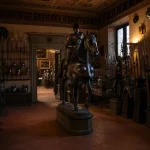
The historic Incurabili complex in Naples combines centuries of medical history with elegant Baroque architecture, including its distinctive staircases, arcades, and clock tower.
Because the pharmacy is part of a delicate historical complex, planning your visit ahead ensures you don’t miss out on this incredible time capsule.
Visitor Detail
Essential Information
Address
Via Luciano Armanni 21, 80138 Naples, Italy
Area
Historic Center (Centro Storico), upper section
Current Status
Fully reopened following a major €100M structural restoration
Ticket Price
Approximately €10
Included Access
Historic Pharmacy + Museum of Sanitary Arts
Visit Duration
About 1 hour
Guided Tours
Highly recommended (often mandatory due to fragile interiors)
Nearby Attractions
MANN (Archaeological Museum), Via Foria, Piazza Cavour
Insider Tips for Art & History Enthusiasts
Look for the Double-Headed Eagle: Many visitors focus only on the overall color of the jars. However, look carefully at the shelves and you’ll notice a distinct double-headed eagle appearing on several majolica vessels. This specific symbol reflects the political influence of ruling imperial dynasties and highlights the pharmacy’s historical connection to royal power and elite patronage.
Book Your Ticket Ahead: The wooden interior, ancient paintings, and ceramic collections are exceptionally fragile. Because of this, visitor numbers are strictly limited, and guided access is required to preserve the space. Advance online reservations through the Museo delle Arti Sanitarie are strongly recommended.
How to Get to the Incurabili Pharmacy
By Metro
The easiest options to reach the historic medical quarter via public transit are:
Museo Station (Metro Line 1)
Piazza Cavour Station (Metro Line 2)
From either station, expect a scenic 7–10 minute uphill walk through the historic streets near Via Foria. The route itself offers an authentic glimpse into everyday Naples life, completely away from the main commercial tourist corridors.
Creating the Ultimate “Hidden Naples” Cultural Loop
One of the best ways to experience the depth of the city is by combining several artistic and historical attractions into a single, seamless day trip. If you are already exploring nearby highlights like the chaotic Quartieri Spagnoli, the grand Galleria Umberto I, or the peaceful Cloister of Santa Chiara, this itinerary makes a brilliant contrast:
Morning: Start with a futuristic descent into the deep blue mosaics of the iconic Toledo Metro Station.
Midday: Head up to the Centro Storico to explore the medical and alchemical wonders of the Incurabili Pharmacy and the Museum of Sanitary Arts.
Afternoon: Walk down toward Via dei Tribunali to visit Pio Monte della Misericordia and stand before Caravaggio’s masterpiece, The Seven Works of Mercy.
Together, these locations reveal a sophisticated side of Naples focused on creative genius, enlightenment science, faith, and human ingenuity rather than conventional sightseeing.
Why the Incurabili Pharmacy is a Must-Visit for Every Traveler
Many historic hospitals across Europe have been modernized beyond recognition or completely gutted over the centuries. The Incurabili Pharmacy is entirely different. It remains an astonishing, untouched time capsule where visitors can still experience the exact atmosphere of an Enlightenment-era medical institution almost exactly as it appeared to doctors and kings centuries ago.
Few places combine Baroque art, medical history, scientific innovation, religious heritage, and rare decorative arts within such an authentic local culture. For travelers searching beyond Naples’ most famous attractions, the Farmacia Storica degli Incurabili is one of the city’s greatest hidden treasures. It is not simply an old pharmacy—it is a monument to humanity’s endless pursuit of healing, knowledge, and hope.
FAQ
Can you take photos inside the Incurabili Pharmacy?
Yes, photography is generally permitted for personal use, but flash photography is strictly prohibited to protect the historic frescoes, fragile gold leaf, and delicate woodwork.
Who was Maria Lorenza Longo?
Maria Lorenza Longo was the visionary founder of the Ospedale degli Incurabili. She was an influential Catalan noblewoman whose personal recovery from illness inspired her to dedicate her life and fortune to creating one of Naples’ most important medical and charitable institutions.
What is the best exit for the Incurabili Pharmacy?
When arriving by metro, exiting at Piazza Cavour or Museo will position you perfectly. Follow the signs heading toward Via Foria, and then make your way up into the historic hospital district via Via Luciano Armanni.
How long does it take to visit the Incurabili Pharmacy?
A standard guided visit exploring the main pharmacy hall, the adjacent side rooms, and the medical exhibits of the Museum of Sanitary Arts typically takes between 45 minutes and 1 hour.
Is the pharmacy open every day?
Opening schedules can vary following the new management guidelines of the post-restoration reopening. Always verify current operating hours on the official website before planning your walk.
Is the Incurabili Pharmacy worth visiting if I am not interested in medical history?
Absolutely. The vast majority of visitors come primarily for the jaw-dropping Baroque architecture, the massive collection of hand-painted majolica tiles, the rare woodwork, and the mysterious, historic atmosphere rather than the medical science itself.