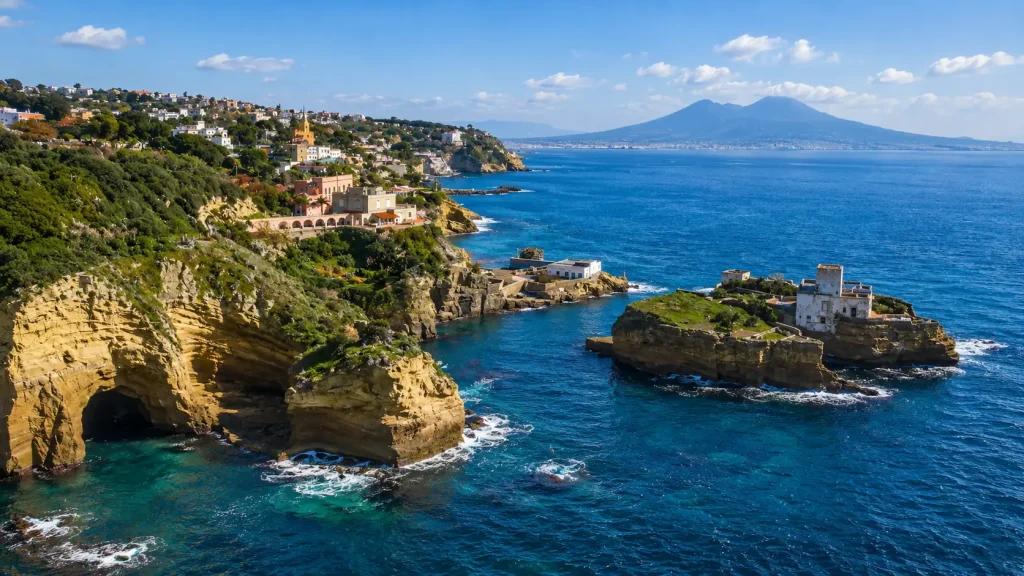
The mysterious La Gaiola Island combines turquoise waters, ancient ruins, and легенды о проклятии in one of Naples’ most fascinating coastal hidden gems.
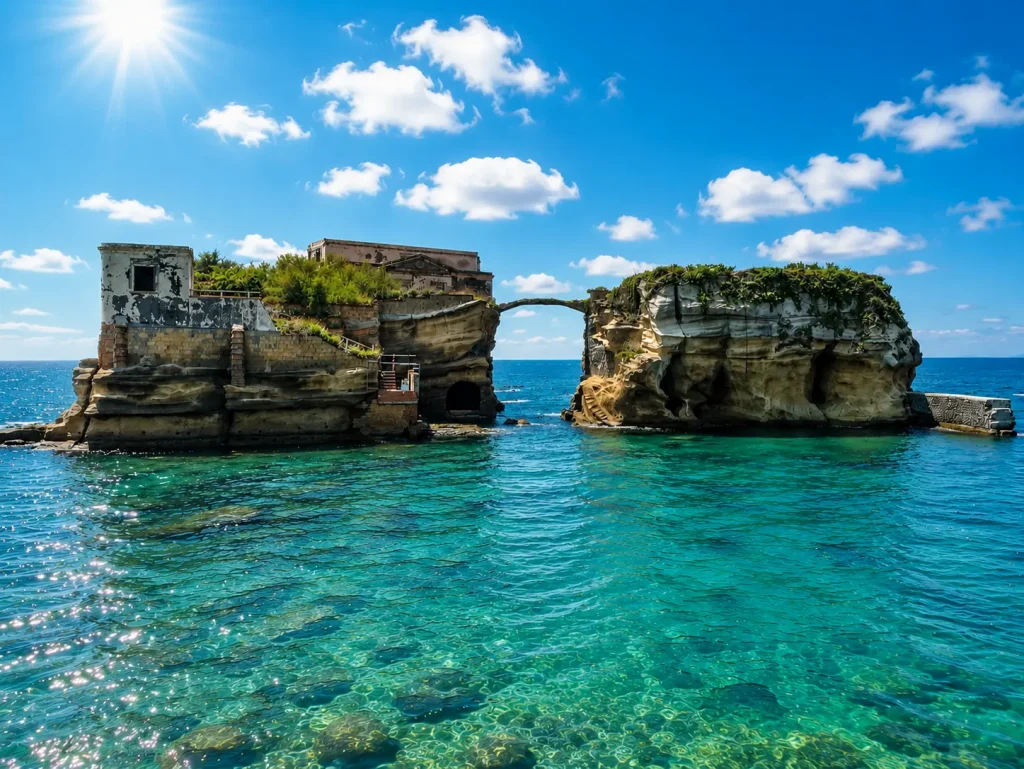
Just beyond the bustling streets of Naples, where the elegant Posillipo district meets the sparkling waters of the Tyrrhenian Sea, two small rocky islets rise dramatically from the sea. Connected by a narrow, gravity-defying stone bridge and surrounded by crystal-clear water, La Gaiola Island looks like something from a postcard.
Yet behind this breathtaking beauty lies one of Italy’s most chilling legends.
For generations, locals have referred to Gaiola as Isola Maledetta — the Cursed Island. Wealthy owners suffered financial ruin. Influential families experienced devastating tragedies. Residents vanished, died unexpectedly, or watched their fortunes collapse shortly after acquiring the property. Over time, the stories became so numerous that many Neapolitans stopped treating them as coincidences and began viewing the island with a mixture of fascination and unease.
At the same time, La Gaiola is far more than a place of dark legends.
Beneath the turquoise waters surrounding the island lie the remains of an ancient Roman coastal estate, submerged roads, imperial fish ponds, and archaeological structures that have slowly disappeared beneath the sea over the course of two millennia. Today, these ruins form part of the Gaiola Underwater Park (Parco Sommerso di Gaiola), one of the most fascinating marine archaeological sites in Italy.
Whether you come for the history, the snorkeling, the underwater ruins, or the stories of the curse, La Gaiola offers one of the most unique experiences in Naples.
Is La Gaiola Island Really Cursed?
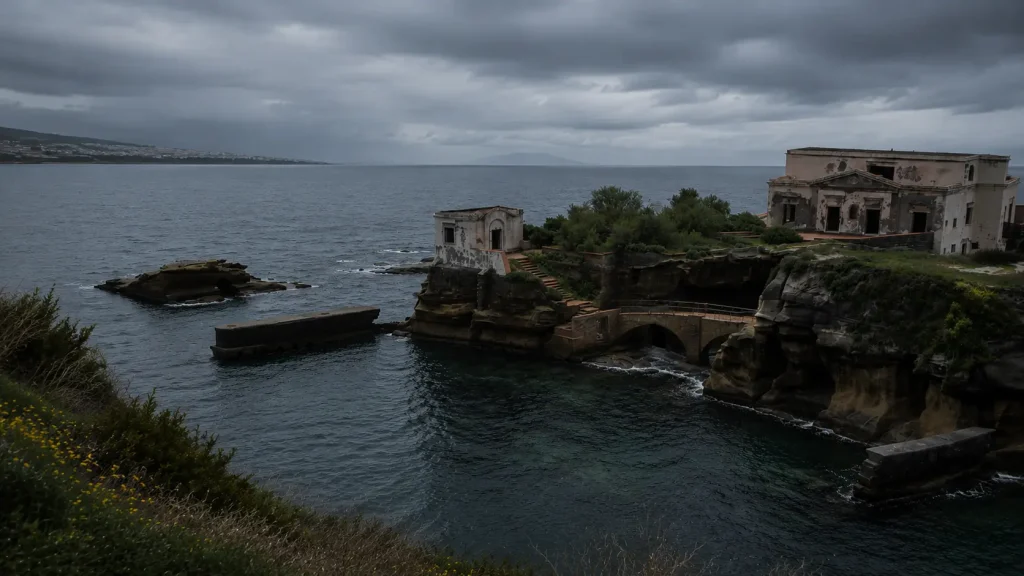
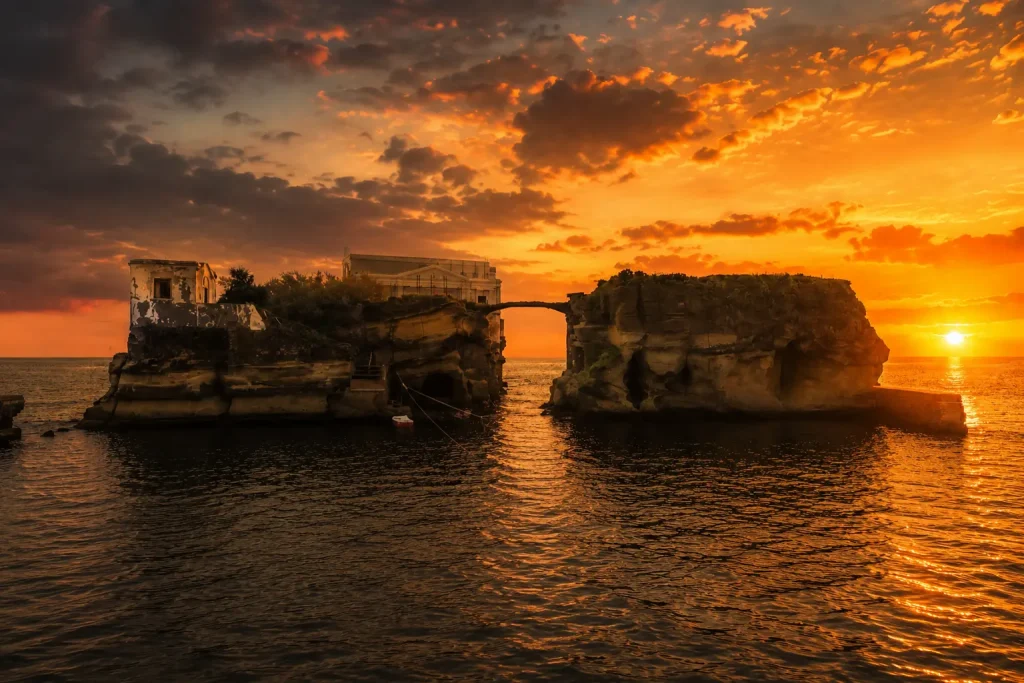
The abandoned villa of La Gaiola Island sits beneath dark clouds, reinforcing the mysterious reputation that earned it the nickname “The Cursed Island” of Naples.
The answer depends on whether you prefer science or folklore.
Most historians and skeptics view the island’s reputation as the result of a remarkable series of coincidences amplified by local legends. However, the list of misfortunes associated with the island is unusually long and difficult to ignore. Over the last two centuries, numerous owners, residents, and individuals linked to La Gaiola reportedly experienced bankruptcy, violent deaths, family tragedies, kidnappings, or sudden financial collapse. As a result, the island gradually earned its reputation as one of the most cursed places in Italy.
Today, the villa standing on the larger islet is completely abandoned and inaccessible to visitors. The surrounding waters, however, are perfectly safe and protected as part of a marine reserve that welcomes swimmers, kayakers, and snorkelers from around the world. Whether the curse is real remains a mystery. What is certain is that few places in Naples possess such an extraordinary combination of natural beauty, classical archaeology, and dark legend.
The Anatomy of a Curse: The Tragic Timeline of Owners
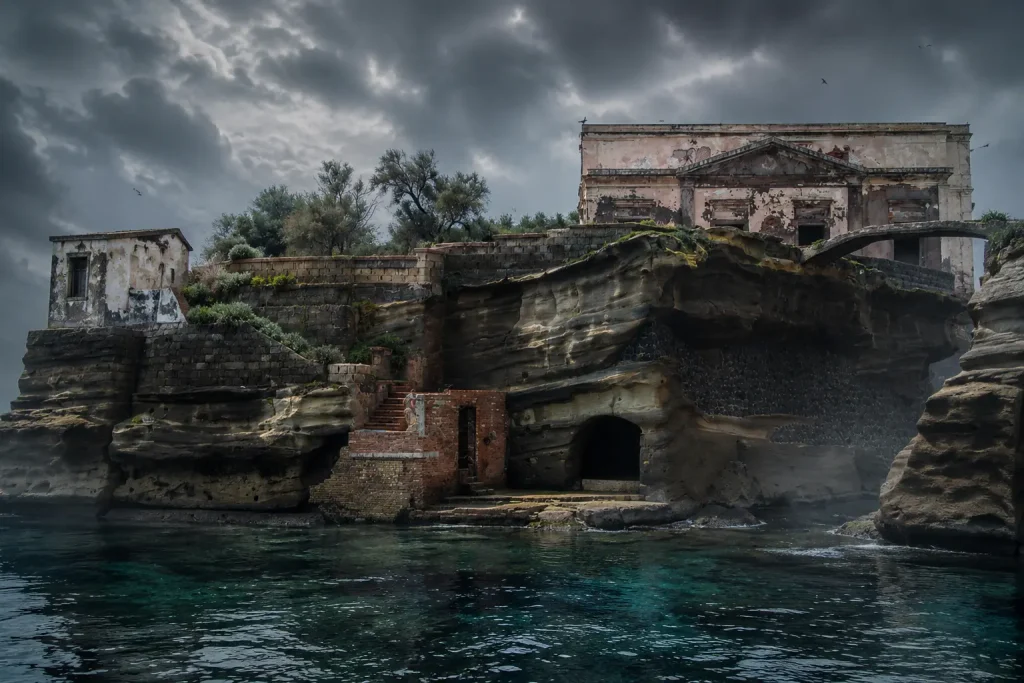
The abandoned villa of La Gaiola Island stands beneath ominous clouds, reinforcing the mysterious stories of misfortune, tragedy, and the legendary curse that surrounds this iconic Naples landmark.
The legend of La Gaiola’s curse did not begin with famous industrialists or wealthy modern businessmen. According to local stories, it started with a mysterious hermit.
The Hermit’s Vanishing Act
In the early nineteenth century, a man known only as Il Mago (“The Wizard”) lived alone on the island, surviving on the charity of local fishermen. Little is known about his origins. Some accounts describe him as a scholar, while others portray him as an eccentric mystic fascinated by alchemy, astrology, and the occult. Then, one day, he disappeared without a trace. No body was found. No explanation was ever offered. Some claimed he left Naples secretly, while others insisted that the island itself had somehow claimed him. For many locals, this disappearance marked the beginning of La Gaiola’s sinister reputation.
Hans Braun and the Birth of the Modern Curse
The story became internationally famous during the twentieth century. Swiss businessman Hans Braun purchased the island and transformed it into an exclusive private retreat overlooking the Bay of Naples. Surrounded by breathtaking views and complete privacy, it seemed like the perfect Mediterranean escape.
His dream ended tragically. Braun was later found dead under mysterious circumstances, reportedly wrapped inside a heavy carpet within the villa. Soon afterward, his grief-stricken wife drowned in the calm, shallow waters surrounding the island. The double tragedy shocked Naples and became one of the most frequently cited examples of the island’s curse.
Famous Owners, Famous Misfortunes
Over the decades, La Gaiola became associated with some of Europe’s wealthiest and most influential figures. According to local Naples lore, Fiat chairman Gianni Agnelli was among the prominent individuals connected to the island. Supporters of the curse theory often point to the devastating tragedies that later affected his family.
Particular attention is given to the death of his son, Edoardo Agnelli. Some local stories claim that Edoardo viewed La Gaiola as a private refuge before the family’s highly publicized misfortunes accelerated. While historians debate the accuracy of these accounts, they remain a central part of the island’s mythology.
The island has also been linked in popular accounts to American oil billionaire J. Paul Getty. Locals frequently note that Getty’s grandson was brutally kidnapped by the Calabrian mafia (‘Ndrangheta) during the period in which the family was allegedly connected to the island. The kidnapping became one of the most famous criminal cases of the twentieth century and further fueled stories surrounding Gaiola’s curse.
The Last Private Owner
Perhaps the most famous modern example involves businessman Giancarlo Grappone. After purchasing the island, his massive insurance company collapsed, financial difficulties mounted, and legal troubles eventually led to a high-profile imprisonment. To believers in the curse, Grappone became simply another name added to a growing list of victims. Soon afterward, ownership of the island passed to the Italian state. No private owner has permanently lived there since.
Coincidence or Something More?
Skeptics point out that wealthy families often face public scrutiny and that tragedies can occur regardless of where someone owns property. Believers see things differently. When viewed together, the stories form an extraordinary chain of misfortune stretching across generations. Whether one calls it coincidence, bad luck, or something more mysterious, the legend has become inseparable from La Gaiola’s identity.
Deep History: The Submerged Roman Palace of Publius Vedius Pollio
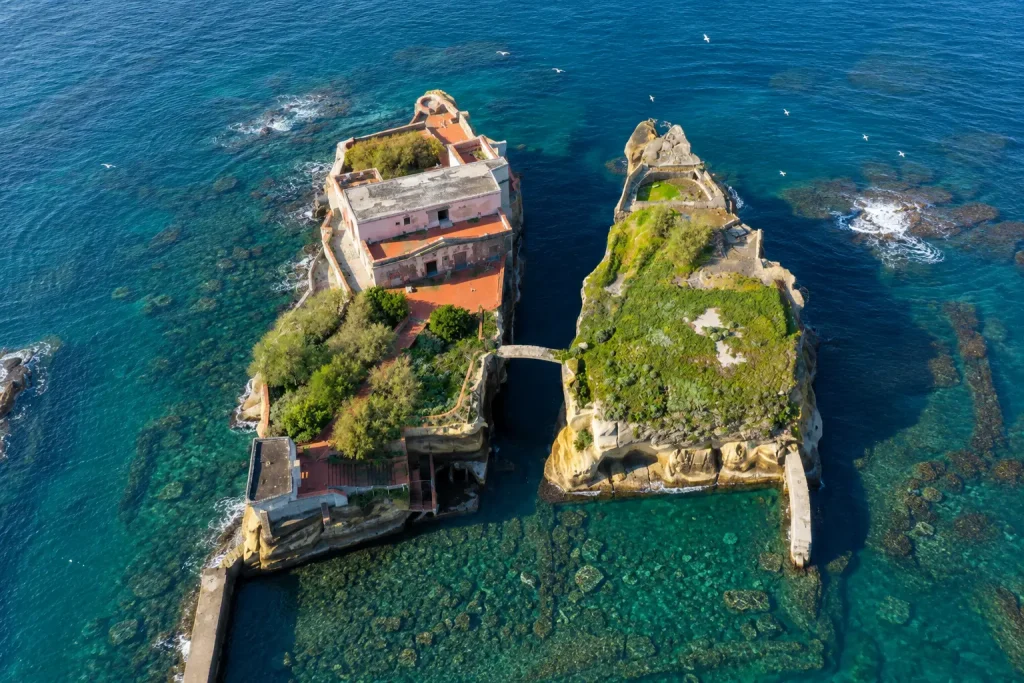
An aerial view of La Gaiola Island reveals its twin islets, historic bridge, turquoise waters, and the submerged archaeological remains hidden beneath the surface of the Bay of Naples.
Long before stories of modern curses emerged, La Gaiola was already a place associated with wealth and prestige. The surrounding Posillipo district derives its name from the ancient Greek word Pausílypon, meaning “respite from pain” or “the place where worries disappear.” For more than two thousand years, aristocrats, merchants, poets, and rulers have been drawn to this beautiful stretch of coastline. The irony is hard to miss: a place named for peace and tranquility would later become famous for stories of tragedy and misfortune.
Rome’s Elite Playground
During the Roman era, Posillipo became one of the most desirable residential areas in the Bay of Naples. The wealthy elite competed to build luxurious seaside villas along the dramatic cliffs overlooking the sea. Among the most famous residents was Publius Vedius Pollio, an immensely wealthy Roman knight and close associate of Emperor Augustus.
Pollio constructed an enormous coastal estate featuring gardens, terraces, private docks, bathing facilities, fish ponds, and entertainment areas designed to impress visitors arriving by sea. The villa was considered one of the most luxurious residences in the region. Today, much of that magnificent complex rests beneath the waters surrounding La Gaiola.
A Dark Reputation Long Before the Curse
Curiously, the island’s association with tragedy may stretch much further back than the nineteenth century. Publius Vedius Pollio was notorious throughout the Roman world for his extreme cruelty. Ancient writers described him as a man who maintained enormous moray eels in elaborate fish ponds carved into the coastline near his villa.
According to one of the most infamous stories from ancient Rome, Pollio occasionally threw disobedient slaves into these pools as punishment, allowing the eels to attack and consume them. The tale became so notorious that Emperor Augustus himself was reportedly horrified by Pollio’s behavior.
Some historians believe parts of the story may have been exaggerated over time. Nevertheless, it was repeated by several Roman authors and became one of the darkest legends associated with the Posillipo coast. Today, local guides often point out that the submerged remains of these ancient fish ponds still rest beneath the waters of Gaiola Marine Park. For believers in the curse, it is tempting to imagine that the island’s troubled reputation began nearly two thousand years before the first modern tragedy ever occurred.
The Power of Bradyseism
One of the most fascinating aspects of La Gaiola has nothing to do with curses. It is geology. The Bay of Naples sits within one of Europe’s most active volcanic regions, influenced by the volcanic systems of the Phlegraean Fields (Campi Flegrei) and nearby Mount Vesuvius.
Over centuries, underground volcanic activity has caused the land to slowly rise and fall in a process known as bradyseism. Unlike earthquakes, which occur suddenly, bradyseism is a gradual movement that can continue for decades or even centuries. As a result, sections of the ancient Roman coastline slowly sank beneath the sea. Entire portions of Pollio’s villa, harbor facilities, fish ponds, terraces, and coastal structures disappeared underwater.
H3: A Favorite Coast of Emperors The Posillipo coastline remained popular long after Pollio’s death. Roman emperors, senators, and wealthy merchants continued building villas across the area for centuries. Archaeologists believe many structures still remain undiscovered beneath the waters surrounding Gaiola and the nearby coastline.
What Lies Beneath the Water: A Window Into Ancient Naples
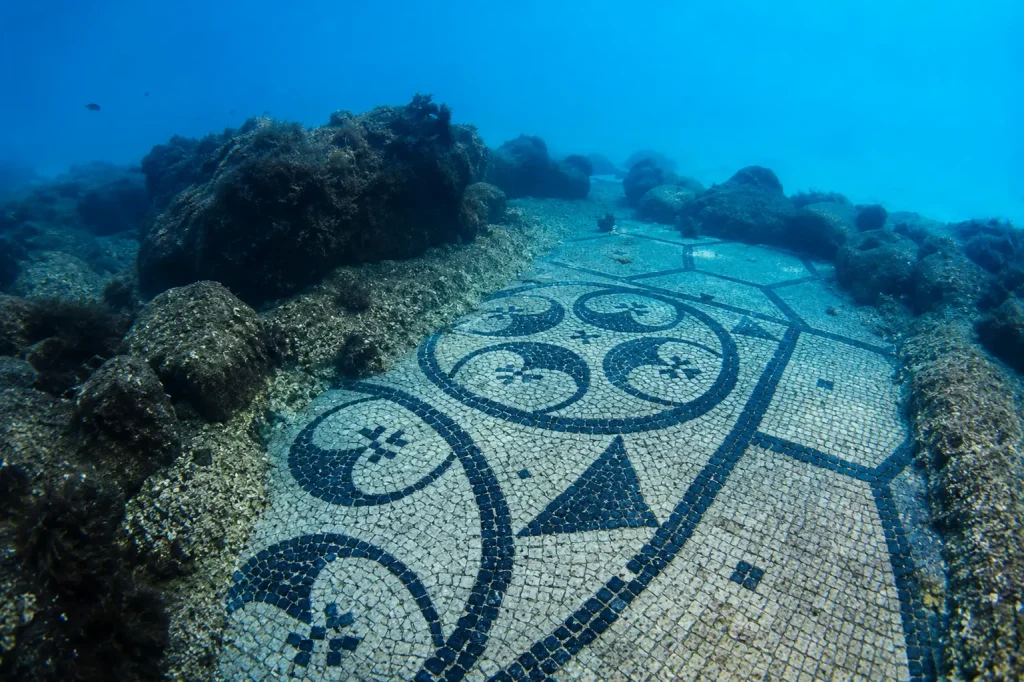
An ancient Roman mosaic lies preserved beneath the crystal-clear waters of La Gaiola Underwater Park, revealing the hidden archaeological treasures of Naples’ famous underwater site.
Unlike traditional archaeological sites, where visitors walk among ruins, Gaiola invites travelers to explore an ancient world submerged by time and nature. Much of its history is hidden just beneath the surface. Depending on weather, tides, and visibility conditions, visitors swimming or snorkeling around the marine park can clearly observe:
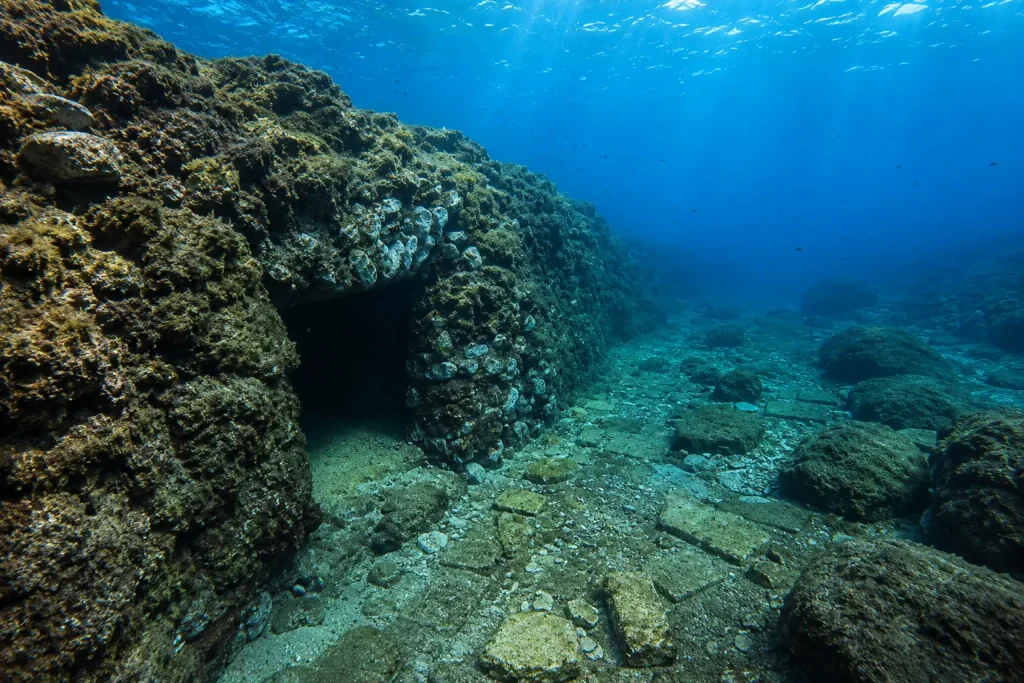
Ancient Roman walls built from local yellow tuff stone
Submerged imperial building foundations
Fish farming pools (piscinae) where Pollio kept his infamous eels
Ancient stone pathways and stairs leading into the deep
Submerged harbor and docking structures
Fragments of luxury coastal villas and mosaic foundations
Many of these remains lie only one to three meters below the surface, making them remarkably visible even to snorkelers without specialized diving equipment. Instead of looking down from a museum platform, visitors float directly above structures built nearly two thousand years ago. On calm summer mornings, the water becomes so clear that outlines of ancient walls and foundations appear almost suspended beneath the surface. It is easy to understand why many visitors describe Gaiola as one of Naples’ best-kept secrets.
More Than a Curse: The Living Marine Park
Submerged stone ruins preserved beneath the waters of La Gaiola Underwater Park offer a glimpse into the ancient Roman world hidden beneath the Bay of Naples.
While the island’s dark reputation attracts most visitors, many leave talking about something entirely different. The waters surrounding La Gaiola are home to one of the most important marine ecosystems in the Bay of Naples. Protected as part of the Gaiola Underwater Park, the area combines archaeology, conservation, and marine biodiversity in a way that few places in Europe can match.
A Natural Aquarium Beneath the Cliffs
Snorkelers often describe Gaiola as an open-air aquarium. The protected waters support a surprising variety of marine life, much of which thrives directly among the submerged Roman ruins. Depending on the season, visitors may encounter:
Schools of Sea bream and colorful Wrasse
Damselfish weaving through ancient Roman bricks
Octopuses hiding in the crevices of submerged foundations
Sea stars, Sea urchins, and anemones
Small crabs hiding among volcanic tuff rocks
The combination of wild fish swimming through ancient walls creates an unforgettable experience. Few archaeological sites in the world feel this alive.
The Importance of Posidonia Seagrass
One of the marine park’s greatest treasures is its extensive meadow of Posidonia oceanica. Often mistaken for seaweed, Posidonia is actually a flowering marine plant found only in the Mediterranean. Scientists frequently refer to Posidonia meadows as the “lungs of the Mediterranean” because they:
Produce massive amounts of oxygen for the marine habitat
Significantly improve coastal water quality and clarity
Stabilize the seabed with their dense root systems
Protect the narrow Posillipo coastlines from wave erosion
Provide vital shelter and nursery grounds for hundreds of marine species
H3: Why the Water Is So Clear Many visitors are surprised by the exceptional clarity of the water so close to a major city. The explanation is simple: strict environmental protections, strictly controlled visitor numbers, dedicated conservation programs, and a total ban on commercial fishing have allowed the area’s ecosystem to fully regenerate. As a result, snorkeling conditions at Gaiola are often among the absolute best in the entire Bay of Naples.
Rare Legends & Lesser-Known Facts
Golden sunset light illuminates La Gaiola Island and its iconic bridge, creating one of the most dramatic and mysterious coastal views in Naples.
Beyond the famous stories of curses and tragedy, La Gaiola is surrounded by a collection of lesser-known folklore that adds another layer of mystery to the island.
Virgil the Magician
Today, Virgil is remembered as one of ancient Rome’s greatest poets. In medieval Naples, however, popular culture believed he was a powerful sorcerer. According to local folklore, Virgil conducted secret alchemical experiments somewhere along the Posillipo coast and created magical protections for the city. One version of the story claims that an experiment gone wrong accidentally cursed the very rocks of La Gaiola.
The Ghostly Lady
Some local fishermen still tell stories about a pale woman who appears on the ruined terraces of the abandoned villa during foggy mornings. Descriptions vary, but she is often portrayed as faceless and dressed in an old-fashioned white dress. No evidence supports the story, yet it continues to be passed from one generation to another, adding to the island’s eerie reputation.
The Bridge of Sighs
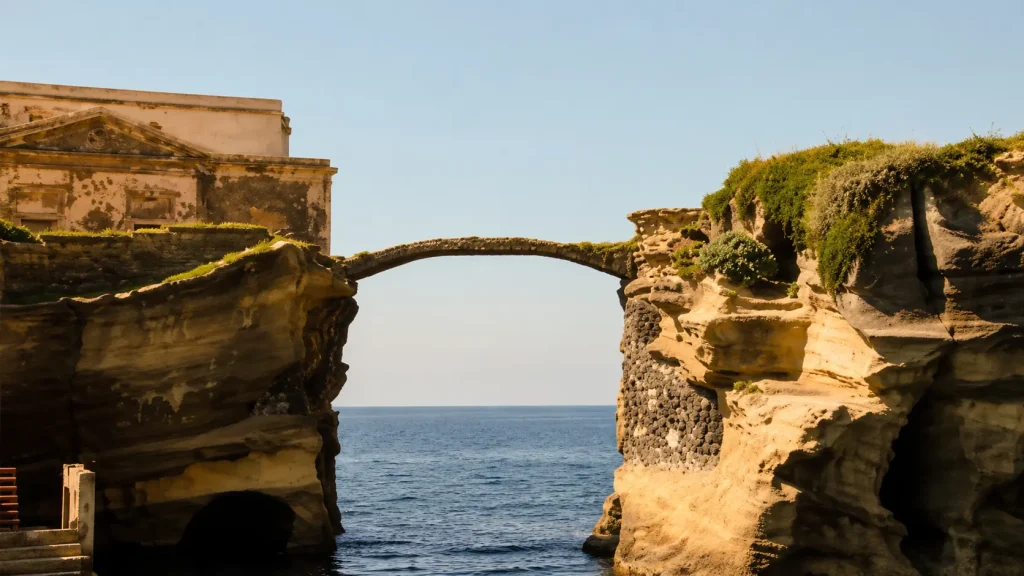
The narrow, high bridge connecting the two islets has inspired romantic legends for generations. According to one local tale, couples who kiss while standing on the center of the bridge will either enjoy eternal love or suffer a sudden, dramatic separation. The outcome, locals joke, depends entirely on the mood of the sea.
The Island That Survived the War
During World War II, parts of the Port of Naples suffered extensive bombing. Despite its highly exposed coastal location, La Gaiola completely escaped major destruction. Some residents viewed this as pure luck. Others saw it as further evidence that mysterious, ancient forces shield the island from the chaos of the outside world.
Practical Guide for Visitors
The iconic stone bridge linking the two islets of La Gaiola Island has become one of the most recognizable features of Naples’ famous Cursed Island.
Unlike many hidden gems in Naples, La Gaiola is not a place where visitors can simply arrive and expect unrestricted access. Because the area is a highly regulated eco-reserve, visitor numbers are carefully controlled.
Strictly Prohibited (Fines apply for landing on the rocks)
The Best Way to Experience Gaiola
The most rewarding ways to explore the area include:
Guided kayak tours: Great for paddling safely between the islets and under the bridge.
Snorkeling excursions: Guided by marine biologists to identify fish and Roman architecture.
Transparent-bottom boat tours: Excellent for non-swimmers to view the submerged city comfortably.
Insider Tip
Many first-time visitors are disappointed when they discover that stepping onto the island itself is prohibited. In reality, the true attraction lies underwater. A kayak or snorkeling excursion provides a far richer experience than exploring the abandoned, structurally unsafe villa ever could.
What Most Tourists Miss
Most visitors focus entirely on the small public beach area. That is a mistake. Some of the best photographic views of La Gaiola can be found from the hiking paths and high cliffs directly above the Posillipo coastline. Also, keep in mind that following heavy coastal storms, underwater visibility may remain poor and cloudy for several days.
Hidden Gems in Naples
Beyond the pizza shops, chaotic traffic, and famous waterfront views, Naples hides ancient underground cities, forgotten Roman theatres, secret tunnels, mysterious churches, hidden palaces, and candlelit passages buried beneath centuries of history. Here are the hidden gems that reveal the city’s most fascinating and authentic side.
La Gaiola Island sits just off the Posillipo coastline, with the Bay of Naples and Mount Vesuvius creating one of the most spectacular coastal panoramas in southern Italy.
By Metro and Bus
Take Naples Metro Line 2 to Mergellina Station. From there, board Bus 140 toward Posillipo and get off near the Discesa Coroglio stop. The final section requires a scenic but very steep 15-minute downhill walk along the Discesa Gaiola road.
Note: Remember that you will have to walk back up this steep hill after your swim!
By Taxi
A taxi is the easiest and most comfortable option. Ask the driver to take you as far down the Discesa Gaiola hill as vehicles are legally allowed to go to reduce the amount of walking required under the hot sun.
Combine Your Visit with Parco Virgiliano
Many travelers combine La Gaiola with a visit to the nearby Parco Virgiliano. The clifftop park offers some of the finest panoramic views in Italy, with spectacular vistas overlooking Capri, Nisida, the Bay of Naples, and La Gaiola itself. If you want the classic postcard view of the island from above, this is the place to find it.
Why La Gaiola Is One of Naples’ Most Unique Hidden Gems
Few places combine so many layers of history, nature, and myth in such a small area. La Gaiola is simultaneously:
A protected marine sanctuary rich in Mediterranean biodiversity
An active underwater archaeological park holding 2,000-year-old imperial secrets
One of Italy’s most notorious and captivating “cursed” locations
A paradise for active eco-travelers, swimmers, and kayakers
One of Naples’ most scenic and dramatic coastal viewpoints
Whether you come for the mystery, the ancient history, the crystal-clear water, or simply the opportunity to discover a side of the region that standard tour buses completely miss, La Gaiola offers an unforgettable experience. It is a place where ancient Rome rests beneath the sea, legends refuse to die, and nature has beautifully reclaimed the remnants of a vanished world.
In a city filled with castles, catacombs, and underground tunnels, La Gaiola remains something entirely different. It is a place where history, legend, archaeology, and nature collide in a way found nowhere else in Naples.
FAQ
Can I swim to La Gaiola Island?
Yes. Swimming in the designated public protection zones is allowed and highly recommended. However, pulling yourself up onto the island’s rocks or entering the ruined villa is strictly prohibited.
Is La Gaiola suitable for children?
Yes. The protected beach and shallow waters are generally family-friendly. Keep in mind that the steep uphill walk back from the beach can be highly challenging for small children on hot summer days.
Do I need professional diving equipment to see the Roman ruins?
No. Most prominent archaeological remains lie only one to three meters below the surface. A simple snorkeling mask and fins are usually sufficient to see the ancient walls.
Is La Gaiola really cursed?
There is no scientific evidence supporting the existence of a curse. The island’s dark reputation comes from an extraordinary, real-life sequence of financial collapses and personal tragedies associated with its former 19th and 20th-century owners.
How much does it cost to visit Gaiola Underwater Park?
Beach access is free, but advance reservation on the official platform is mandatory due to daily visitor limits designed to protect the marine environment. Guided kayak and boat tours are paid services managed by local eco-associations.
What is the best time to visit La Gaiola?
The best period is from May through September, with early morning (around 9:00 AM) offering the calmest water, the fewest crowds, and the best visibility for snorkeling.
Can you visit the villa on the island?
No. The villa is closed to the public due to its severely deteriorated condition and ongoing conservation and safety concerns.