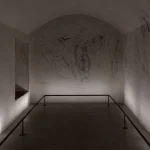
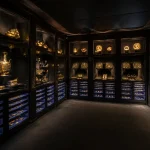
Inside Museo Stibbert — one of Florence’s most unusual museums, famous for its extraordinary collection of knight armor and historical weapons.
Tired of endless Renaissance paintings, crowded museums, and tourist-packed streets in Florence?
Hidden in the northern hills of Montughi stands one of the city’s strangest and most unforgettable attractions: the Museo Stibbert. Part Neo-Gothic fantasy villa, part historical armory, and part theatrical time capsule, this extraordinary museum feels like a secret Florence that mass tourism somehow forgot.
Inside, you’ll find an entire army of armored knights, one of the world’s most important samurai collections outside Japan, Islamic treasures, rare paintings, and even Napoleon Bonaparte’s coronation cloak.
Unlike the packed halls of the Uffizi Gallery, Museo Stibbert often feels eerily quiet — giving visitors the rare sensation of discovering a hidden world completely detached from the chaos of central Florence.
In this guide, you’ll discover what makes the museum so unique, what to see inside, how to get there efficiently in 2026, and whether it’s truly worth leaving the historic center.
Who Was Frederick Stibbert? The Eccentric Millionaire’s Obsession
A vintage-style black and white portrait inspired by Frederick Stibbert, the eccentric collector behind Florence’s famous Museo Stibbert armory museum.
The museum exists because of one extraordinary man: Frederick Stibbert.
Born in 1838 into an enormously wealthy Anglo-Italian family, Stibbert inherited a colossal fortune connected to the British East India Company through his grandfather. Instead of pursuing politics or aristocratic society life, he devoted himself almost entirely to collecting.
And not casually.
Over decades, he accumulated weapons, armor, ceremonial uniforms, paintings, furniture, textiles, manuscripts, costumes, antique firearms, and historical artifacts from across Europe, the Middle East, India, and Japan.
But what truly made Stibbert different was his vision.
He did not want a traditional museum filled with sterile glass displays.
He wanted theater.
Every room in his Neo-Gothic villa was carefully staged to immerse visitors in a different historical atmosphere. Instead of simply hanging armor on walls, he created cinematic scenes where knights appeared ready for battle and samurai seemed frozen in the middle of a march.
This immersive style was decades ahead of its time and still feels surprisingly modern today.
When Stibbert died in 1906, he left his villa, gardens, and nearly 50,000 objects to the city of Florence — creating one of the most eccentric museums in Florence and one of Italy’s greatest hidden collections.
What to See Inside: Knights, Samurai, and Napoleonic Relics
The museum contains far more than most visitors expect.
This is not simply “a museum with armor.”
It’s an immersive historical fantasy world filled with dramatic lighting, theatrical interiors, rare artifacts, and rooms that feel pulled straight from a historical epic film.
The Cavalcade Room (Salone della Cavalcata): A Terrifying Army of Knights
This is the moment most visitors never forget.
The legendary Cavalcade Room is the undisputed masterpiece of the museum — a vast hall where a procession of mounted knights appears to march directly toward you through the darkness.
Fourteen life-sized horses and armored warriors stand frozen in formation, wearing authentic European armor from the 16th century. Some belonged to noble families, while others were ceremonial masterpieces crafted for military elites and aristocrats.
The lighting is intentionally dramatic, with metal reflections flickering in the darkness while the horses look unnervingly alive. The entire room feels less like a museum and more like stepping into a medieval dream — or the set of a fantasy film like The Lord of the Rings.
It is easily one of the most visually unforgettable museum rooms in Florence.
And for families, it’s a hidden lifesaver.
Museo Stibbert is arguably one of the best things to do in Florence with kids. While younger visitors often become exhausted in traditional Renaissance galleries, rows of armored knights, swords, helmets, and war horses instantly capture their imagination.
For many children, this becomes the highlight of the entire Florence trip.
The Japanese Armory: Samurai in the Heart of Tuscany
One of the museum’s greatest surprises is its extraordinary Japanese collection.
The Japanese Armory contains more than 80 complete samurai suits alongside helmets, swords, bows, saddles, masks, and ceremonial objects from the Edo period. It is considered one of the most significant collections of Japanese arms and armor outside Japan itself.
The level of craftsmanship is astonishing.
Visitors can see:
Terrifying iron masks with exaggerated facial expressions
Lacquered armor plates with intricate detailing
Elegant katana mountings and ceremonial swords
Massive samurai helmets decorated with crests and horns
Clan symbols belonging to powerful feudal families
The contrast feels surreal.
One moment you are surrounded by medieval European knights.
The next, you are standing before a silent army of samurai in the middle of Tuscany.
The Islamic and Moresque Halls: Treasures of the Orient
Another hidden highlight of the museum is its Islamic and Moresque collection.
These rooms reflect the 19th-century European fascination with the “Orient” and feel almost dreamlike in their atmosphere.
Visitors encounter:
Ottoman helmets and shields
Persian and Indian daggers
Damascus steel blades
Decorated firearms and ceremonial weapons
Intricate Middle Eastern textiles and tiles
The magnificent Moorish Hall is especially memorable. With its arches, colorful decorations, and exotic atmosphere, it feels like stepping into a scene from One Thousand and One Nights.
Some historians also believe the Egyptian and Oriental symbolism found throughout the villa reflects the era’s fascination with esoteric culture, romanticism, and Masonic-inspired aesthetics.
Beyond Weapons: Napoleon’s Coronation Cloak and Paintings
Although armor dominates the museum’s reputation, the collection extends far beyond weapons.
Frederick Stibbert collected virtually everything that fascinated him.
One of the museum’s most remarkable treasures is the coronation cloak worn by Napoleon Bonaparte during his coronation as King of Italy in Milan in 1805.
Seeing the actual garment up close creates a surprisingly powerful connection to European history.
The museum also contains paintings associated with artists such as:
Sandro Botticelli
Pieter Bruegel the Elder
Cristofano Allori
Furniture, antique interiors, chandeliers, historical costumes, and decorative arts fill many additional rooms throughout the Neo-Gothic mansion.
The result feels less like visiting a museum and more like entering the preserved imagination of an eccentric 19th-century collector.
Hidden Gems in Florence
Beyond the Duomo and crowded piazzas, Florence hides secret pharmacies, forgotten towers, quiet libraries, surreal gardens, and Renaissance mysteries most tourists never see. Here are 11 hidden gems that reveal the city’s true soul.
The Secret Oasis: The Stibbert Museum English Garden
Many visitors focus entirely on the villa and underestimate the surrounding gardens.
That’s a mistake.
The park surrounding the museum is one of Florence’s quiet hidden escapes — especially valuable after spending time in the crowded historic center.
Designed as a romantic English landscape garden, the grounds feature:
Shaded walking paths
Ponds and small bridges
Grottos and fountains
Dense greenery and hidden corners
Quiet viewpoints overlooking the park
But the most mysterious structure is undoubtedly the Egyptian Temple.
Built directly beside the water, this strange monument reflects the 19th-century obsession with Egyptology and symbolic architecture. Combined with the villa’s theatrical atmosphere, it gives the entire garden an almost surreal feeling.
On warm afternoons, the gardens become one of the most peaceful places in northern Florence.
Bring water, slow down, and explore the paths after your visit.
Very few tourists ever do.
How to Visit Museo Stibbert: Tickets and Logistics
Because the museum sits outside Florence’s historic center, planning your visit properly matters more than for major attractions near the Duomo.
Many tourists underestimate travel time or assume the museum works like a standard walk-through gallery.
It doesn’t.
How to Get to Stibbert Museum from Central Florence
The museum is located at Via Frederick Stibbert 26 in the Montughi district, north of central Florence.
By Tram (Best Option)
One of the easiest modern ways to reach the museum is using Florence’s Tram T1 line.
From Santa Maria Novella Station, take the tram to either Statuto or Muratori, then walk uphill for approximately 10–15 minutes toward the villa.
Many travelers prefer the tram because:
It runs every few minutes
It avoids Florence traffic completely
It is easy to navigate even for first-time visitors
For most tourists in 2026, this is arguably the most convenient option.
By Bus
Another option is Bus No. 4 from the Santa Maria Novella area toward northern Florence.
On Foot
You can also walk from Piazza San Marco in roughly 25–30 minutes through quieter residential neighborhoods that feel completely different from tourist-heavy central Florence.
By Taxi
A taxi from the Duomo area is relatively quick and convenient, especially for families with children.
If you are planning a broader exploration of northern Florence or nearby Fiesole, combining destinations by taxi or car works particularly well.
Ticket Prices and Mandatory Guided Tours
One of the most important things to know before visiting:
You cannot freely wander through the museum alone.
Because of the fragile interiors and densely packed historical rooms, visits usually happen in scheduled groups accompanied by museum staff. Tours generally begin every hour and last around 60–70 minutes.
However, it’s important to manage expectations correctly.
These are typically escorted visits rather than detailed lecture-style tours. Museum staff usually guide visitors through the locked rooms and oversee preservation and safety, so using an audio guide or reading about the collection beforehand can greatly enrich the experience.
The system may sound restrictive at first, but it actually helps preserve the museum’s unique atmosphere:
Rooms never become overcrowded
Lighting remains cinematic and immersive
The experience feels calmer and more exclusive
Visitors move through the villa in a carefully designed sequence
Ticket prices are generally affordable compared to Florence’s major museums, usually around €8–10 depending on exhibitions and reductions.
The museum is also often included in the Firenze Card program, making it a smart addition for travelers spending several days in Florence.
As always, checking current opening hours before visiting is highly recommended.
The Verdict: Is the Stibbert Museum Worth Leaving the City Center?
Absolutely — for the right traveler.
If your dream Florence itinerary revolves entirely around Renaissance masterpieces and famous landmarks, Museo Stibbert may initially seem unusual.
But if you enjoy:
Hidden gems
Atmospheric museums
Medieval history
Samurai culture
Eccentric collectors
Cinematic interiors
Off-the-beaten-path experiences
Family-friendly attractions without crowds
…then this museum may become one of the most memorable places you visit in Florence.
Pros
Almost no tourist crowds
One of Europe’s most unique armor collections
Fantastic for families and children
Highly atmospheric presentation style
Beautiful English gardens
A truly different side of Florence
Cons
Located outside the historic center
Fixed guided-visit schedule
Less freedom for slow independent exploration
Still, for many travelers, the museum becomes unforgettable precisely because it feels so different from everything else in Florence.
It’s not just another museum.
It’s Frederick Stibbert’s fantasy world — preserved almost exactly as he imagined it more than a century ago.
What to See Next Nearby
If you are already exploring northern Florence, several nearby places combine perfectly with a visit to the museum.
Villa Fabbricotti
A peaceful historic villa area surrounded by greenery and walking paths.
Baden Powell Park
Fiesole
A beautiful hilltop town famous for Roman ruins, panoramic views, and a slower Tuscan atmosphere. If you have extra time, combining Fiesole with Museo Stibbert creates one of the best off-the-beaten-path day itineraries in Florence.
FAQ About Stibbert Museum Florence
Is Stibbert Museum worth visiting in Florence?
Yes — especially if you want to experience a different side of Florence beyond the crowded Renaissance museums. Stibbert Museum is one of the city’s best hidden gems, famous for its massive collection of medieval armor, samurai artifacts, theatrical interiors, and peaceful gardens.
What is Stibbert Museum famous for?
The museum is best known for the spectacular Cavalcade Room, where life-sized armored knights on horseback appear to march through a dark Neo-Gothic hall. It is also famous for one of the largest samurai armor collections outside Japan.
How long does it take to visit Stibbert Museum?
Most visits last around 1.5 to 2 hours, including the guided museum route and time to explore the English Garden afterward.
Can you visit Stibbert Museum without a guided tour?
No. Visitors usually enter the historic rooms in scheduled escorted groups because of the fragile interiors and valuable artifacts. However, these are generally quiet escorted visits rather than detailed lecture-style tours.
Is Stibbert Museum good for kids?
Absolutely. Many families consider it one of the best museums in Florence for children because the armored knights, swords, horses, and samurai displays are far more visually engaging for younger visitors than traditional art galleries.
How do you get to Stibbert Museum from Florence city center?
One of the easiest modern options is Florence’s Tram T1 line. From Santa Maria Novella Station, take the tram to Statuto or Muratori, then walk uphill for about 10–15 minutes. You can also reach the museum by bus, taxi, or on foot from central Florence.
Does Stibbert Museum have a samurai collection?
Yes. The museum contains one of the most important collections of samurai armor and Japanese weapons outside Japan, including Edo-period helmets, masks, swords, and ceremonial armor.
Are the Stibbert Museum gardens free to visit?
Access policies can occasionally change, but the English Garden is often accessible with a museum ticket and is considered one of the most peaceful hidden green spaces in Florence.
Is photography allowed inside Stibbert Museum?
Photography rules may vary depending on exhibitions and museum policies, so it is best to check current guidelines when visiting. In many areas, non-flash photography is typically permitted.
What else can you see near Stibbert Museum?
Nearby attractions include Fiesole, Villa Fabbricotti, and quiet local green spaces like Baden Powell Park — all excellent options for exploring a quieter and less touristy side of Florence.