Inside Orsanmichele Church — one of Florence’s most mysterious and atmospheric hidden churches.
Walking through the narrow streets between the Florence Cathedral and Piazza della Signoria, it’s impossible not to notice the massive stone building covered with niches filled by statues from the greatest masters of the Renaissance. This is Orsanmichele — one of the most unusual buildings in Florence.
Once, merchants traded grain here. Today, visitors step inside to pray before a miracle-working image of the Virgin Mary. Part church, part medieval marketplace, part political statement of Florence’s powerful guilds, Orsanmichele tells the story of Florence better than almost any other monument.
Why did the city’s guilds compete to decorate its façade with increasingly impressive sculptures? Why does the building look more like a fortress than a church? And what hidden museum waits above the crowds below?
In this guide, we’ll uncover the secrets of Orsanmichele Church Florence that most tourists walk past without ever realizing.
From Grain Market to Holy Shrine: The History of Orsanmichele
The historic facade of Orsanmichele Church in Florence, featuring Renaissance sculptures commissioned by the city’s powerful medieval guilds.
The story of Orsanmichele begins long before the Renaissance. The name itself comes from Orto di San Michele — “The Garden of Saint Michael.” In the early Middle Ages, this area contained a small monastery and garden dedicated to Saint Michael.
By the 13th century, Florence was rapidly growing in wealth and population. The religious buildings disappeared, replaced by a grain market essential to the city’s survival. Grain was stored and sold here under covered loggias, protecting merchants and supplies from weather.
But everything changed after a devastating fire in 1304.
The structure was rebuilt on a much grander scale between 1337 and 1350 by architect Francesco Talenti, the same master involved in work on Florence Cathedral. The new building combined two purposes that seem almost contradictory today: a functioning grain exchange and a sacred religious space.
This dual identity is what makes Orsanmichele Florence so unique.
The lower level became a church-like hall centered around a revered image of the Virgin Mary, while the upper floors continued storing grain for the city. Medieval Florentines effectively transformed commerce into something sacred — a perfect reflection of Florence itself, where banking, religion, politics, and art constantly overlapped.
Over time, Orsanmichele became closely tied to Florence’s guilds, the powerful professional organizations that controlled the city’s economy and politics. Each guild adopted the building almost like a corporate headquarters and public showcase.
Today, standing on Via dell’Arte della Lana, you are looking at what was once both the economic heart and spiritual insurance policy of medieval Florence.
The Exterior: A Masterclass of Renaissance Sculpture
A dramatic corner view of Orsanmichele Church in Florence, showcasing its medieval stone facade, Gothic windows, and famous guild-sponsored Renaissance statues.
The exterior of Orsanmichele Church is one of the greatest open-air sculpture galleries in Florence.
Along the walls are 14 niches, each commissioned by one of Florence’s guilds. Every guild was responsible for decorating its niche with a statue of its patron saint. What began as civic decoration soon evolved into a fierce artistic competition.
The Guilds’ Pride
In Renaissance Florence, guilds were not merely trade associations. They were economic empires.
The wool merchants, bankers, judges, silk traders, armor makers, blacksmiths, and doctors all fought for prestige. Commissioning a superior sculpture at Orsanmichele became a public demonstration of wealth, influence, and cultural power.
You can think of Orsanmichele as a medieval “state within a state,” where every niche acted like a luxury storefront or corporate office competing for attention.
A wealthy guild could not afford to look weaker than its neighbor.
This competition accidentally created one of the greatest concentrations of Renaissance sculpture in the city.
The Sculptors
Several of the most famous Renaissance artists worked here, including Donatello, Lorenzo Ghiberti, and Andrea del Verrocchio.
Among the highlights:
Donatello’s dramatic Saint Mark
Ghiberti’s elegant Saint John the Baptist
Verrocchio’s dynamic Christ and Saint Thomas
The original statues are now preserved inside the museum to protect them from weather damage, while highly detailed copies remain outside.
Still, even the replicas are astonishing when viewed up close. Many visitors rush between the Duomo and Piazza della Signoria without realizing they are walking past masterpieces equal to those inside Florence’s most famous museums.
Pro Tip: Don’t miss Verrocchio’s Christ and Saint Thomas — it is widely considered one of the most technically perfect bronze groups of the Renaissance era.
Interesting Fact: Why Did the Wool Merchants’ Guild Hire Donatello?
The powerful Arte della Lana — the Wool Merchants’ Guild — wanted a statue that projected intelligence, confidence, and authority.
They hired Donatello to create Saint Mark, knowing his revolutionary sculpting style could make the guild appear modern and sophisticated.
Legend says the guild members initially worried the statue’s expression looked too calm and thoughtful. Donatello reportedly replied that once the sculpture was raised high into its niche, the face would appear stronger from street level.
He was right.
Even today, Saint Mark feels startlingly alive compared to earlier medieval sculpture.
Inside Orsanmichele: The Miracle-Working Tabernacle
The atmospheric interior of Orsanmichele Church in Florence, featuring Gothic vaults, stained glass windows, and the famous Orcagna Tabernacle.
If the exterior represents Florence’s public pride, the interior reveals its spiritual soul.
Stepping inside Orsanmichele feels surprisingly intimate after the heavy stone exterior. The light becomes softer, the atmosphere quieter, and the building suddenly feels less like a fortress and more like a sacred refuge hidden inside the city.
The Tabernacle of Orcagna
The greatest treasure inside is the spectacular tabernacle created by Andrea Orcagna.
Built between 1352 and 1359, the Gothic masterpiece combines marble, gold, mosaics, colored glass, and intricate carvings into an almost jewel-like structure.
The craftsmanship is extraordinary. Tiny decorative details cover nearly every surface, blending sculpture, architecture, and religious symbolism into one unified work.
Unlike many Renaissance churches focused on symmetry and balance, Orcagna’s tabernacle still carries the emotional intensity and richness of Gothic art.
It remains one of the finest Gothic monuments in Florence.
The Virgin Mary Painting
Inside the tabernacle is the sacred image that transformed Orsanmichele into a pilgrimage site.
The Madonna painting became associated with miracles during times of plague, famine, and political crisis. Florentines believed the Virgin protected the city, and crowds gathered here to pray during disasters.
Offerings poured in from wealthy citizens and guilds hoping to secure divine protection for Florence’s economy and people.
For medieval residents, this was not just a church — it was part of the city’s survival system.
Even today, candles and flowers often appear near the image, quietly continuing centuries of devotion.
Hidden Gems in Florence
Beyond the Duomo and crowded piazzas, Florence hides secret pharmacies, forgotten towers, quiet libraries, surreal gardens, and Renaissance mysteries most tourists never see. Here are 11 hidden gems that reveal the city’s true soul.
The magnificent Orcagna Tabernacle inside Orsanmichele Church in Florence, surrounded by Gothic frescoes, stained glass windows, and medieval architectural details.
Planning a visit to Orsanmichele is easy, but many travelers miss important details.
Entrance
The church itself is often free to enter, although access may occasionally be limited during religious services or restoration work.
Because Orsanmichele is smaller than Florence’s major basilicas, it can feel crowded during peak tourist hours.
Early morning or late afternoon usually offers the best experience.
Note: Since 2024–2025, access to the museum and the upper levels is managed under a combined ticket system for state museums. Always check the official website or the ticket office on-site for current pricing.
Museum Access
One of Florence’s best hidden experiences is located above the church.
The upper floors contain the Orsanmichele Museum, where many original sculptures from the façade are displayed in remarkable detail.
Most tourists never go upstairs — which is exactly why it feels so special.
Opening Hours
Schedules can change seasonally, especially for the museum floors.
Before visiting, it’s smart to verify updated times through Florence museum resources or local tourism information.
A full visit usually takes:
20–30 minutes for the church
45–60 minutes including the museum
Is Orsanmichele Worth Visiting?
Absolutely.
If you want to understand how Florence actually functioned during the Renaissance — economically, artistically, and spiritually — Orsanmichele may be more revealing than many larger attractions.
It offers world-class art without the overwhelming crowds of Florence’s most famous museums.
The Orsanmichele Museum: The Hidden View
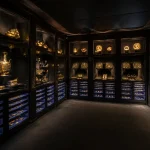
The atmospheric interior of the Orsanmichele Museum in Florence, where original Renaissance sculptures are displayed inside the former medieval grain storage floors.
The museum above the church is one of Florence’s most overlooked treasures.
The climb up the original medieval staircase is an experience in itself — it feels like walking back in time, away from the modern city noise.
As you climb through the old grain-storage floors, the building’s original purpose suddenly becomes easier to imagine. Thick walls, narrow staircases, and heavy stone architecture remind visitors that this was once a working commercial structure.
Upstairs, the original statues reveal details impossible to appreciate from street level.
You can stand face-to-face with Donatello’s carvings, examine delicate folds in marble robes, and see tool marks left by Renaissance masters centuries ago.
But perhaps the museum’s greatest surprise is the view.
Looking through the ancient windows of the old granary, you get a unique perspective over Florence’s rooftops — quieter and more intimate than famous viewpoints crowded with tourists.
It feels less like a panoramic attraction and more like secretly borrowing the eyes of a medieval Florentine merchant.
For travelers searching for hidden museums Florence visitors usually miss, Orsanmichele is one of the city’s best discoveries.
What to See Near Orsanmichele
One of the best things about visiting Orsanmichele is its location in the absolute heart of historic Florence. Within just a few minutes on foot, you can reach some of the city’s most famous landmarks — along with several hidden gems many tourists overlook.
Piazza della Signoria
A bright sunny view of Piazza della Signoria in Florence, featuring Palazzo Vecchio, the Loggia dei Lanzi, and famous Renaissance sculptures.
Just a short walk away, Piazza della Signoria has been Florence’s political center for centuries.
Here you’ll find:
the imposing Palazzo Vecchio,
the open-air sculpture gallery of the Loggia dei Lanzi,
and replicas of iconic Renaissance statues, including Michelangelo’s David.
The square is especially beautiful in the evening, when the crowds begin to thin and the stone buildings glow under warm lights.
Florence Cathedral (Duomo)
A bright panoramic view of Florence Cathedral and Brunelleschi’s iconic dome under a clear blue Tuscan sky.
Only a few minutes north stands the legendary Florence Cathedral with Brunelleschi’s massive dome dominating the skyline.
Even if you already visited the cathedral, the nearby streets around the Duomo are worth exploring slowly. Small workshops, hidden courtyards, and historic cafés survive between the larger tourist routes.
(H3) The Uffizi Gallery
Art lovers should not miss the nearby Uffizi Gallery, one of the most important art museums in the world.
Inside are masterpieces by:
Botticelli,
Leonardo da Vinci,
Michelangelo,
Raphael,
and Caravaggio.
Interestingly, after seeing the sculptures of Orsanmichele outside in the streets, the Uffizi feels like a continuation of Florence’s artistic story rather than a separate attraction.
Mercato del Porcellino
The historic Mercato del Porcellino in Florence, featuring elegant Renaissance arches and the atmosphere of the city’s old merchant quarter.
The Verdict: Why It’s Florence’s Most Strategic Stop
Orsanmichele sits almost perfectly between Florence’s biggest landmarks, making it an ideal pause between the Duomo and Piazza della Signoria.
But what makes it unforgettable is how many layers of Florence exist inside one building.
It is:
a former grain market,
a Gothic church,
a Renaissance sculpture gallery,
a guild headquarters,
a miracle shrine,
and a hidden museum with city views.
Few places explain Florence so completely in such a compact space.
While crowds rush toward the city’s headline attractions, Orsanmichele quietly reveals how medieval Florence truly worked — a city where commerce and faith stood side by side, and where even grain merchants competed through art powerful enough to survive for centuries.
Hidden Gems in Venice
Venice is more than gondolas and crowded canals. Step away from the tourist routes and discover quiet districts, hidden courtyards, and places where the city feels truly authentic.
Orsanmichele is famous for being one of the most unique buildings in Florence — a former medieval grain market transformed into a church and later into a showcase for Renaissance sculpture. It is especially known for the guild-sponsored statues created by masters such as Donatello, Ghiberti, and Verrocchio.
Is Orsanmichele worth visiting?
Yes — especially for travelers interested in hidden gems, Renaissance art, and medieval Florence. Unlike many larger attractions, Orsanmichele offers world-class sculpture, Gothic interiors, and a peaceful atmosphere without overwhelming crowds.
Where is Orsanmichele located in Florence?
Orsanmichele Church is located on Via dell’Arte della Lana in the historic center of Florence, between the Florence Duomo and Piazza della Signoria.
Is entry to Orsanmichele free?
The church itself is often free to enter, although access rules can change depending on restoration work, religious services, or museum ticket systems. The upper museum levels may require a separate or combined ticket.
What can you see inside Orsanmichele?
Inside Orsanmichele, visitors can admire the magnificent Orcagna Tabernacle, Gothic frescoes, stained glass windows, and the miracle-working image of the Virgin Mary that once attracted pilgrims from across Florence.
What is the Orsanmichele Museum?
The Orsanmichele Museum occupies the upper floors of the historic building and houses many of the original Renaissance sculptures that once stood in the exterior niches. The museum also offers beautiful hidden views over Florence’s rooftops.
Why did Florence’s guilds decorate Orsanmichele?
Florence’s guilds used Orsanmichele as a public symbol of wealth, prestige, and political influence. Each guild sponsored statues for the building’s exterior niches, competing to commission the most impressive artwork from leading Renaissance sculptors.
Which famous artists worked on Orsanmichele?
Several major Renaissance artists contributed to Orsanmichele, including Donatello, Lorenzo Ghiberti, and Andrea del Verrocchio.
How long does it take to visit Orsanmichele?
Most visitors spend about 20–30 minutes inside the church itself. If you also visit the museum and upper floors, plan for approximately 45–60 minutes total.
What attractions are near Orsanmichele?
Nearby attractions include Piazza della Signoria, Florence Cathedral, Uffizi Gallery, and Mercato del Porcellino — all within a short walking distance.