The Vasari Corridor stretches above Florence as a hidden Renaissance passage once used by the powerful Medici family.
Imagine walking across Florence — from Palazzo Vecchio to Palazzo Pitti — without ever touching the crowded streets below. No tourist chaos. No traffic. No noise.
Just a narrow elevated passage hidden above the city for nearly 500 years.
This is the Vasari Corridor (Corridoio Vasariano) — one of Florence’s most mysterious and legendary hidden spaces. Built for the powerful Medici dynasty during the Renaissance, the corridor allowed rulers to move invisibly through the city while ordinary citizens remained far below.
After being closed for nearly a decade due to restoration works, the corridor has finally reopened. But in 2026, many travel guides are already outdated. Ticket systems changed, the interior experience was completely redesigned, and many tourists still believe you need an overpriced “exclusive tour” to enter.
You don’t.
In this guide, you’ll learn:
What the Vasari Corridor actually is
Why the Medici family built it in just 5 months
What changed after the 2024–2025 renovation
How to buy official tickets without overpaying resellers
The hidden stories and legends most visitors completely miss
Whether you’re a history lover, architecture enthusiast, or simply searching for one of the most unique experiences in Florence — this is the guide you need.
What is the Vasari Corridor? The Medici’s Private Highway
The hidden Vasari Corridor stretches above Ponte Vecchio, allowing the Medici family to cross Florence privately during the Renaissance.
The Vasari Corridor (Corridoio Vasariano) is a secret elevated passageway running through the heart of Florence. Built in 1565 by the famous Renaissance architect Giorgio Vasari under orders from Cosimo I de’ Medici, the corridor was designed as a secure private route for the Medici rulers.
The timing was extraordinary.
Cosimo I wanted the passage completed in time for the wedding of his son, Francesco I de’ Medici, to Joanna of Austria. Somehow, Vasari and his workers managed to finish the nearly one-kilometer-long structure in only five months — an astonishing engineering achievement for the 16th century.
But the corridor was never just an architectural flex.
The Medici family needed a secure way to move between their political headquarters at Palazzo Vecchio and their royal residence at Palazzo Pitti without mixing with ordinary citizens on the streets below. At the time, Florence was politically unstable, and conspiracies against powerful families were a very real threat. The Vasari Corridor effectively became a private elevated highway — protected, invisible, and fully controlled by the Medici dynasty.
Today, it remains one of the most fascinating architectural symbols of Renaissance Florence.
The Route: From Palazzo Vecchio to the Boboli Gardens
The Vasari Corridor stretches above Ponte Vecchio, giving the Medici family a private route across Renaissance Florence.
Walking through the Vasari Corridor feels surprisingly surreal because you’re constantly moving above the city — through walls, across rooftops, and over streets filled with tourists who have no idea what exists above them.
The route itself is part of the experience.
Starting Near Palazzo Vecchio
Palazzo Vecchio has dominated the political heart of Florence since the late 13th century and later became a key part of the Medici power network connected to the Vasari Corridor.
The corridor begins near Palazzo Vecchio, the political heart of Renaissance Florence.
From there, the passage slips into the upper levels of the Uffizi Gallery, connecting politics, art, and Medici power into one continuous architectural line.
As you move through this section, the atmosphere already feels strangely detached from the busy city outside.
Crossing the Arno Above Ponte Vecchio
The Vasari Corridor stretches above Ponte Vecchio, connecting the political and residential centers of the Medici dynasty across Florence.
The most spectacular part of the corridor runs above Ponte Vecchio.
Through the corridor windows, visitors get elevated views over the Arno River that most tourists never experience. The atmosphere here feels quieter and oddly isolated compared to the chaos on the bridge below.
But Ponte Vecchio once looked — and smelled — completely different. There’s a reason the Medici transformed the bridge forever, and it had everything to do with the corridor above it.
The Strange Curve Around Torre dei Mannelli
The Vasari Corridor bends around Torre dei Mannelli after the powerful Florentine family refused to allow the Medici to cut through their tower.
One of the corridor’s strangest moments appears near the medieval Torre dei Mannelli.
Here, the passage suddenly bends outward in an awkward curve, almost as if the architect changed his mind halfway through construction.
The reason is surprisingly dramatic — and involves one powerful Florentine family refusing to cooperate with the Medici. We’ll get to the full story in the secrets section below.
Santa Felicita’s Hidden Balcony
The Medici family used this hidden balcony connected to the Vasari Corridor to attend mass privately above the crowds of Florence.
The corridor then passes directly through the façade of Church of Santa Felicita.
Inside the church, the Medici family had a private screened balcony hidden behind grilles. From there, they could attend mass separately from ordinary citizens below — another reminder that the corridor was designed not only for safety, but also for privacy and control.
Ending at Palazzo Pitti and the Boboli Gardens
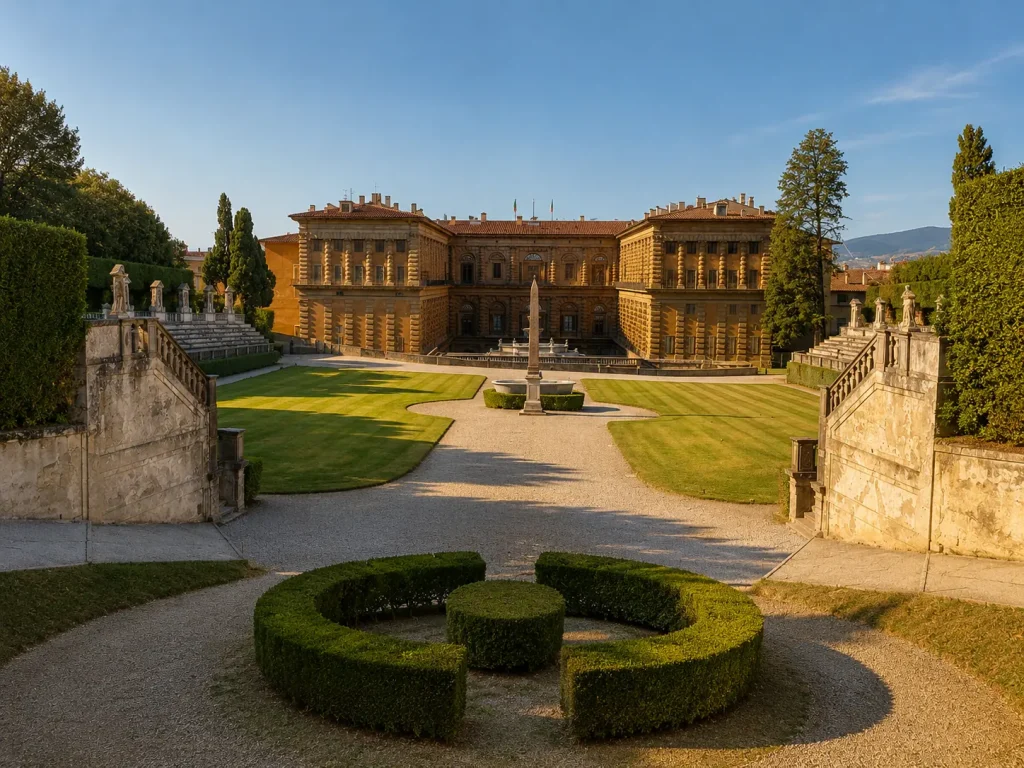
The Vasari Corridor ends near the magnificent Boboli Gardens, opening into one of the most elegant Renaissance landscapes in Florence.
The passage finally reaches Palazzo Pitti and exits near the magnificent Boboli Gardens.
More specifically, visitors emerge near the famous Grotta del Buontalenti — the surreal artificial grotto filled with dramatic textures, hidden chambers, and Mannerist fantasy architecture commissioned by the Medici family.
After the confined atmosphere of the corridor, stepping out near the grotto and into the open gardens feels almost cinematic. It’s one of the most satisfying endings to any historical walk in Florence.
The Big Change: What’s Inside the Renovated Corridor Now?
After its major restoration, the Vasari Corridor shifted from a crowded portrait gallery into an immersive architectural experience focused on light, space, and hidden views over Florence.
This is the part many outdated travel guides still get completely wrong.
For decades, the Vasari Corridor was famous for housing the Uffizi’s legendary collection of artist self-portraits. Visitors expected walls covered with paintings from floor to ceiling.
That experience no longer exists.
The Self-Portraits Were Removed
Following the major restoration project completed in late 2024 and 2025, the famous self-portrait collection was relocated to new exhibition areas inside the Uffizi Gallery itself.
If you’re expecting a traditional art gallery inside the corridor, you may be surprised.
The space now feels much more minimalistic and architectural.
The Corridor Itself Became the Main Attraction
Instead of focusing on dense artwork displays, the renovated experience emphasizes:
Renaissance architecture
Natural light and spatial atmosphere
Historic engineering details
Panoramic views over the Arno River
Ancient Roman inscriptions and epigraphs
The result feels cleaner, quieter, and more immersive than before.
What surprises many visitors is how physically intimate the corridor feels. The walls are relatively plain, the windows narrow, and footsteps echo softly through the long white passage. Instead of moving from painting to painting, you become aware of the corridor itself — and of what it must have felt like for the Medici family to travel above Florence almost completely unseen.
Quick Info
Best for: Architecture lovers, history buffs, and travelers searching for exclusive Florence experiences.
Length: Approximately 1 kilometer (about 35–45 minutes walking time).
Reopening status: Fully operational since late 2024 / 2025.
Accessibility: Now fully accessible thanks to elevators and ramps added during restoration.
How to Book Tickets for the Vasari Corridor (Avoid the Scams)
Hidden Gems in Florence
Beyond the Duomo and crowded piazzas, Florence hides secret pharmacies, forgotten towers, quiet libraries, surreal gardens, and Renaissance mysteries most tourists never see. Here are 11 hidden gems that reveal the city’s true soul.
How to Book Tickets for the Vasari Corridor (Avoid the Scams)
The renovated Vasari Corridor combines Renaissance architecture, quiet gallery spaces, and historic sculptures within Florence’s legendary Medici passage.
This is where many travelers still get confused.
For years, access to the Vasari Corridor was limited to expensive private tours and reseller packages costing €100–€150 or more. Many old articles still repeat this information, even though the system has changed significantly.
The Corridor Is Now Integrated Into the Uffizi System
You first purchase a ticket for the Uffizi Galleries
Then add the Vasari Corridor supplement
Select an available timed entry
The Vasari Corridor supplement currently costs around €20 on top of your standard Uffizi Gallery admission ticket, though pricing can vary depending on season and ticket type.
Group Sizes Are Still Limited
Even after reopening, entry remains carefully controlled.
Groups are generally limited to around 25 visitors in order to preserve the atmosphere and manage movement inside the narrow corridor. During high season, tickets can still sell out quickly.
Important Visitor Tip: The Route Is One-Way
Keep in mind that the Vasari Corridor experience is strictly one-way. You enter through the Uffizi side and exit near the Boboli Gardens and Palazzo Pitti.
You cannot turn around and walk back through the passage, so make sure you take your photos and enjoy the river views as you move through the corridor.
You Do NOT Need a €150 “Secret Tour”
This is important.
Many tour operators still market the corridor as an ultra-exclusive hidden experience requiring luxury guided tours.
That information is outdated.
While premium tours still exist, ordinary visitors can now access the corridor directly through the official ticketing system. Always check the official source before paying inflated reseller prices.
4 Secrets and Legends Hidden Within the Walls
Hidden above Ponte Vecchio, the Vasari Corridor carries centuries of Medici intrigue, political power, and mysterious Renaissance legends.
The Vasari Corridor is more than a passageway.
It’s filled with strange stories, political symbolism, architectural improvisation, and historical legends that most tourists never notice.
1. Why the Butchers Were Banished from Ponte Vecchio
Today, Ponte Vecchio is famous for jewelry shops and glittering gold displays.
But originally, the bridge was packed with butchers.
And according to historical accounts, the smell was unbearable.
Since the Medici family regularly walked through the corridor directly above the bridge, Cosimo I de’ Medici reportedly ordered the meat sellers removed and replaced with goldsmiths and jewelers.
That decision permanently transformed the identity of Ponte Vecchio — and explains why the bridge still feels completely different from most medieval bridges in Europe today.
2. The Tower That Refused to Move
The strange curve near Torre dei Mannelli wasn’t an accident.
When Giorgio Vasari planned the corridor route, the powerful Mannelli family refused permission to cut through or demolish their medieval tower.
Rather than starting a political conflict, Vasari improvised.
He designed the corridor to bend awkwardly around the structure using external supports and brackets. Even today, the curve remains visible — a permanent architectural scar left behind by Renaissance-era aristocratic stubbornness.
3. The “Hitler Windows”
The three large panoramic windows overlooking the Arno River were not part of the original 1565 design.
They were added in 1938 under orders from Benito Mussolini before the visit of Adolf Hitler.
The goal was simple: impress Hitler with Florence’s beauty.
Ironically, this may have helped save Ponte Vecchio during World War II. While retreating German forces destroyed many bridges in Florence in 1944, Ponte Vecchio survived — allegedly because Hitler admired it during his earlier visit.
Whether entirely true or partly mythologized, the story remains one of Florence’s most persistent historical legends.
4. A Secret Escape Route?
Some historians believe the corridor may also have functioned as an emergency escape route during periods of unrest.
The Medici family constantly feared conspiracies, riots, and assassination attempts. Having a protected elevated passage between political and residential centers gave them a major strategic advantage in dangerous moments.
In Renaissance Florence, architecture was often about survival as much as beauty.
Best Time to Visit the Vasari Corridor
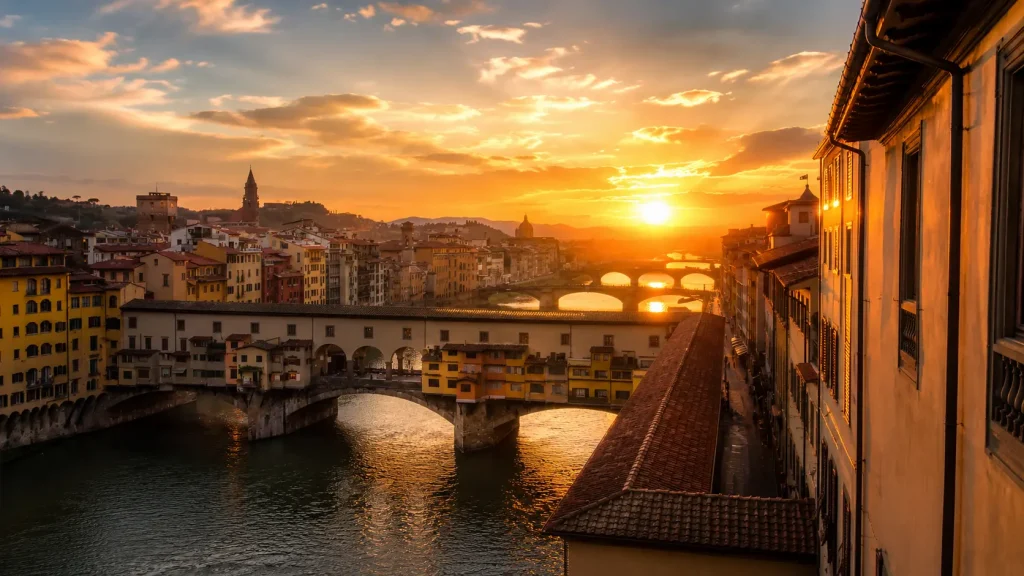
As the sun sets over Florence, the Vasari Corridor reveals one of the most breathtaking hidden perspectives above the Arno River.
Early morning and late afternoon entries usually provide the best lighting over the Arno River, especially near Ponte Vecchio.
Midday visits can become visually flat due to strong sunlight reflecting off the pale corridor walls, while softer morning or evening light creates a much more atmospheric experience.
This also makes photography through the corridor windows noticeably easier.
The Verdict: Is the Vasari Corridor Worth It?
Honestly, it depends on what kind of traveler you are.
The Pros
One of the most unique historical walks in Italy
Incredible hidden perspectives over Florence
Strong Medici atmosphere and Renaissance storytelling
Far calmer than Florence’s overcrowded museums
A rare chance to experience architecture as political power
The Cons
Movement inside is controlled and continuous
You cannot freely wander or linger too long
The famous self-portrait collection is gone
Visitors expecting a traditional art museum may feel underwhelmed
Final Verdict
If this is your first and only day in Florence, your time may be better spent exploring the Duomo, the Uffizi, or the Accademia.
But if you already love Florence — or want something deeper, stranger, and more exclusive — the Vasari Corridor is absolutely worth it.
The Vasari Corridor is not Florence’s most famous attraction. But it may be its most revealing one.
Because once you walk above the city — hidden behind walls built for dukes, conspiracies, and survival — Renaissance Florence suddenly stops feeling like a museum.
And starts feeling real.
What to See Next Nearby
The Uffizi Gallery
The Uffizi Gallery served as both an artistic and political center of Medici Florence — and became one of the main access points to the secret Vasari Corridor.
After visiting the corridor, continue exploring the Uffizi Gallery itself.
Many of the self-portraits once displayed inside the corridor can now be viewed in the museum’s updated exhibition areas.
Michelangelo’s Secret Room
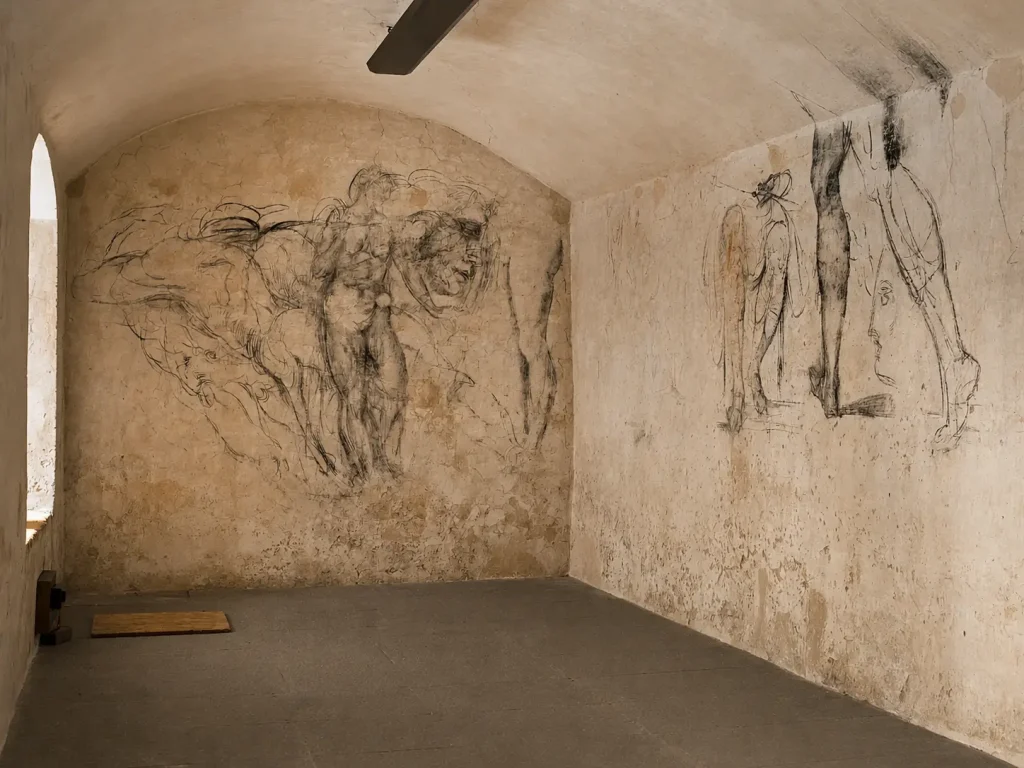
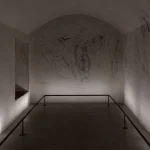
The rough charcoal drawings inside Michelangelo’s Secret Room reveal the raw creative process of Michelangelo Buonarroti during his alleged hiding period beneath the Medici Chapels in 1530.
If you enjoyed the hidden world of the Medici above Florence, the underground refuge connected to Michelangelo beneath the Medici Chapels offers the opposite perspective — intimate, claustrophobic, and deeply personal.
Together, the two sites reveal two radically different sides of Renaissance Florence.
The Boboli Gardens combine Renaissance symmetry, hidden pathways, dramatic fountains, and Medici grandeur in one of Florence’s most iconic historic landscapes.
The corridor exits directly near the spectacular Boboli Gardens.
Don’t rush away.
The gardens are filled with hidden grottos, sculptures, fountains, elevated viewpoints, and quiet corners that perfectly continue the Medici atmosphere after the corridor experience.