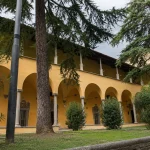
Inside Officina Profumo-Farmaceutica di Santa Maria Novella — the world’s oldest pharmacy hidden in the heart of Florence.
A Place Where Florence Still Smells Like the Renaissance
Imagine stepping into a place where time stopped in 1221.
You push open a heavy wooden door expecting a luxury perfume boutique… but instead, you enter something closer to an alchemist’s laboratory. The air is filled with the scent of dried herbs, antique wood, wax, citrus oils, and centuries-old remedies. Frescoes glow softly above marble counters. Crystal bottles reflect golden light. Silence replaces the noise of Florence outside.
This is not just a shop.
This is the legendary Officina Profumo-Farmaceutica di Santa Maria Novella — often called the oldest pharmacy in the world.
For more than 800 years, Dominican monks, royal families, perfumers, doctors, and travelers have walked through these halls searching for medicine, beauty, and sometimes even immortality in a bottle.
And somehow… the place still feels alive.
From Monastic Garden to Royal Courts: A Brief History
The historic interior of Officina Profumo-Farmaceutica di Santa Maria Novella — a Renaissance pharmacy in Florence known for centuries-old perfumes, herbal remedies, and monastic traditions.
The story begins in 1221, when Dominican friars arrived in Florence and settled beside the church of Santa Maria Novella.
Inside the monastery walls, the monks created a hidden medicinal garden known as the Hortus Conclusus — an enclosed botanical space where they cultivated herbs, flowers, roots, and rare medicinal plants. Their original mission was practical and spiritual at the same time: caring for sick monks and patients from the monastery hospital.
At first, the friars produced simple herbal remedies, balms, and digestive extracts.
But Florence was changing.
During the Renaissance, wealthy Florentine families became fascinated with exotic scents, cosmetics, and botanical science. The monks gradually transformed from healers into some of Europe’s most respected creators of fragrances and medicinal preparations.
By the 1500s, nobles across Italy were requesting products from the monastery.
And in 1612, the pharmacy officially opened its doors to the public under the name:
Officina Profumo-Farmaceutica di Santa Maria Novella.
By that point, however, its reputation had already spread far beyond Florence.
Royal courts in France, aristocrats in Rome, and wealthy merchants across Europe were importing products made by the Dominican friars.
What started as a monastic herb garden had quietly become a Renaissance luxury empire.
Hidden Detail Most Visitors Miss
The pharmacy still uses many original botanical recipes inspired by ancient monastic traditions and Renaissance herbal medicine practices. Some formulas are centuries old and continue to be produced in Florence today.
The Secret of Catherine de’ Medici: Acqua della Regina
The elegant interior of Officina Profumo-Farmaceutica di Santa Maria Novella in Florence, featuring Renaissance-inspired architecture, antique wooden counters, and historic perfume displays.
One of the most famous stories connected to the pharmacy involves perhaps the most powerful woman of Renaissance Europe: Catherine de’ Medici.
In 1533, the 14-year-old Florentine noblewoman left Italy to marry the future King Henry II of France.
According to historical tradition, the monks of Santa Maria Novella created a special fragrance for her journey — a revolutionary scent known as Acqua della Regina (“The Queen’s Water”).
At the time, most perfumes were oil-based and extremely heavy.
This formula was different.
It used alcohol as its base, making it lighter, fresher, and more elegant than anything Europe had experienced before. Many historians consider it one of the first modern alcohol-based perfumes in history.
When Catherine arrived in France, Florentine perfume culture followed her.
French aristocrats became obsessed with scented gloves, botanical fragrances, and refined personal perfumes — trends that would later help transform France into the perfume capital of the world.
A Remarkable Fact
The fragrance still exists today under the name Acqua di S.M. Novella.
And according to the pharmacy, the formula has remained essentially unchanged for nearly 500 years.
When you smell it, you are experiencing almost the exact scent that accompanied Catherine de’ Medici to the French royal court during the Renaissance.
That alone makes this place feel less like a store… and more like a time machine.
The Plague Remedy: The Dark Legend of the Seven Thieves Vinegar
A richly decorated interior room inside Officina Profumo-Farmaceutica di Santa Maria Novella in Florence, featuring vaulted frescoed ceilings, antique décor, and atmospheric Renaissance-style lighting.
Before luxury perfumes, the pharmacy was deeply connected to medicine — especially during epidemics.
One of the most mysterious products associated with the Officina is the legendary Vinegar of the Seven Thieves.
According to folklore, during plague outbreaks, a group of thieves robbed infected homes without becoming sick. When authorities finally captured them, the thieves supposedly revealed their secret:
A powerful herbal vinegar infused with rosemary, sage, lavender, garlic, and other aromatic plants believed to protect against disease.
Versions of this remedy appeared throughout Europe, but Santa Maria Novella became famous for preserving and producing traditional herbal preparations inspired by these medieval formulas.
Whether it truly worked is another question.
But in an age before modern medicine, scent itself was considered protective. People believed strong botanical aromas purified the air and defended the body from invisible corruption.
The Rose Water Connection
Another famous preparation was Acqua di Rose — distilled rose water.
The Dominican friars reportedly used it during epidemics as a cleansing and disinfecting solution. Today, it survives as one of the pharmacy’s most iconic beauty products and is still sold as a facial toner.
It is one of the strangest details about Santa Maria Novella:
Products originally linked to medieval plague prevention are now part of modern skincare routines.
Hidden Gems in Florence
Beyond the Duomo and crowded piazzas, Florence hides secret pharmacies, forgotten towers, quiet libraries, surreal gardens, and Renaissance mysteries most tourists never see. Here are 11 hidden gems that reveal the city’s true soul.
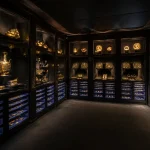
An elegant perfume display hall inside Officina Profumo-Farmaceutica di Santa Maria Novella in Florence, featuring Renaissance-inspired architecture, antique wooden showcases, and historic fragrance bottles.
Calling this place a “shop” is misleading.
The interior feels closer to a museum, palace, and monastery combined.
Every room tells a different part of the pharmacy’s history.
The Antica Spezieria
This is the emotional heart of the complex.
Dark wooden cabinets line the walls. Glass bottles glow under chandeliers. Ancient ceramic jars once used for medicinal compounds sit beneath frescoed ceilings.
The room feels frozen somewhere between science and magic.
If you are a photographer or a content creator, this is one of the most visually rewarding places in Florence.
The way the light reflects through crystal bottles and antique glass feels less like a shop… and more like a Renaissance painting brought to life.
Photography lovers often describe it as one of the most atmospheric interiors in Florence.
Sala Salesiana
Originally created as a sales hall in the 19th century, this magnificent room is filled with vaulted ceilings, elegant displays, and historical furniture.
Many visitors stop here without realizing they are standing inside one of the world’s oldest continuously operating pharmaceutical spaces.
The Sacristy
The sacristy preserves some of the oldest spiritual and artistic elements connected to the monastery.
Look closely and you’ll notice Renaissance religious symbolism mixed with botanical imagery — a reminder that, for the Dominican friars, medicine and spirituality were never fully separated.
Hidden Artistic Treasure
Many visitors focus only on perfumes and completely miss the frescoes by Paolo Schiavo and other Renaissance decorative details hidden throughout the rooms.
That is part of what makes Santa Maria Novella special:
It exists somewhere between pharmacy, art gallery, monastery, and historical archive.
And yes — the experience is completely free to enter.
Why Everything Looks Like a Museum Piece
Even the packaging feels timeless.
Cream-colored boxes, handwritten-style typography, wax seals, and Florentine symbols make every product look like something discovered inside a Renaissance cabinet of curiosities.
For many visitors, buying something here feels less like shopping… and more like taking home a fragment of Florence itself.
Quick Info
Best For: History lovers, fragrance enthusiasts, photographers, Renaissance fans.
Must-Try Products: Pot-Pourri in traditional terracotta jars, Acqua di Rose, Acqua di S.M. Novella, Herbal teas and botanical soaps
Entrance Fee: Free
One of the best free historical experiences in Florence.
Hidden Gems in Venice
Venice is more than gondolas and crowded canals. Step away from the tourist routes and discover quiet districts, hidden courtyards, and places where the city feels truly authentic.
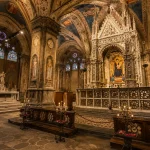
A dramatic interior inside Officina Profumo-Farmaceutica di Santa Maria Novella featuring golden angel statues, antique wooden walls, marble floors, and atmospheric Renaissance-style lighting.
Arrive Early
The pharmacy becomes crowded surprisingly fast, especially between late morning and afternoon.
If you want photographs without large crowds, arrive close to opening time — ideally around 9:00 AM.
The atmosphere is dramatically different when the rooms are still quiet.
Don’t Rush
Most tourists spend only 10–15 minutes here.
That is a mistake.
Take time to notice the ceiling details, antique jars, handwritten labels, and carved wooden furniture. The beauty of Santa Maria Novella is hidden in small details.
Use the Interactive Fragrance Displays
The modern sections include scent guides and interactive displays that help visitors explore fragrances based on ingredients and mood.
Even if you do not plan to buy anything, it is an interesting way to understand how Renaissance botanical traditions evolved into modern perfumery.
Visit the Tisaneria
One of the most underrated parts of the experience is the Tisaneria — the tea and herbal infusion room.
After the crowds of Florence, it feels unexpectedly peaceful.
Many visitors walk in for perfumes and leave remembering the quiet atmosphere more than the products themselves.
Why This Place Feels Different From Other Florence Attractions
Florence is full of museums.
But most museums are disconnected from daily life.
Santa Maria Novella is different because it never truly stopped functioning.
The same institution that treated medieval patients still produces fragrances. The same halls that welcomed Renaissance nobles still receive travelers every day.
Very few places in Europe preserve such a direct connection between past and present.
You are not looking at history behind glass.
You are walking inside it.
What to See Next Nearby
The peaceful courtyard of Biblioteca delle Oblate — a hidden former convent transformed into one of Florence’s most atmospheric local spaces.
Just a short walk from Officina Profumo-Farmaceutica di Santa Maria Novella, you’ll find another peaceful hidden gem of Florence: the Biblioteca delle Oblate.
Unlike the crowded viewpoints near the Duomo, this quiet library café offers one of the most relaxing panoramic views in the city.
Many locals come here simply to read, drink coffee, and watch the cathedral glow above the rooftops.
If Santa Maria Novella feels like Florence through scent… Biblioteca delle Oblate feels like Florence through silence.
Conclusion: The Scent of Immortality
The reason people continue visiting Officina Profumo-Farmaceutica di Santa Maria Novella after 800 years is simple:
It offers something modern tourism rarely can.
A sensory connection to the Renaissance.
Not through books. Not through paintings. But through smell.
You can literally inhale the same botanical notes once used by Dominican monks, Florentine nobles, and European queens centuries ago.
And for a brief moment, Florence no longer feels like a historical city.
It feels alive.
FAQ
Santa Maria Novella the oldest pharmacy in the world?
It is considered one of the oldest continuously operating pharmacies in the world, founded by Dominican monks in 1221.
Can you visit Officina Profumo-Farmaceutica di Santa Maria Novella for free?
Yes, entrance is free, making it one of the best free historical experiences in Florence.
What is Santa Maria Novella famous for?
The pharmacy is famous for Renaissance perfumes, herbal remedies, Catherine de’ Medici’s fragrance, and its stunning historic interiors.
Where is Officina Profumo-Farmaceutica di Santa Maria Novella located?
It is located on Via della Scala near the Basilica of Santa Maria Novella in Florence, Italy.